
Orienteering and ticks: build the body check into the finish routine
Forest and grass courses can expose athletes to ticks. Plan clothing and repellent before the start, inspect promptly after the finish and remove an attached tick correctly.
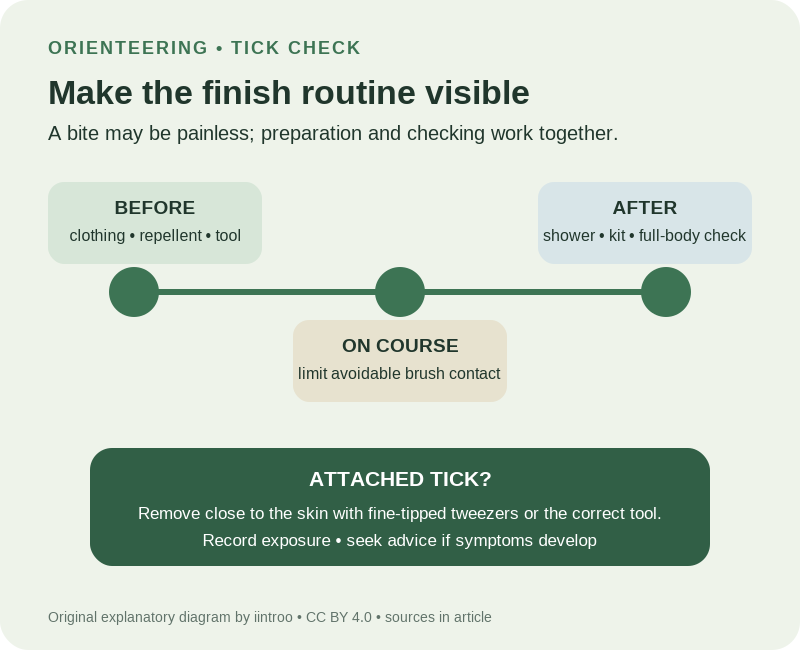
Key points
- Tick exposure varies by place, season and terrain; a course map cannot show every risk.
- A prompt full-body check after outdoor sport helps find attached ticks that may not be felt.
- Remove an attached tick with fine-tipped tweezers or a purpose-designed tool; do not prescribe antibiotics or vaccination from an online checklist.
Treat tick exposure as a course-specific risk
This guide is for foot and mountain-bike orienteers, families, coaches and organisers. Ticks occur in grass, leaf litter, scrub and woodland in many parts of the world, but the species and diseases they can carry differ by region. Weather, season, vegetation, time on the course and behaviour all affect exposure. The absence of a warning sign does not mean a venue is tick-free.
An international six-day competition study in eastern France used participant reports and photographs to examine bites among orienteers. It provides rare sport-specific exposure data, but one event and self-selected reporting cannot estimate the risk for every country or course. Local public-health advice and event risk assessment remain essential.
Prepare clothing, repellent and the finish area
Before entering tick habitat, use protective clothing that is practical for the terrain and weather. Long sleeves and long trousers can reduce exposed skin; light colours can make ticks easier to see. Use a locally authorised repellent exactly as its label directs. Permethrin products are for treated clothing and gear where approved, not for direct use on skin unless the product specifically says so.
Organisers can include current regional advice in race information, identify a private well-lit place for checking skin, make a suitable tick-removal tool available and brief medical staff on local tick-borne diseases. These measures should not create a claim that the event is risk-free. A 2025 systematic review found varied evidence across personal protection and environmental interventions, with differences in outcomes and study quality.
Check promptly after the finish
After the course, inspect clothing, shoes, packs and the whole body. Pay attention to the hairline and scalp, around and behind the ears, under the arms, around the waist, behind the knees and between the legs. Children and anyone who cannot inspect every area may need respectful help in a private setting. Showering soon after returning indoors can help wash off unattached ticks and creates an opportunity for a check.
Do not rely on feeling a bite: ticks can be small and their attachment may be painless. Recheck later and inspect kit before placing it in a vehicle or home. Follow public-health instructions for washing or tumble-drying clothes, because recommendations depend on fabric, equipment and local guidance.
Remove an attached tick without improvised chemicals
Use clean fine-tipped tweezers or a purpose-designed tick tool. Grasp the tick close to the skin and pull steadily according to the tool and public-health instructions, then clean the bite area and hands. Avoid burning the tick or covering it with petroleum, nail polish or other substances; irritation and delay do not improve a controlled removal.
Record the date and location of likely exposure. Local authorities may advise whether to retain or photograph the tick, but species identification alone does not diagnose infection. Do not start antibiotics, antiparasitic drugs or other treatment without a qualified clinician. Advice about preventive medication or vaccination varies by disease, country, travel history, age and individual health.
Know when symptoms need medical advice
Seek medical advice if a spreading rash, fever, severe headache, unusual fatigue, muscle or joint pain, neurological symptoms or other illness develops after possible tick exposure. Tell the clinician where and when the athlete trained or competed. Tick-borne encephalitis, Lyme borreliosis and Crimean-Congo haemorrhagic fever are different diseases; no single symptom list or waiting period covers them all.
Severe illness, confusion, weakness, breathing difficulty, significant bleeding or rapidly worsening symptoms requires urgent care through local emergency services. Teams travelling across borders should check destination-specific public-health and vaccination guidance before departure. The finish-line check supports early recognition; it does not replace medical assessment.