
New to padel? Build court exposure before chasing match volume
Padel injury evidence is limited. New players can progress court, overhead and change-of-direction exposure while reporting elbow, ankle and other pain early.
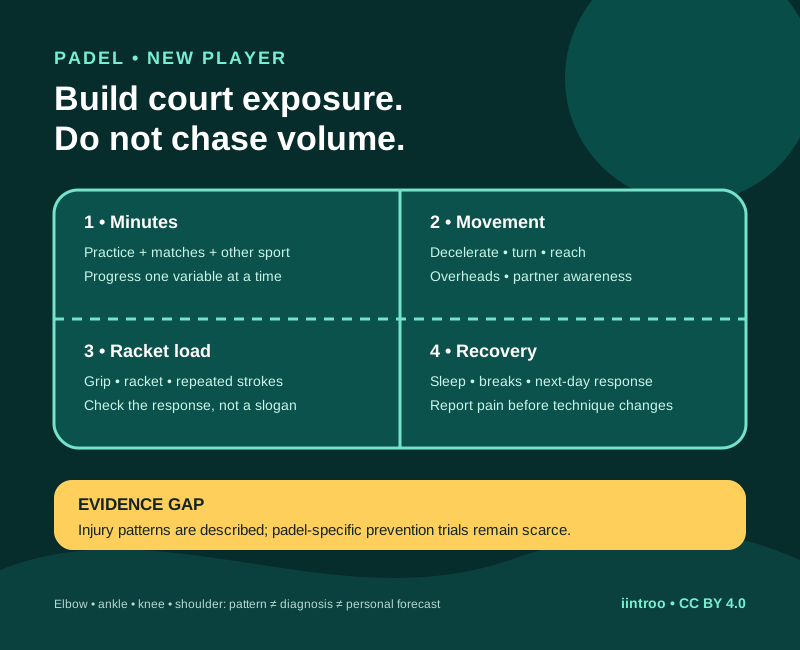
Key points
- A 2023 systematic review found limited, heterogeneous padel injury evidence; the elbow was reported most often, followed by the knee, shoulder and lower back.
- Recent recreational surveys add ankle and foot problems, but retrospective self-report cannot prove that age, equipment, warm-up or playing position caused an injury.
- Progress practice, match minutes, repeated overheads and change-of-direction exposure rather than copying a universal weekly limit.
Treat a fast-growing sport as a new exposure
This guide is for people starting padel, returning after a break and coaches introducing new players. The enclosed court, short accelerations, repeated stopping, low positions, overheads and racket contact create a mix of demands. Experience in tennis, squash or another sport can help, but it does not automatically prepare the ankle, calf, knee, elbow or shoulder for padel frequency.
The 2023 systematic review included only eight studies and 2,022 participants. It reported an incidence of about three injuries per 1,000 training hours and eight per 1,000 matches, with very broad prevalence estimates. Different definitions and exposure measures prevent simple comparison. These numbers frame a research problem; they are not a forecast for one player.
Progress court time and movement together
Record practice and match minutes, number of playing days, tournament matches and other racket or running activity. Early sessions can emphasise split-step timing, controlled deceleration, lateral movement, turning near the glass and communication with a partner before adding repeated maximal chases and overheads.
Do not increase session length, match frequency and movement intensity at the same time. There is no padel-specific trial defining a safe weekly progression. A player can use the next-day response, movement quality and loss of normal function to inform coaching decisions without turning soreness into a numerical injury-prediction score.
Interpret elbow and ankle patterns cautiously
The systematic review most often identified the elbow, while the 2025 Chilean survey found ankle-foot problems most common and many elbow-forearm complaints developed gradually. The Belgian survey reported lower-limb injuries most frequently. These differences likely reflect populations, recall periods and definitions as well as real variation.
Check grip size, racket mass and balance, footwear condition, court surface and the timing of overhead and backhand practice, but avoid declaring one item the cause. A retrospective association between an injury and age, equipment or even performing a warm-up can be distorted by experience, exposure and recall. It does not prove that warming up or using an overgrip is harmful.
Build capacity without selling a prevention recipe
A general preparation programme may include calf and lower-limb strength, landing and deceleration control, trunk and shoulder capacity, and gradual forearm loading. The exercises should match the player, their health and the demands they actually face. No padel-specific exercise programme has yet been shown to prevent every common injury.
A warm-up can rehearse movement and offer a readiness check, but it cannot compensate for excessive exposure, unsafe court conditions or continuing through pain. The FIP, Premier Padel and Aspetar partnership announced dedicated injury-surveillance research in 2025, an important sign that current prevention evidence remains incomplete rather than settled.
Know when to leave the court
Stop after a suspected fracture or dislocation, inability to bear weight, major swelling, sudden weakness, numbness, an eye impact with vision change, or a head impact with possible concussion. Use local emergency arrangements for severe symptoms. Persistent elbow, shoulder, back or lower-limb pain that changes technique or limits daily function needs qualified assessment.
Return should rebuild the specific tasks that were lost: court movement, repeated strokes, overheads, match duration and recovery between matches. This guide cannot diagnose an injury, prescribe equipment or set a return date. Current facility rules, FIP competition procedures and individual clinical advice take priority.