
Training with a lower-limb prosthesis: protect the skin before a hot spot becomes a wound
Heat, sweat, friction and socket pressure can turn a small residual-limb hot spot into lost training. Inspect early, adjust fit and escalate wounds promptly.
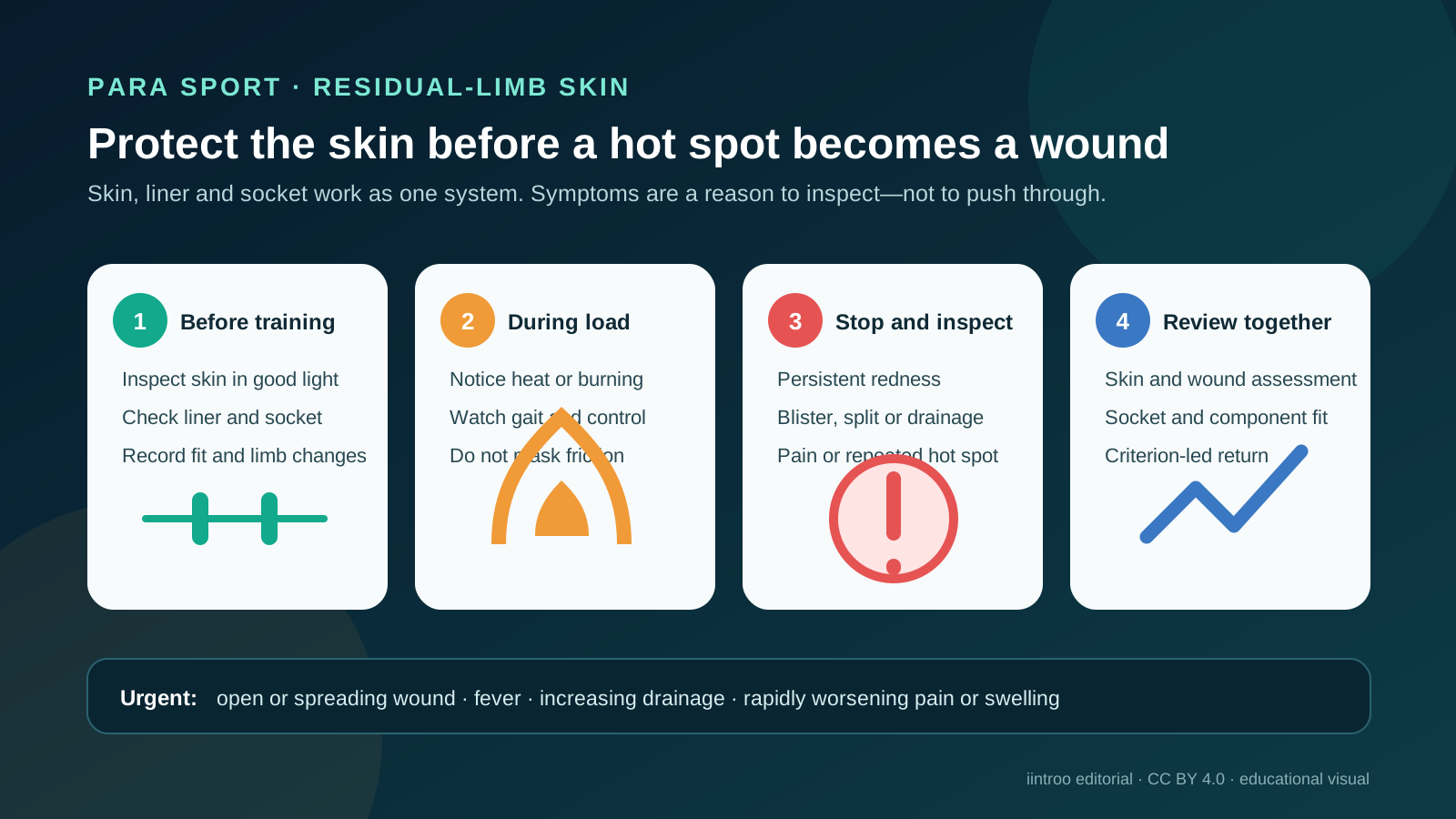
Key points
- Pain, burning, persistent redness, blistering, drainage or a new odour under a prosthetic socket is information to stop and inspect, not a normal cost of training.
- Sweat, heat, friction, pressure, limb-volume change and equipment fit interact; skin care alone cannot correct a mechanical socket problem.
- An open wound, spreading redness, fever, increasing swelling or rapidly worsening pain needs prompt clinical and prosthetic assessment.
A small skin signal can become a participation problem
This guide is for athletes who use a lower-limb prosthesis, plus coaches, prosthetists and health teams. The residual limb sits in a warm, enclosed interface exposed to pressure, shear and sweat. Running, jumping, court movement, travel and repeated donning can magnify those forces. A 2026 review of lower-limb Para-athletes describes frequent dermatological problems, but prevalence estimates come from varied populations and methods. They do not predict what will happen to one athlete or one socket.
A new hot spot, burning sensation, itch, persistent redness, blister, split skin, follicle inflammation or pain deserves an early stop and inspection. Reduced sensation may make visual and tactile checks especially important. Do not wait for blood on a liner or a change in gait. Skin that cannot tolerate the interface can interrupt mobility beyond sport, so training decisions should protect daily function as well as the next result.
Check the whole skin–liner–socket system
Before and after training, inspect the whole contact area in good light, using a mirror or help if needed. Follow the individual cleaning instructions for the skin, liner and socket, allow them to dry, and use only products compatible with both the skin and prosthetic materials. Generic lotions, powders, adhesives or dressings can irritate skin, trap moisture or change the interface. A prosthetist and clinician can advise what is suitable for the person and device.
Fit can change with limb volume, body composition, temperature, travel, fluid shifts, medication and component wear. Extra socks, pads or tighter straps are not universal fixes: they can move pressure elsewhere. Record when symptoms appear, the session surface and duration, weather, liner and sock combination, and any visible mark. That simple pattern gives the prosthetist more useful information than simply reporting that the socket hurt.
Respond to a hot spot before testing it again
Stop the provoking activity, remove the prosthesis safely and inspect. Do not repeatedly redon the socket to see whether pain disappears during a hard session. Persistent redness, recurrent blistering or focal pressure should trigger a fit review. A training modification may protect conditioning while the interface is assessed, but the alternative must not load the wound or create unsafe movement. The appropriate plan depends on the skin, circulation, sensation, cause of limb loss, prosthesis and sport.
Evidence about continuing prosthetic use with an ulcer is limited and does not support one rule for everybody. A systematic review found that selected people may sometimes continue modified use under professional care, while other presentations require temporary discontinuation. That is a clinical and prosthetic decision, not a coach-led experiment. Do not copy another athlete's liner, socket adjustment or wound plan.
Know when the problem leaves the training room
Seek prompt assessment for an open or deep wound, increasing drainage, foul odour, spreading redness, warmth, swelling, fever, rapidly escalating pain or systemic illness. Diabetes, vascular disease, immune suppression, reduced sensation, previous infection or a recently healed wound can lower the threshold for review. Emergency care is appropriate for severe infection signs, rapidly spreading tissue change or an acutely unwell athlete.
Return to full training should address wound healing, fit, comfort, movement quality and the demands of the sport rather than a fixed number of rest days. The 2024 VA/DoD rehabilitation guideline supports interdisciplinary care across the rehabilitation pathway, while Para-sport reviews underline how little prevention research is specific to athletes. Competition classification does not replace health assessment. This article does not diagnose a skin condition, prescribe a dressing, alter a socket or clear participation.