
Para powerlifting shoulder health: connect bench load with transfers, mobility and the athlete's impairment
The competition lift is only part of upper-limb demand. Track pressing, transfers, wheelchair use and personal-care load together, and return through an individual bench set-up.
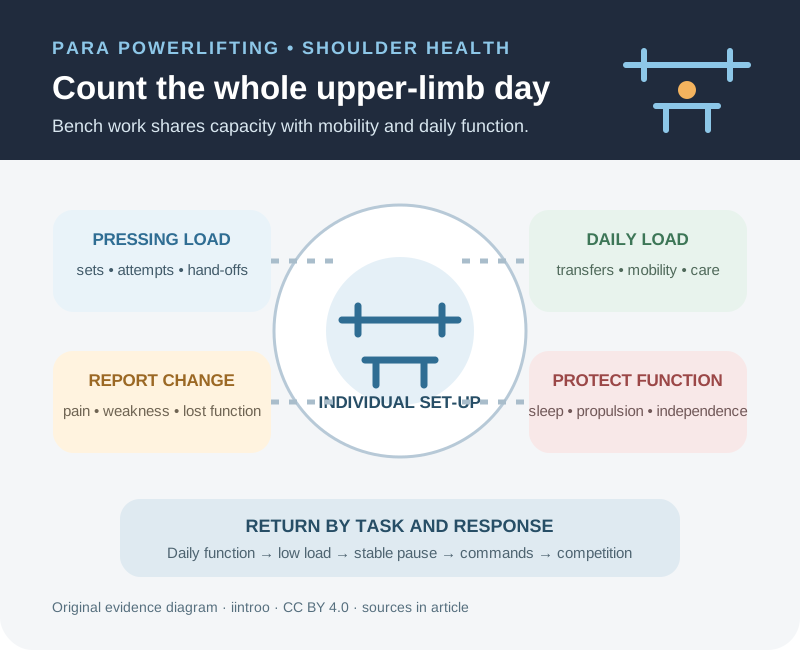
Key points
- Current World Para Powerlifting rules standardise competition equipment and lift requirements, but medical suitability and training technique remain individual clinical and coaching questions.
- Recent prospective Para-sport surveillance found a high injury burden in powerlifting and across shoulder problems, while samples remain small and concentrated in a few centres.
- Shoulder load should include pressing, transfers, wheelchair propulsion, crutch use, personal care and other sport rather than barbell volume alone.
Start with the whole upper-limb day
This guide is for Para powerlifters, coaches, personal assistants and clinical teams. The sport centres on the bench press, but the same shoulders and arms may also support transfers, wheelchair propulsion, crutch use, dressing, work, school or another sport. Two athletes in the same bodyweight category can have very different impairments, movement options, daily loads and consequences if shoulder function falls.
World Para Powerlifting's current rules define eligible competition, approved equipment and technical lift requirements. Those rules create a consistent sporting task; they do not prescribe one shoulder position, grip, strap arrangement or training volume as medically correct for every athlete. Competition legality and individual health decisions must be kept separate.
Use surveillance without pretending it explains mechanism
At London 2012, the shoulder and clavicle region accounted for the largest share of recorded Para powerlifting injuries, but the event study described only 1,411 athlete-days and could not establish mechanisms. A 2025 prospective study followed 102 Brazilian Para athletes across four sports for one year and found powerlifting carried the highest injury burden in that cohort, with shoulder problems important across sports.
The 2025 scoping review located 218 powerlifting and Para powerlifting studies, but only 45 involved Para powerlifting and injury mechanisms remained under-investigated. Much of that literature came from Brazil, and only seven studies across the whole review investigated women exclusively. These gaps argue for individual monitoring and better research, not for universal conclusions from one tournament or centre.
Build the bench set-up around repeatable control
Use approved equipment and the current rules, then rehearse the athlete's set-up consistently in training. Grip, shoulder-blade support, contact with the bench, belts or straps, hand-off and communication should match the athlete's impairment, range, comfort and competition requirements. Equipment changes need trial sessions before a maximal lift; copying another lifter's arch, grip width or restraint arrangement can create a different problem.
A 2026 study compared shoulder range, posture and strength in only 31 Para swimmers, powerlifters and throwers. It found group differences in posture and range but no muscle-function differences, and it did not establish an injury-prevention technique. Screening findings can guide questions and individual assessment; they are not pass-fail predictors of future pain.
Track pressing and independence together
Record hard sets, competition attempts, accessory pressing and pulling, plus transfers, propulsion and unusual daily demands. A painful shoulder may first appear as slower transfers, disrupted sleep, altered hand placement or reduced independence rather than a failed bench set. Training decisions should protect essential daily function as well as the next competition.
Report increasing pain, weakness, numbness, swelling, loss of range, repeated clicking with loss of function or symptoms that change transfers and self-care. Sudden severe pain, deformity, a cold or pale hand, chest pain, breathing difficulty or new neurological symptoms needs prompt medical assessment. Do not test a suspected acute injury under a heavier bar.
Return through the athlete's real bench and daily tasks
Return may rebuild comfortable daily movement, transfers and mobility before low-load pressing, stable set-up, paused repetitions, heavier work, hand-offs and competition commands. The sequence depends on diagnosis, impairment, baseline function, equipment and the demands outside sport. A lifter who needs the arms for mobility may require different load and recovery choices from an athlete whose daily movement uses them less.
Monitor symptoms during lifting and across the next day, including any effect on sleep, propulsion and independence. Persistent pain, falling function or a set-up that cannot be reproduced warrants reassessment. This article does not prescribe a grip, strap, exercise programme, maximum load or return date.