
Para swimming shoulder pain: count life load beyond the pool
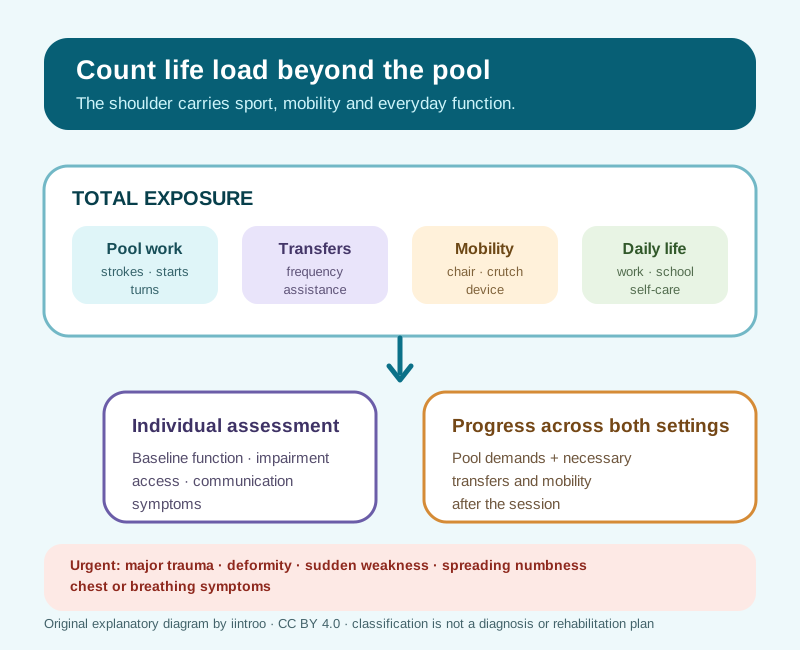
Pool volume is only part of shoulder exposure in Para swimming. Review propulsion, transfers, daily mobility and impairment-specific function before return.
Key points
- Shoulder exposure can combine swimming with transfers, wheelchair or mobility-device use, school, work and self-care, so pool distance alone may miss the total load.
- Para swimmers differ in impairment, function, technique and access needs; classification describes competition grouping and is not a diagnosis or rehabilitation prescription.
- Sudden loss of function, deformity, marked weakness, spreading numbness, chest symptoms, fever or major trauma needs prompt assessment rather than another training set.
Start with the athlete's own movement demands
This guide is for Para swimmers, coaches, families, classifiers and rehabilitation teams. Shoulder pain may arise during a stroke, start, turn, transfer, wheelchair push, crutch use, work or self-care. The same complaint can have different effects for an athlete who relies on the upper limbs for mobility, and temporarily reducing one training set may not reduce the dominant exposure.
IPC surveillance identifies upper-limb injury as an important Para-sport concern and warns that delayed reporting can have clinical consequences. A systematic review also found the shoulder a common injury location among non-ambulant Para athletes, but rated prevalence evidence very low and incidence evidence low. Those pooled estimates are planning signals, not a personal risk calculator or a reason to treat all Para athletes alike.
Separate classification from clinical care
Para swimming classification groups athletes to limit the impact of eligible impairment on competition outcome. It does not name the tissue causing pain, set a safe training volume or prescribe rehabilitation. Two swimmers in the same class can have different health histories, movement strategies, access needs and loads outside the water.
Assessment should start with the swimmer's baseline function and preferred communication. Ask what changed in technique, equipment, transfers, seating, assistance, daily schedule and pool work. A comparison with a non-disabled posture ideal or an assumed symmetrical stroke can be misleading when the athlete's impairment makes that position unavailable or irrelevant.
Map total shoulder exposure before changing the programme
Record stroke and drill volume, intensity, paddles or resistance, starts, turns and strength work alongside transfer count, mobility-device use, school or work demands and travel. Note pain timing, night symptoms, loss of function and the response over the following day. The goal is to find modifiable peaks and preserve independence, not to impose a universal weekly distance.
Aquatics GB emphasises preparation for changing training demands and adapting posture and control goals to the athlete. The general swimming review found no strong evidence for or against most proposed shoulder risk factors, with only limited or conflicting evidence for many variables. A sudden workload change may matter, but one ratio, range-of-motion value or scapular observation cannot clear or diagnose a Para swimmer.
Use accessible, impairment-aware clinical assessment
Persistent pain, falling performance, disrupted sleep, new weakness or reduced transfer or mobility function deserves assessment from a clinician who understands both shoulder care and the athlete's impairment. Standard tests may need adaptation, and measurements should be interpreted against the athlete's baseline. The swimmer should not lose essential daily mobility simply to complete a generic exercise plan.
Seek prompt care after major trauma, deformity, sudden loss of movement or strength, spreading numbness, fever with a hot swollen joint, chest pain or breathing difficulty. New neurological change can also require urgent assessment. An online guide cannot distinguish tendon, joint, nerve, bone, referred or systemic causes.
Build return across pool and daily function
Progression can include pain-tolerable daily function, adapted conditioning, controlled pool work, increased stroke and speed demands, starts or turns and full competition preparation. It should also test how the shoulder tolerates necessary transfers and mobility around the same session. The order and thresholds belong to the athlete and clinical team, not to a classification label.
Agree which symptoms, technique changes or losses of function pause progression. Equipment or assistance changes can help, but they should be checked for safety, accessibility and competition rules. Recurrent symptoms after increasing both swimming and daily load need reassessment rather than pushing through to protect a selection deadline.