
Parkour landings: progress height, skill and environment together
Landing and obstacle contact feature prominently in limited injury studies. Build capacity and technique before difficulty, and inspect the training space each time.
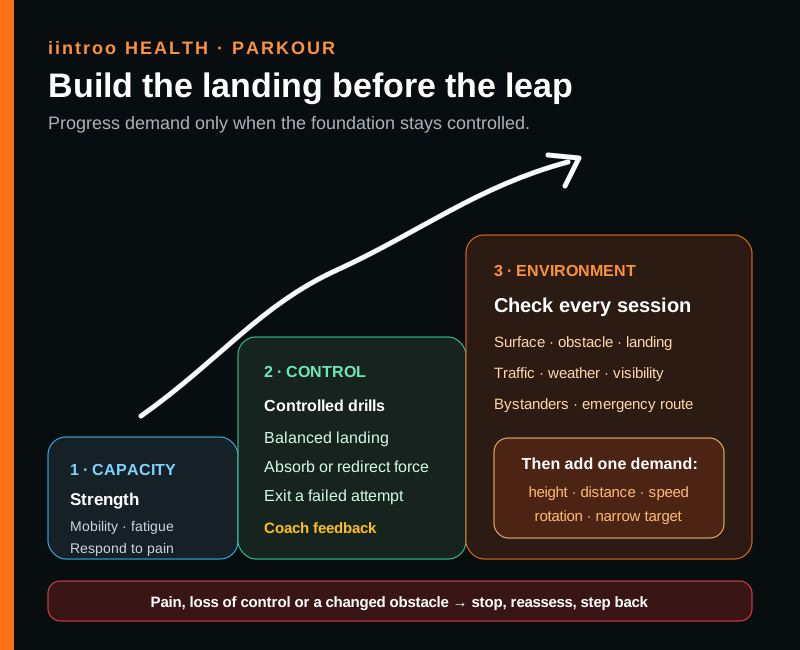
Key points
- Parkour injury evidence is limited, but surveys and emergency-department data repeatedly identify landings, falls and obstacle contact as important circumstances.
- World Gymnastics development material prioritises gradual progression and preparation before difficult skills; competition scoring is not a safety clearance for training.
- Landing-technique and strength evidence from other sports can inform coaching, but it has not proved one parkour-specific programme prevents injuries.
Read the injury evidence without inventing a rate
This guide is for parkour athletes, coaches, families and facility managers. One retrospective survey of 266 participants found that landings were involved in many reported injuries, while a US emergency-department study also identified landing, falls and striking obstacles as common mechanisms. Extremity injuries, including fractures and sprains, appeared often in those datasets.
Neither study gives a current global injury rate. The survey relied on recall and included very few women, while the emergency dataset captured only injuries that reached participating hospitals and had no reliable participation denominator. Use the findings to identify planning questions, not to label parkour uniquely dangerous or safe.
Earn difficulty through capacity and control
World Gymnastics development material emphasises gradual load, physical preparation and progressive technical learning rather than an early rush toward high-difficulty elements. Build landing control at low consequence before adding height, distance, speed, rotation, narrow targets or fatigue. Progress one demand at a time when possible.
Competition rules describe execution and safety deductions, but a scored skill is not the same as readiness for an individual athlete. Coaches should consider age, experience, recent growth, injury history, fatigue and the surface or obstacle before choosing the next progression.
Use broader landing evidence carefully
A systematic review across adult amateur sports found that technique instruction and feedback, and dynamic strengthening programmes, changed selected landing-biomechanics measures. Most included work was not parkour-specific, and a change in a laboratory knee angle is not proof that injuries will fall in real-world parkour.
Even so, the evidence supports coaching rather than repeated unguided impact. Practise quiet, balanced landings, appropriate joint flexion, safe ways to absorb or redirect momentum and exits from failed attempts under qualified supervision. Strength, coordination and exposure should progress together.
Sources: 5
Inspect the environment every session
Check that surfaces are stable, dry enough for the planned movement and free from traffic, broken edges, glass or unexpected gaps. Confirm obstacle strength and landing space rather than assuming a familiar location is unchanged. Keep bystanders away from the movement line and agree on a clear signal before each attempt.
A coached facility can use suitable mats and spotting for the learning task, but equipment does not make uncontrolled height safe. Outdoor practice also needs a plan for weather, visibility, emergency access, local rules and consent to use the space.
Respond to symptoms before repeating the skill
Stop after a head impact, neck or back pain, deformity, major swelling, inability to bear weight, loss of normal movement, numbness, weakness or severe pain. Activate emergency care for loss of consciousness, worsening confusion, breathing difficulty, uncontrolled bleeding or suspected spinal injury. Do not ask for another attempt to clarify whether an injury is serious.
Gradual pain, repeated ankle giving-way or a change in technique also deserves assessment and load review. Return should restore the capacities and decisions needed for the athlete's actual environment. This article does not prescribe an individual programme or provide medical clearance.