
Pneumothorax in athletes: confirm lung recovery before training, flying or diving
A pneumothorax can cause sudden chest pain and breathlessness. Symptom control, radiographic resolution and activity-specific recurrence risk guide return.
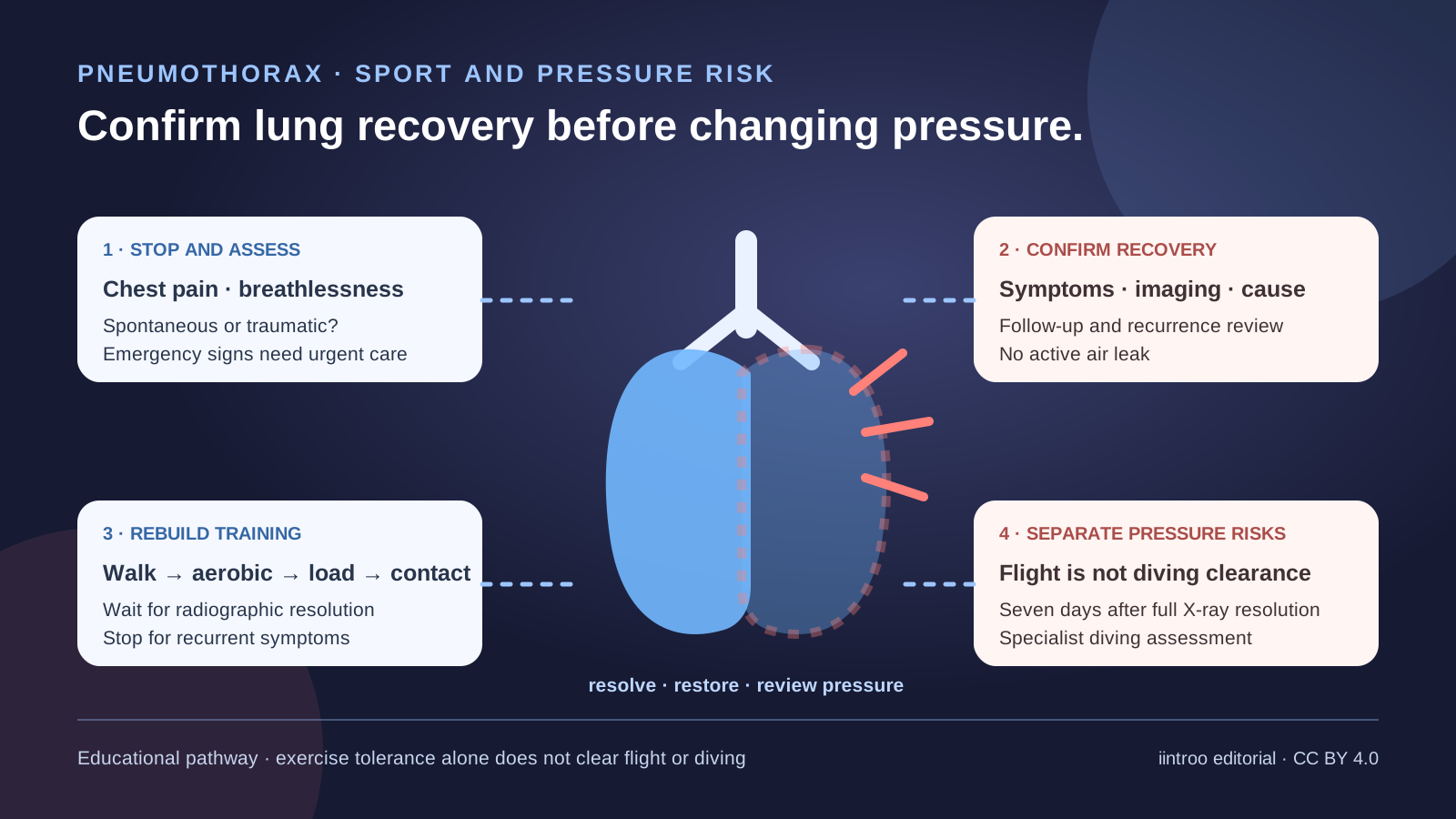
Key points
- A pneumothorax is air in the pleural space and can present with sudden one-sided chest pain or breathlessness; suspected tension pneumothorax is an emergency.
- Intensive or contact training should wait for clinical recovery and complete radiographic resolution, with the cause and recurrence risk reviewed.
- Commercial flight and compressed-gas diving involve separate pressure risks and cannot be cleared by exercise tolerance alone.
Treat sudden chest symptoms as a diagnosis problem
A pneumothorax occurs when air enters the space between the lung and chest wall, allowing part or all of the lung to collapse. Athletes may develop a primary spontaneous episode without known lung disease, a secondary episode linked with underlying disease or a traumatic episode after collision, rib injury, a fall or a procedure. Sudden one-sided chest pain, breathlessness, rapid breathing or unexplained loss of exercise capacity should stop participation and prompt medical assessment. Severe distress, fainting, blue colour, low blood pressure or worsening symptoms requires emergency care.
The diagnosis is usually confirmed with chest imaging and interpreted alongside symptoms and physiological stability. Coaches cannot distinguish pneumothorax from asthma, muscle strain, anxiety, pulmonary embolism or cardiac disease at the sideline. Do not ask an athlete to run, lift or repeatedly breathe deeply to prove the pain is musculoskeletal. Traumatic chest symptoms also require assessment for rib, lung and other injuries, while recurrent or unusual spontaneous cases may prompt investigation for underlying, familial or catamenial causes.
Let stability and patient priorities guide initial care
The 2024 ERS/EACTS/ESTS guideline conditionally supports conservative care for minimally symptomatic, clinically stable primary spontaneous pneumothorax and recommends needle aspiration over chest-tube drainage for initial intervention when treatment is needed. Ambulatory approaches may suit selected people. These decisions belong in respiratory or emergency care because symptoms, physiology, lung disease, local expertise and reliable follow-up matter more than an athlete's desire for a faster return.
Recurrence prevention can be discussed early when another episode would carry exceptional consequences, including remote expeditions, aviation or diving, but surgery trades lower recurrence risk against pain, complications and recovery time. Persistent air leak, failure of lung re-expansion, bilateral or recurrent episodes and high-risk occupations trigger specialist considerations. Smoking increases recurrence risk and cessation should be supported. No supplement, breathing drill or fitness level seals an active air leak.
Separate training, flight and diving decisions
Athlete-specific evidence is scarce. The BTS athletic statement allows low-intensity aerobic activity as symptoms permit but advises delaying intensive exercise, contact sport and weightlifting until complete radiographic resolution. This is not a fixed return date: chest pain, breathlessness, treatment, lung function, underlying disease and the consequences of recurrence all matter. Early training should remain close to care, avoid collision and straining, and stop for recurrent symptoms.
Commercial flight is a separate pressure-exposure decision. Current BTS and European guidance advises waiting at least seven days after full radiographic resolution before flying, while new case literature does not justify self-clearing an earlier trip. Compressed-gas diving carries a much greater barotrauma consequence; international respiratory guidance discourages it after spontaneous pneumothorax unless a highly secure definitive prevention strategy and specialist diving assessment have been completed. Snorkelling at the surface and breath-hold diving still need individualized advice when recovery is recent or the cause is uncertain, too.
Rebuild capacity after resolution and keep an emergency plan
Once symptoms have resolved and imaging confirms lung re-expansion, return can progress from walking and easy aerobic work to longer duration, moderate intensity, resistance, speed and controlled sport practice. Contact, heavy lifting, remote routes, altitude and competition return later because rescue access and recurrence consequences increase. The athlete should regain comfortable breathing, normal daily function and the capacity to complete each step without chest pain, unusual breathlessness or next-day deterioration.
Teams should know the athlete's agreed warning signs and emergency route without receiving unnecessary private details. A recurrent sharp chest pain or breathlessness means stop and seek care rather than repeat a familiar inhaler or assume deconditioning. This article cannot confirm resolution, select drainage or surgery, calculate recurrence risk, approve a flight or certify diving fitness. It supports evidence-led specialist follow-up and a staged sport return while acknowledging that athlete outcome data are mainly guidelines, case series and expert opinion.