
Polymyalgia rheumatica in masters sport: train around disease and treatment
New shoulder and hip stiffness in an older athlete needs assessment. With polymyalgia rheumatica, activity supports function but does not replace treatment.
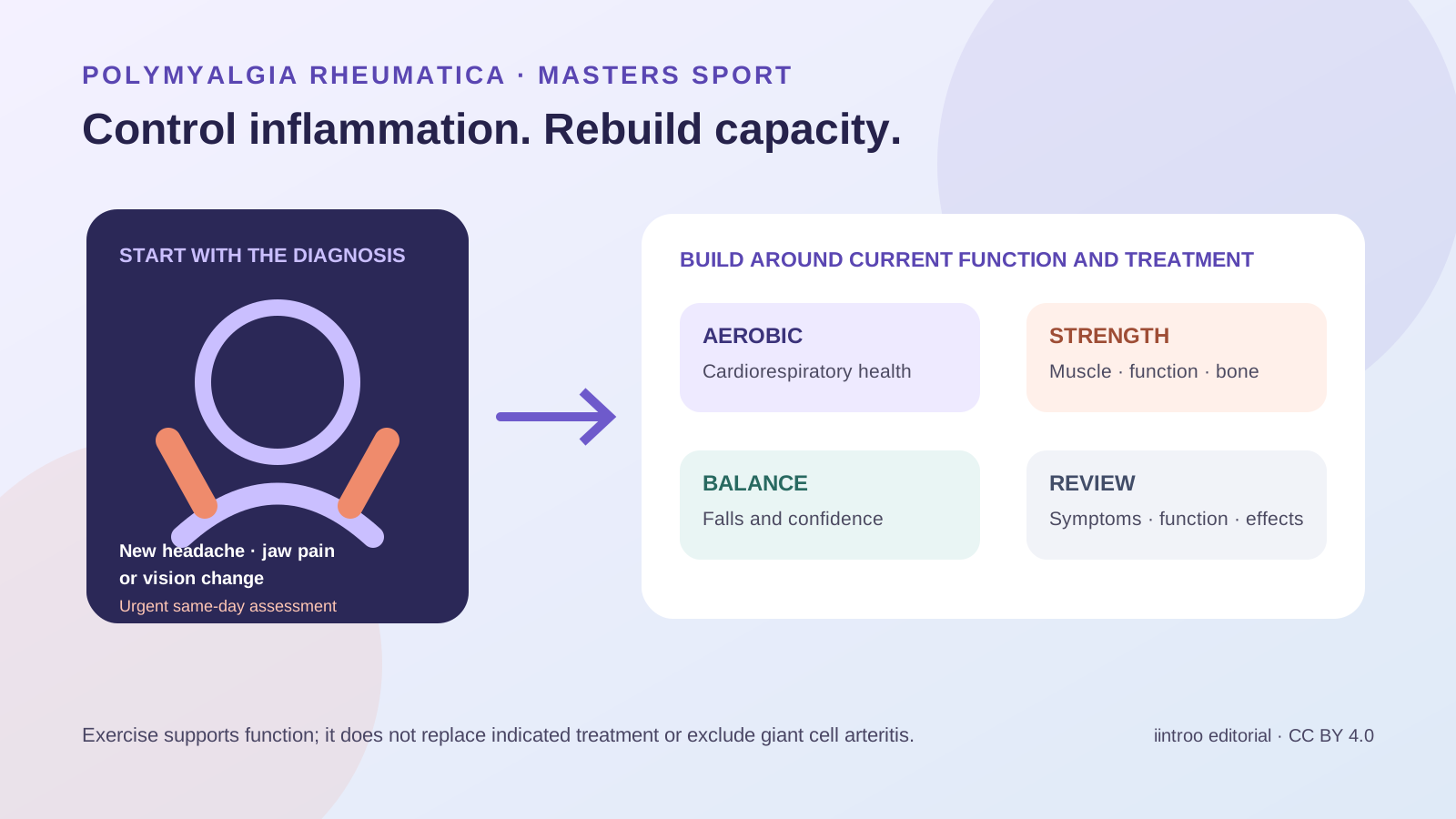
Key points
- Polymyalgia rheumatica usually affects adults over 50 and causes bilateral shoulder or hip-girdle pain and stiffness, but tests and treatment response are not perfectly specific.
- Exercise can support strength, balance, aerobic health and function, yet disease-specific training evidence remains limited and medication is often required.
- New headache, scalp tenderness, jaw pain with chewing or visual symptoms can indicate giant cell arteritis and needs urgent same-day assessment.
Do not dismiss new stiffness as ordinary ageing or training load
Polymyalgia rheumatica is an inflammatory condition that almost exclusively affects people older than 50 and commonly causes bilateral shoulder and hip-girdle pain, pronounced morning stiffness and difficulty with tasks such as dressing or rising. A masters athlete may interpret the change as delayed-onset muscle soreness, rotator-cuff disease or accumulated training. PMR has no single confirmatory test. Clinical pattern, inflammatory markers, exclusion of mimics and response over time all matter, and normal athletic identity does not make the diagnosis impossible.
Weakness should be distinguished from movement limited by pain. Marked true weakness, fever, weight loss, swollen joints, neurological signs or an atypical pattern can point to another condition. Persistent new symptoms deserve clinical assessment rather than repeated hard sessions or self-treatment with leftover steroids. Glucocorticoids can rapidly improve PMR symptoms, but response alone is not diagnostic and dosing or tapering should not be improvised around competition. Relapse and treatment adverse effects need planned follow-up.
Recognize giant cell arteritis as an urgent parallel risk
PMR can coexist with giant cell arteritis, an inflammation of large and medium arteries that can threaten vision. New headache, scalp tenderness, jaw or tongue pain when chewing, visual blurring, double vision or loss, and unexplained neurological symptoms need urgent same-day medical assessment. The athlete should not wait for the next training review or use exercise tolerance as reassurance. Sudden visual loss or stroke-like symptoms is an emergency.
Large-vessel inflammation can also present with arm or leg claudication, unequal pulses or systemic symptoms, but these signs are not suitable for self-diagnosis. The 2026 British guideline emphasizes prompt recognition and coordinated treatment. A training diary may help describe onset, morning stiffness and functional change, yet it cannot rule out vasculitis. Coaches should know the red flags while avoiding access to private medical detail that is unnecessary for the emergency response.
Use exercise to preserve function, not to replace disease control
The 2026 British Society for Rheumatology guideline supports considering aerobic, resistance, balance and flexibility exercise as part of holistic management. It also states that PMR-specific exercise trials are lacking, so benefits are inferred largely from older-adult and other rheumatic-disease evidence. Activity may help cardiorespiratory health, strength, balance, mood and daily function, but it is not an alternative to indicated anti-inflammatory treatment. No programme has been shown to prevent relapse or allow faster medication tapering.
A practical progression starts from current function and disease control. Low-impact aerobic activity, controlled resistance for large muscle groups, balance practice and comfortable range-of-motion work can be advanced one variable at a time. Pain, stiffness, fatigue and next-day function can guide discussion, but no single symptom score sets clearance. New or worsening symptoms, repeated loss of function or an apparent flare should prompt review rather than automatic deloading or extra medication. A physiotherapist can adapt exercise for coexisting joint or tendon problems.
Plan for steroid effects, bone health and a criteria-led return
Glucocorticoids can affect bone, muscle, glucose, blood pressure, sleep, mood, infection risk and body composition. The first year after PMR diagnosis carries particular fracture concern, while risk can remain elevated. Bone-risk assessment, nutrition and preventive treatment belong with the clinical team. Progressive weight-bearing and resistance exercise may support bone and muscle, but loading should reflect fracture risk, balance, current strength and any glucocorticoid-related myopathy. Supplements should not be copied without reviewing diet, kidney function and prescribed care.
There is no universal PMR return-to-sport timeline. A masters athlete can rebuild duration, intensity and technical demands after disease control and treatment effects are understood, with extra caution for cycling falls, heavy lifting and remote endurance events. This page cannot diagnose PMR, select or taper medication, exclude giant cell arteritis or prescribe an individual programme. The defensible pathway is prompt diagnosis, urgent action on vascular red flags, monitored disease treatment, protection of bone and muscle, and gradual participation based on function and shared review.