
Leakage during heavy lifts: what powerlifting studies can—and cannot—tell you
Urinary leakage in powerlifting varies by lift, load and context. Learn why surveys cannot prescribe a belt or stance change, and when to seek tailored care.
Key points
- Lifetime and three-month leakage estimates are not interchangeable.
- Associations with belts or stance do not prove that changing either will treat symptoms.
- Assessment should consider symptoms, contraction and relaxation, and the athlete's goals.
A lifting-specific question, not a reason for embarrassment
This guide is for women who notice urinary leakage during squats, bench presses or deadlifts, and the coaches supporting them. Symptoms may differ between a heavy single, a long set and everyday life. Leakage should not be celebrated as proof of effort or treated as a reason to exclude an athlete automatically. It is a health concern worth discussing privately.
Stress urinary incontinence refers to leakage with effort or exertion; urgency-related leakage is a different pattern, and both can occur together. A clinician should clarify the pattern rather than assuming that any wetness during a lift means the pelvic floor is simply weak. This article explains evidence, not a personal exercise prescription.
Why two prevalence numbers do not show a worsening trend
A 2021 online survey of 480 competitive women powerlifters found that 43.9% reported leakage in the preceding three months. Deadlift was the most likely provoking lift and bench press the least likely. Respondents also described load, position and fatigue as relevant contexts.
A 2026 study analysed questionnaires from 1,072 women and reported lifetime leakage during powerlifting in 67.3%. That is not directly comparable with a three-month estimate from a different sample. Social-media recruitment, self-report and selection effects limit both studies. Neither percentage predicts the experience of a particular woman starting strength training.
A belt association is not a belt prescription
The larger survey found associations involving belt use, deadlift stance, lifting experience and one-repetition maximum, alongside other personal factors. Retrospective recollection of life before and after taking up powerlifting is not prospective evidence that lifting caused symptoms. Its reported odds ratio should not be presented as a proven individual risk multiplier.
These associations cannot tell a lifter to discard a belt, change stance or adopt one breathing method as treatment. Equipment choices, training exposure and symptoms can influence one another. A 2025 review included five studies and 1,809 participants, but its search ended in January 2024. Its observational evidence does not settle the causal question or validate a universal safe load.
Stronger muscles and fewer symptoms are different outcomes
A 2024 feasibility study followed two powerlifters and one weightlifter through 12 weeks of physiotherapist-supported pelvic-floor training. Measured strength and endurance improved in all three, but symptom outcomes differed: one improved, one was unchanged and one worsened. With only three participants and no control group, this cannot establish treatment effectiveness or ineffectiveness.
The distinction matters when judging progress. A better strength measurement is not automatically a comfortable training session, fewer leaks or restored confidence. NICE recommends supervised, individualised care that considers both contraction and relaxation, discomfort and personal goals. General clinical guidance is not a tested powerlifting technique protocol, and more unsupervised contractions are not the answer for every athlete.
Bring useful context to the appointment
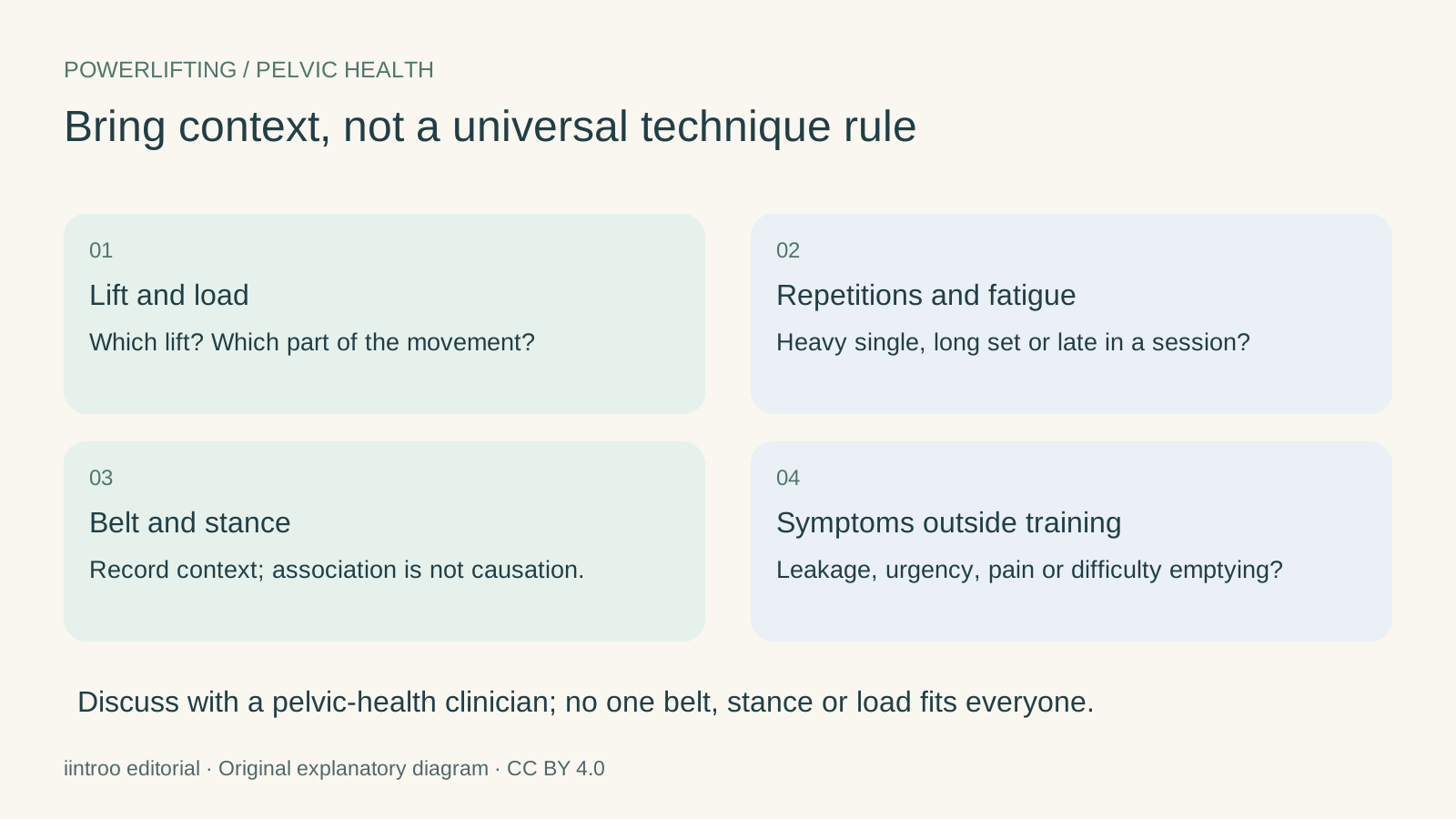
As a practical synthesis of the research, record which lift provokes symptoms, approximate load and repetitions, fatigue, belt or stance context, and whether leakage also occurs outside training or with urgency. This is information for shared decisions, not a diagnostic checklist. A pelvic-health clinician and coach can discuss tolerable training adjustments and review the response without promising a fixed recovery date.
Persistent bladder or urethral pain, difficulty emptying, associated bowel leakage, blood in the urine or recurrent unexplained urinary infections require medical assessment rather than attribution to lifting. The urgency depends on the symptoms and circumstances. Protect the athlete's privacy: useful support does not require announcing symptoms to a team, filming a leak or publishing training-health details.