
Urinary leakage in women athletes: common does not mean untreatable
Understand what the athlete evidence can and cannot show, how teams can open a private conversation, and why individual pelvic-floor assessment matters more than a sport label.
Key points
- Urinary leakage is reported across sports, but prevalence estimates vary substantially between studies.
- A broad label such as high-impact sport does not explain an individual athlete's symptoms.
- Pelvic-floor muscle training can help some women, but technique and treatment should be individually assessed and supervised.
Make room for a symptom athletes may hide
This guide is for adult women athletes, coaches and support teams. Leakage during running, jumping, lifting or another training task is a health symptom, not evidence that an athlete is weak, unfit or unsuited to sport. It can affect participation and confidence, yet embarrassment and the belief that it is simply normal can delay a conversation.
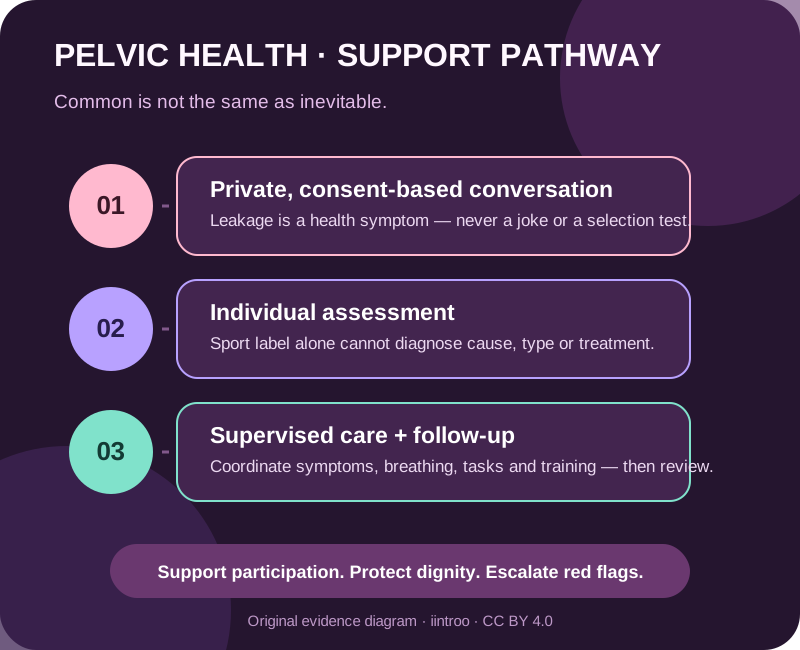
Use private, consent-based screening and a clear referral route. A coach can make help accessible but should not ask for intimate details in front of teammates or perform a clinical assessment. The PFD-SENTINEL consensus was designed for sports clinicians to support referral; its authors state that it is not a diagnostic or prognostic tool and that further validation is needed.
The prevalence headline needs context
A 2026 umbrella review assessed 14 reviews and re-analysed 32 primary studies covering 120 cohorts and 4,649 women athletes aged 18–45. It found substantial variation between cohorts. Broad sport discipline, impact category and sport modality did not significantly explain that variation, so a label such as 'high impact' is a poor individual risk calculator.
Weekly training volume showed an association with leakage odds in meta-regression, but the underlying evidence was largely cross-sectional and measures of intensity and pelvic-floor exposure were limited. This does not prove that an extra hour of training causes leakage or establish a safe training threshold. Pregnancy history, pelvic surgery, constipation, respiratory symptoms, hormones and other factors may also be relevant to an individual assessment.
Sources: 1
Assessment comes before a generic exercise sheet
A pelvic-health physiotherapist or appropriately qualified clinician can clarify the symptom pattern, screen for other causes and assess how the pelvic floor coordinates with breathing and sport tasks. Urgency, pain, bowel symptoms, a feeling of pelvic heaviness, recurrent urinary infection symptoms or leakage outside sport deserve appropriate clinical evaluation rather than being folded into one self-diagnosis.
Seek prompt medical care for visible blood in the urine, inability to pass urine, new neurological symptoms, severe pelvic pain, fever or rapidly worsening symptoms. This article cannot determine whether leakage is stress, urgency or mixed incontinence, and an online checklist cannot rule out another condition.
Treatment is more than squeezing harder
A 2024 systematic review found only six eligible intervention studies in young nulliparous athletes. Personalised pelvic-floor muscle training, particularly when supervised, was associated with improved leakage and muscle outcomes, but small samples and varied protocols limit certainty. NICE recommends supervised pelvic-floor muscle training as first-line care for stress or mixed urinary incontinence in women generally; that recommendation is not an athlete-specific performance programme.
Some athletes may need to learn relaxation, coordination or timing rather than simply adding more contractions. Care can also address bladder habits, constipation, cough, training tasks and equipment. Do not promise that one cue or a fixed number of repetitions will work for everyone, and do not turn symptom disclosure into an automatic ban from sport.
Keep participation and dignity in the plan
When symptoms occur, the athlete and clinician may trial changes to impact dose, lifting strategy, recovery or access to toilets while treatment progresses. These are individual adjustments, not proof that running, jumping or strength training is inherently harmful. Track symptoms and participation over time without publishing personal health information to the team.
Clubs can name a confidential contact, list qualified referral options and include pelvic health in routine athlete education. The useful message is simple: leakage is worth discussing and support exists. This guide offers education, not a diagnosis, pelvic-floor examination or personal treatment plan.