
Prader–Willi syndrome and adaptive sport: build strength with predictable support
Prader–Willi syndrome can affect muscle, appetite, sleep and learning. Predictable sessions can support activity without stigma or unrealistic weight promises.
Key points
- Regular activity can support fitness, strength, function and participation, but the intervention evidence is small and does not establish one best programme.
- Hypotonia, low muscle mass, sleep disorders, scoliosis, learning needs, temperature concerns and a tightly managed food environment can affect session design.
- Collapse, severe breathing difficulty, confusion, marked overheating, repeated vomiting, injury with unusual pain response or acute behavioural change needs prompt assessment.
Make participation predictable, respectful and individual
This guide is for people with Prader–Willi syndrome, families, coaches, teachers and clinical teams. PWS is a genetic neurodevelopmental condition associated with hypotonia and feeding difficulty in infancy, later hyperphagia, altered body composition, lower muscle mass, developmental or learning differences and variable endocrine, sleep, orthopaedic and behavioural needs. People differ substantially in communication, mobility, growth-hormone treatment, scoliosis, pain expression and independence. Body weight is only one part of health and should not be used to predict willingness, ability or the value of sport.
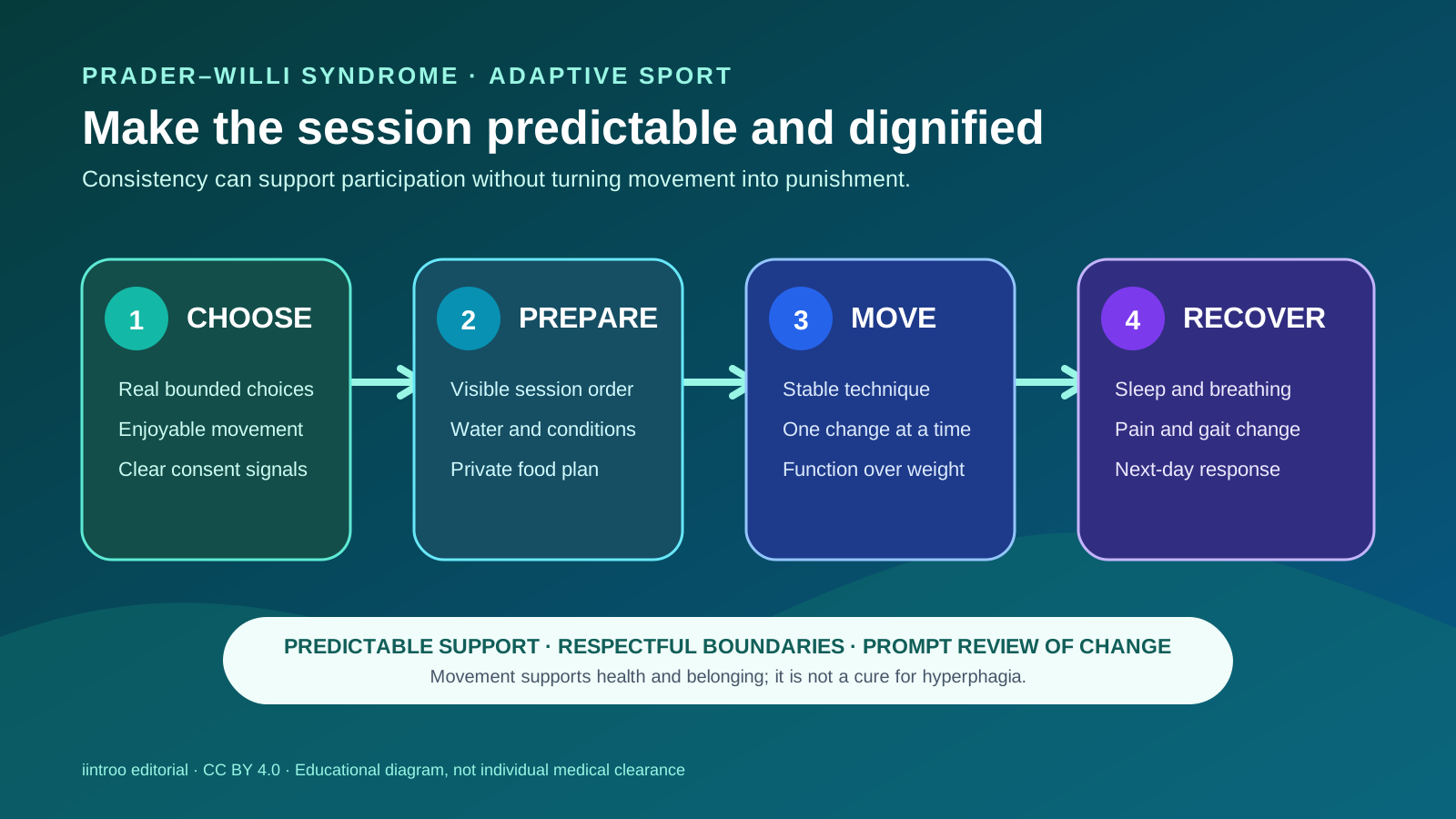
A predictable session can reduce uncertainty: show the order of activities, offer bounded choices, explain transitions and keep start and finish cues consistent. Ask how the person signals pain, fatigue, thirst, distress and consent. Confirm current advice about sleep apnoea, scoliosis, hip or foot problems, diabetes, adrenal concerns, temperature regulation and food security where relevant. Coaches should not change diet, growth hormone or other medicines, diagnose behaviour, use exercise as punishment for eating, or promise that activity alone will prevent obesity.
Treat a limited evidence base honestly
The 2024 paediatric and transition guideline calls physical activity essential for health while acknowledging that PWS-specific evidence is limited. Systematic reviews describe small, diverse studies involving aerobic, resistance, balance, walking and home programmes. Some report gains in strength, walking capacity, body composition or activity, but designs, ages, treatments and outcomes vary. Many studies are non-randomized or short. This means an enjoyable, sustained programme is reasonable, not that one sport, device, step target or intensity is proven superior.
A 2026 review of activity interventions in children again found mostly small and non-randomized evidence. A phase I randomized trial suggested that a supervised progressive strength programme was feasible in adults, but feasibility is not proof of long-term safety or broad effectiveness. Studies combining growth hormone and physical training cannot separate every treatment effect and do not justify changing endocrine care. Exercise may support function and wellbeing; it should not be sold as a cure for hyperphagia, a guarantee of weight loss or a substitute for coordinated nutritional, endocrine and sleep care.
Plan the environment as carefully as the exercises
Select low-barrier activities the person enjoys and can repeat: supported walking, cycling, swimming, dance, games, balance work or resistance with stable technique. Progress one variable at a time and record participation, function, recovery and enjoyment rather than weight alone. Hypotonia and lower lean mass can make movements more demanding, while scoliosis, reduced bone density or altered gait may change impact and equipment choices. Pain response can be atypical, so visible swelling, limping, guarding or loss of function deserves attention even when pain is not strongly reported.
Use water breaks, shade, ventilation, clothing and session timing matched to conditions and the individual's plan. Temperature regulation has been reported as a concern in PWS, but a small controlled study found no resting thermoregulation difference; avoid both dismissal and alarm. The food environment should be agreed with the person and family or support team before an event, kept predictable and handled privately. Do not use food as a public reward, invite unplanned sharing, moralize appetite or single the athlete out. Dignity and safety can coexist with clear boundaries.
Recognize change and return without a weight test
Stop activity and seek urgent assessment for collapse, severe breathing difficulty, blue or grey colour, confusion, seizure, marked overheating, repeated vomiting, severe abdominal distension or a significant injury. New daytime sleepiness, loud snoring, witnessed breathing pauses, declining exercise tolerance, repeated falls, swelling or a persistent change in gait needs clinical review. Because pain and illness can be under-expressed, a sudden behavioural or functional change may be an important signal. Follow the individual's emergency information rather than improvising fluids, food or medication.
After illness, injury, surgery, sleep-treatment change or material loss of function, return through familiar low-complexity movement and then longer or more demanding tasks as recovery is demonstrated. There is no universal body-mass index, step count, temperature, heart-rate zone or behaviour score that clears sport. This article cannot diagnose PWS, prescribe exercise, food or fluids, interpret endocrine or sleep tests, change treatment, or clear participation. It offers a general framework for sustained movement in a predictable, non-stigmatizing environment.