
Pregnant athletes: keep moving, but rewrite the plan as the sport changes
Many athletes can remain active during an uncomplicated pregnancy. The safe plan still depends on clinical assessment, sport-specific impact and fall risk, symptoms and repeated review.
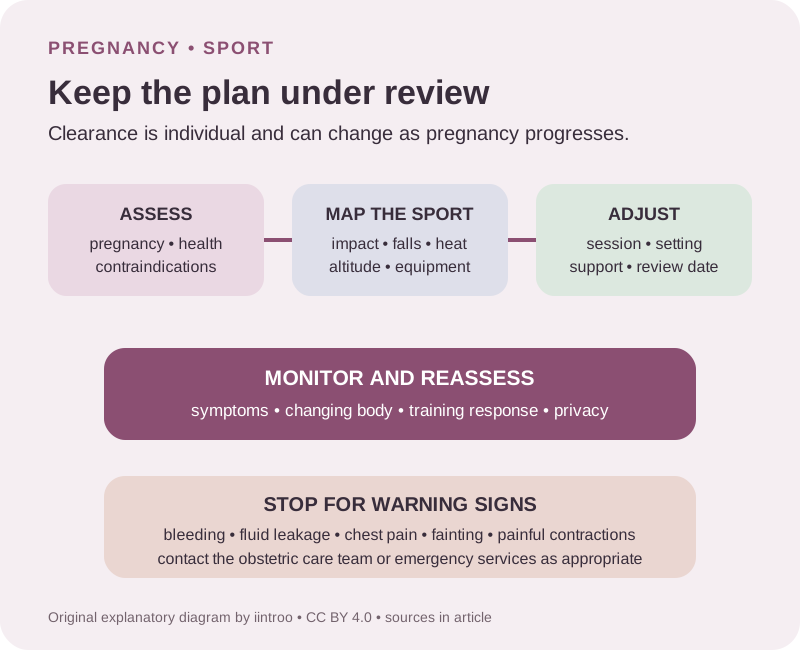
Key points
- Physical activity is recommended in uncomplicated pregnancy, but medical or obstetric contraindications change the plan.
- Competitive-athlete evidence is limited and concentrated in endurance sports; there is no universal safe upper training load.
- Bleeding, fluid leakage, chest pain, fainting or regular painful contractions are reasons to stop and contact the obstetric care team.
Start with the pregnancy and the athlete, not a generic trimester rule
This guide is for pregnant athletes, coaches and multidisciplinary teams. WHO and ACOG recommend regular activity during pregnancy when there is no contraindication, and athletes who were already active may often continue with appropriate modification. That population-level message does not clear a particular athlete, sport or training week.
Review the plan early with the obstetric care professional and, where available, a clinician familiar with sport. Medical and obstetric complications can make exercise inappropriate or require specific limits. Reassess as pregnancy, symptoms, equipment fit, competition conditions and health change rather than treating an approval at the first appointment as permanent clearance.
Map the sport's hazards before preserving its workload
Separate fitness from exposure. A collision sport, a discipline with abdominal impact, an activity with a high fall risk, scuba diving, substantial heat stress or unaccustomed altitude can present concerns that are not captured by heart rate or training duration. ACOG advises avoiding contact sports and activities with a substantial risk of falling or abdominal trauma during pregnancy.
The athlete and clinical team can examine whether equipment, surface, body position, supervision, travel, hydration and access to urgent care change the decision. Switching from road cycling to a stationary bike is one example in public guidance, not a rule that fits every athlete. Do not copy another athlete's competition schedule or social-media training plan.
Use effort and symptoms instead of chasing a universal ceiling
General guidance supports moderate-intensity aerobic activity and muscle strengthening in uncomplicated pregnancy. Athletes accustomed to vigorous training may be able to continue some vigorous work with close clinical oversight. The evidence does not establish one safe maximum heart rate, mileage, lifting load or race distance for every pregnant athlete.
A 2026 scoping review mapped 101 publications but found only 46 original research studies suitable for detailed extraction. The evidence was limited, often dated and largely focused on endurance athletes and Western settings. The absence of a consistent harm signal is not proof that every high training load is safe, especially in sports and populations that were scarcely studied.
Stop and contact the obstetric care team for warning signs
Stop exercise and contact the obstetric care professional for vaginal bleeding, fluid leakage, regular painful contractions, dizziness or fainting, chest pain, shortness of breath before exertion, headache, muscle weakness, or calf pain or swelling. The care team may give additional individual warning signs. Severe symptoms or immediate danger require local emergency services.
Pain, pelvic-floor symptoms, unusual fatigue or a change in fetal movement also deserves discussion according to the care plan. A wearable device cannot rule out a pregnancy complication, and a normal heart-rate reading cannot override symptoms. Coaches should know whom to contact without asking the athlete to disclose private clinical details to the whole team.
Document modifications and protect the athlete's choices
Agree which sessions are permitted, what has been modified, who can make a stop decision and when the plan will be reviewed. Keep medical information confidential and separate from selection or contract discussions. The athlete should be able to report symptoms or step away from competition without pressure to prove commitment.
Return after birth is a separate individual process shaped by delivery, recovery, symptoms, feeding, sleep, pelvic-floor and musculoskeletal health, and the sport's demands. Pregnancy activity does not supply a postpartum clearance date. Qualified assessment and staged progression are more appropriate than a universal six-week rule or a deadline set by the competition calendar.