
Rhythmic gymnastics back pain: report it before skills change
Low-back pain is common in rhythmic gymnastics, but no single screen identifies its cause. Track skill load, protect function and use an individual return plan.
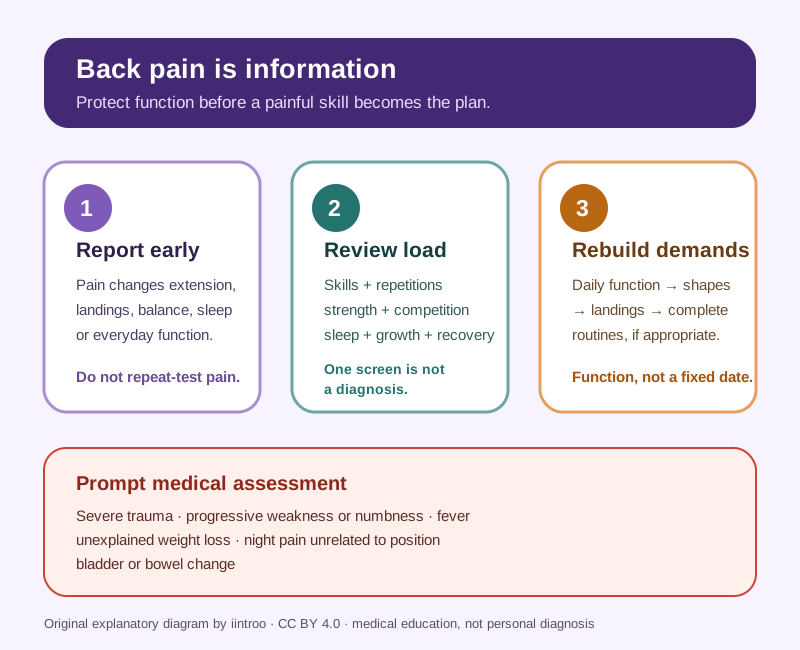
Key points
- Back pain that alters extension, landing, balance, sleep or everyday function deserves early reporting instead of repeated training through it.
- Research supports monitoring symptoms and total training load, but no single posture, flexibility score or screening test can identify every cause or predict every injury.
- Severe trauma, progressive weakness or numbness, fever, night pain, unexplained weight loss, or bladder or bowel change requires prompt medical assessment.
Treat pain as information, not a flexibility test
This guide is for rhythmic gymnasts, parents, coaches and health teams. Repeated trunk extension, rotation, balances, leaps, landings and apparatus work can produce substantial training exposure, but the location of pain does not identify one structure. Muscle, bone, joint and nerve-related problems can overlap, and growth or a recent load change can alter the clinical picture.
A 2026 systematic review found low-back pain common across competitive gymnastics and reported higher prevalence in rhythmic disciplines, while also finding substantial differences in definitions, samples and methods. Clinic and cohort studies likewise describe back and overuse problems, but they cannot tell an individual gymnast why pain started. Do not diagnose a stress injury or dismiss pain as ordinary tightness from a prevalence statistic.
Record the whole load around the painful skill
Track when symptoms begin, which directions or skills provoke them, whether landings or balances change, and whether pain persists after training. Add hours, repetitions, new choreography, surface, strength work, competitions, travel, sleep, recovery and menstrual or other health changes when relevant. A useful record shows patterns without turning one number into a clearance rule.
In the 2025 cluster trial, an eight-month targeted exercise programme did not significantly reduce overuse problems at the knee, lower back and hip or groin compared with usual training. That does not show exercise is useless; it shows that a small exercise package alone is not a guarantee. Skill progression, training planning, recovery, coaching and access to assessment remain part of prevention.
Screening can organise questions, not predict every injury
Questionnaires and physical tests can help a team notice changing health or function. The review of validated tools found a fragmented evidence base, and results from a flexibility, balance, strength or posture test should be interpreted in context. An unusually flexible gymnast is not automatically injured, and a gymnast who passes a screen is not automatically safe to ignore new pain.
Use repeated measures only when the purpose is clear, the test is suitable for the athlete and the result can change a support decision. Avoid using body shape, pain tolerance or extreme range as selection shortcuts. Young gymnasts need confidential routes to report symptoms without losing status or being pressured to demonstrate the painful movement repeatedly.
Escalate symptoms that need clinical assessment
Arrange qualified assessment when pain persists, worsens, recurs with extension or impact, changes technique, limits daily activity or sleep, or follows a significant fall. A clinician may consider the history, growth, neurological function, hip and trunk movement, loading tolerance and whether imaging would change management. Routine imaging is not a substitute for examination, and normal early imaging does not authorise unlimited training.
Severe pain after trauma, inability to walk normally, progressive weakness or numbness, pain with fever, unexplained weight loss, night pain that is not position-dependent, or bladder or bowel change requires prompt medical care. Stop training and follow local emergency advice for rapidly developing neurological symptoms. This page cannot distinguish muscle soreness from a stress injury or another diagnosis.
Return the gymnast to demands, not to a deadline
Return can progress from comfortable daily activity and conditioning to controlled shapes, apparatus work, landings, high-amplitude extension and complete routines, but the sequence must match the diagnosis and the athlete. Monitor symptoms during and after each step, movement quality, confidence and recovery rather than using a universal pain score or number of rest days.
The coach, athlete and clinician should agree which skills are temporarily modified and what would pause progression. Competition rules and medical processes still apply, but administrative eligibility is not proof of recovery. Recurring pain or altered technique should trigger reassessment instead of extra stretching, pain masking or a forced test routine.