
Gymnastics and pelvic-floor symptoms: leakage is common, not something to hide
Urinary or bowel leakage, pelvic pressure and pain can affect athletes in high-impact sport. Normalising the conversation should lead to confidential screening and qualified care—not acceptance or self-prescribed exercises.
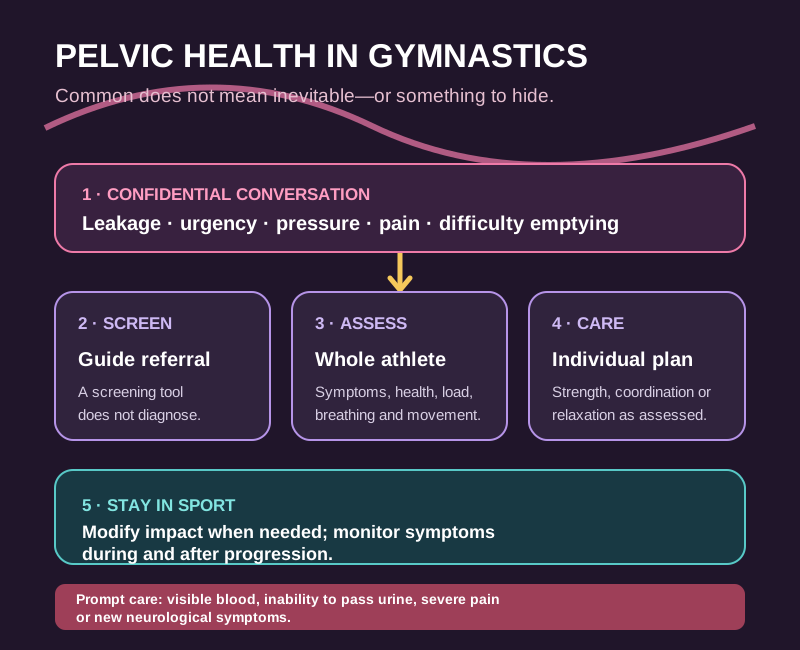
Key points
- Leakage during jumping or landing is a health symptom, not evidence that an athlete is weak or unsuitable for sport.
- Pelvic-floor symptoms include more than urinary leakage and require confidential, individual assessment.
- Training may help some athletes, but the evidence base is small and an online exercise list cannot identify the correct programme.
Create a route to care before asking the question
This guide is for female artistic gymnasts, parents, coaches and health teams. Symptoms can include urinary or bowel leakage, urgency, difficulty emptying, pelvic pressure, heaviness or pain. They can affect training, confidence and daily life. A 2021 survey of 319 competitive gymnasts and cheerleaders reported high symptom prevalence, but a cross-sectional questionnaire cannot diagnose individuals or estimate prevalence in every discipline, age group and country.
Tell athletes in advance who they can speak with confidentially and how privacy will be protected. The conversation should never be held in front of teammates or used to shame body size, technique, menstruation or sexual history. For minors, safeguarding and consent procedures must follow local policy while still respecting the athlete's dignity.
Do not normalise leakage as the price of high-impact sport
Repeated tumbling, vaulting and landing can expose the pelvic floor to rapid pressure changes, but symptoms are not proof that the sport alone caused a disorder. Training history, breathing and bracing, bowel habits, pregnancy, hormonal factors, previous injury and other health conditions may contribute. A symptom-free teammate is not a valid comparison.
Pads, limiting fluid or avoiding particular skills may hide a problem without addressing it. Deliberate dehydration can create additional health risk. Coaches can reduce stigma by treating pelvic health like any other athlete-health topic and referring rather than offering a diagnosis.
Screening identifies who needs assessment; it does not diagnose
The PFD-SENTINEL tool was developed through an international Delphi process for sports-medicine clinicians. It combines symptoms with clinical and sport-related factors to guide referral. It is an expert-consensus screening aid, not a self-test, and the authors state that further validation is needed.
A qualified pelvic-health physiotherapist, sports-medicine clinician, gynaecologist, urogynaecologist or urologist may be involved depending on symptoms and local services. Assessment can consider pelvic-floor function, breathing, trunk and hip strategy, training load and medical history. Internal examination is not automatically required and must never occur without appropriate consent and professional standards.
Treatment is more individual than 'just do Kegels'
Systematic reviews suggest supervised pelvic-floor muscle training can reduce urinary leakage and improve measured muscle function in some female athletes. The evidence base remains small: the 2024 review included six studies, while the 2023 meta-analysis could pool six intervention studies for selected outcomes. Participants, programmes and measurements varied.
Some athletes may need strength work; others may need coordination, relaxation, breathing or changes to impact exposure. Repeated maximal contractions copied from social media can be unhelpful when the problem is not weakness. Treatment should respond to an individual assessment and be reviewed against symptoms and sporting demands.
Keep the athlete in sport while managing risk
A clinician and coach can agree temporary changes to landing volume, surface, skill intensity or conditioning while preserving safe participation. Progress back to full-impact work should consider symptom response during and after training, not a fixed calendar. Pelvic-floor symptoms do not automatically require an athlete to stop gymnastics.
Visible blood in urine or stool, inability to pass urine, severe pelvic or abdominal pain, new neurological symptoms, fainting, or rapidly worsening symptoms needs prompt medical assessment. This educational guide does not determine the cause of symptoms, prescribe exercises or replace an examination.