
Gymnast wrist pain in growing athletes: report it early
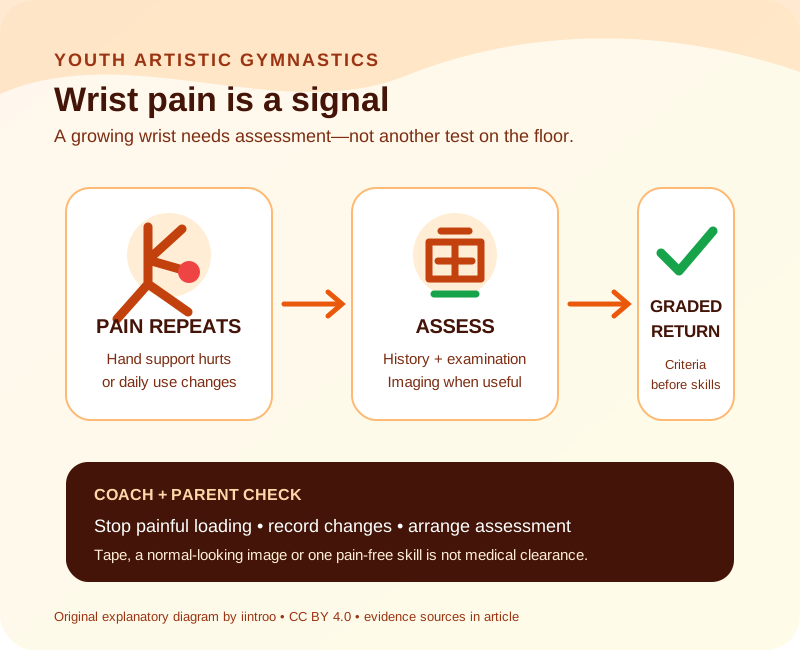
Repeated wrist pain is not a normal price of gymnastics. Growing athletes need load modification and qualified assessment before returning to hand support.
Key points
- A growing wrist is repeatedly loaded as a weight-bearing joint in artistic gymnastics.
- Pain location or an X-ray image alone does not provide a self-diagnosis.
- Return to hand support should follow reassessment and graded, skill-specific loading.
Who needs this guide
This guide is for young artistic gymnasts, parents and coaches responding to wrist pain during vault, tumbling, bars or conditioning. Gymnastics repeatedly asks the upper limb to bear weight. In a growing athlete, pain near the wrist can involve the distal radial growth plate, but tendons, ligaments, cartilage and bones can produce overlapping symptoms.
Do not ask an athlete to keep proving the pain on a hard surface. Stop the painful hand-support activity and arrange assessment by a sports-medicine clinician familiar with paediatric or gymnastics injuries. Deformity, major swelling, loss of feeling, colour change or inability to use the hand after a fall needs prompt medical evaluation.
The evidence describes risk, not a diagnosis
A 2026 systematic review included 25 observational studies and 185,107 adolescent artistic gymnasts. Nine studies produced a pooled wrist-pain prevalence of 53%, while estimates for chronic injury varied widely. Age, years of training, weekly hours and training intensity were among reported associations.
The authors rated all evidence low or very low certainty. Definitions, study designs and populations differed, and association does not prove that one workload caused one athlete's injury. The pooled figures show that wrist concerns deserve attention; they cannot classify an individual wrist or establish a safe training threshold.
Sources: 2
Why growth plates change the conversation
A growth plate is developing tissue, not simply a smaller version of adult bone. The AAOS explains that repeated stress can widen or irregularly affect a physis and, if ignored, may rarely disturb growth. The 2024 gymnastics review describes distal radial physeal stress injury as a recognised pattern in young gymnasts.
Assessment combines history and examination, with imaging selected by a clinician when it will answer a clinical question. A normal-looking early image does not authorise continued painful loading, and an online photograph cannot diagnose growth-plate injury. Treatment choices depend on the finding, severity, growth remaining and symptoms.
Return by criteria and apparatus demand
Published return protocols progress from healing and non-impact conditioning towards supported loading, impact and gymnastics skills. They are frameworks for clinical teams, not a calendar to copy. Hanging, floor tumbling, vaulting and bars place different demands on the wrist, so clearance for one task is not automatic clearance for all apparatus.
The athlete's clinician and rehabilitation professional can set and reassess criteria for pain, movement, strength, loading tolerance and skill progression. Pain during or after a step should be reported rather than hidden with tape, medication or altered technique. This article does not prescribe immobilisation, exercises or a return date.
Sources: 3
Build an early-reporting culture
Record when pain began, the skills that provoke it, recent changes in hours or surfaces, growth and previous injuries. Coaches can remove painful loading and communicate the training record without diagnosing. Parents can make medical review possible before selection pressure turns a manageable concern into prolonged time loss.
Not every wrist injury is preventable, and the review found insufficient evidence for a single prevention threshold. The practical standard is early reporting, qualified assessment and a progressive return that reflects the young gymnast's actual diagnosis and event demands.