
Road rash after a cycling crash: wound care, tetanus and warning signs
Learn when a cycling graze needs medical assessment, how minor wounds are protected, and why tetanus prevention and readiness to ride need separate checks.
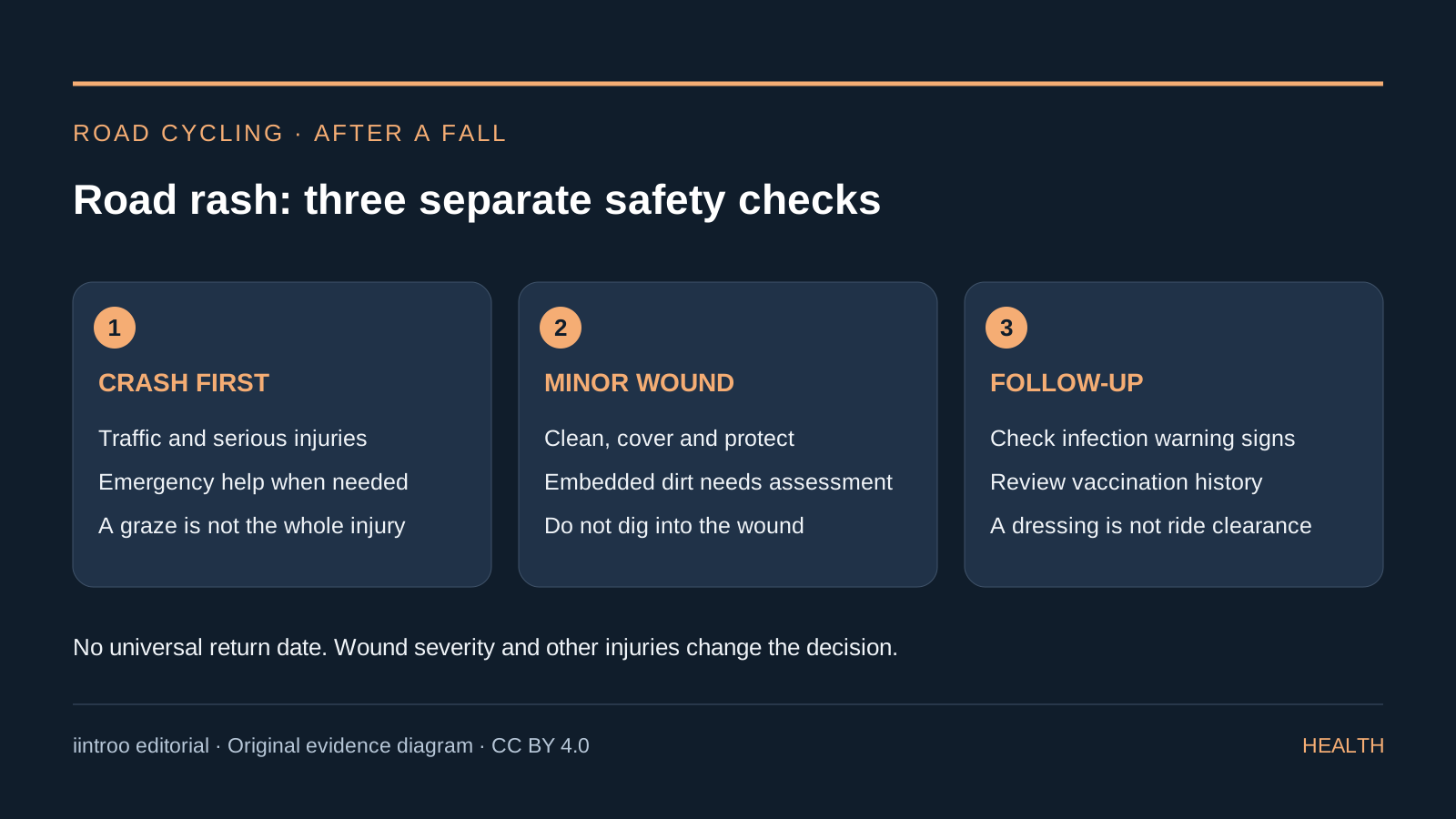
Key points
- Assess the crash and serious injuries before concentrating on a graze.
- Embedded debris, deep wounds and increasing infection signs need professional assessment.
- A dressing does not establish that a cyclist is ready to ride again.
The crash comes before the scrape
This guide is for road cyclists, riding partners and club organisers dealing with scraped skin after a fall. A visible graze can distract from the more important question: is everyone safe, and could another injury need urgent help? A roadside dressing is not a complete assessment of a cycling crash.
Check for traffic danger before approaching. An unresponsive person, abnormal breathing or severe bleeding requires emergency help and first aid appropriate to your training and dispatcher instructions. Avoid unnecessary movement of an injured rider. Give responders a precise location, particularly on unfamiliar rural routes. Do not delay help while examining the bicycle or collecting equipment.
Sources: 6
Recognise the limits of self-care
Seek emergency care for bleeding that will not stop, spurting blood, a very large or deep wound, lost sensation or difficulty moving the affected area. Do not pull out an object embedded in a wound. Skin damage accompanied by these findings is not an ordinary minor graze.
For a small superficial wound once bleeding is controlled, wash your hands and rinse the wound with clean tap or bottled drinking water. Clean the surrounding skin with soap and water and apply a sterile dressing. If grit remains, the wound is heavily contaminated or you cannot clean it adequately, arrange medical assessment rather than digging into it.
Sources: 1
Clean water is practical guidance, not proof that all fluids are equivalent
A 2022 Cochrane review included 13 trials with 2,504 participants across diverse wounds and age groups; its searches ended in May 2021. The evidence comparing tap water with saline was low or very low certainty. For infection, eight trials involving 2,204 people did not establish a confident advantage of either approach.
These were not trials of dirty roadside bottles used on racing cyclists. Uncertainty about comparative cleansing fluids does not justify using contaminated water or leaving debris untreated. Nor should findings from surgical or chronic wounds be treated as a precise recovery prediction for a fresh cycling abrasion.
Sources: 5
Protect a minor wound without turning it into a product experiment
For uncomplicated minor cuts, dermatology guidance supports gentle cleaning, petroleum jelly to maintain moisture and a sterile covering. Routine antibiotic ointment is not required for every minor wound and can irritate skin. This does not rule out clinician-directed antibiotics when an infection or another indication is present.
Sports wound guidance also favours covering an appropriately cleaned wound rather than deliberately drying it in the air. No dressing suits every wound. Follow the dressing instructions and any clinical advice, especially for a broad abrasion, significant drainage or sensitive skin. Inspect for leakage, lifted edges or an adverse reaction rather than repeatedly adding unfamiliar products.
Tetanus prevention is a separate decision
CDC guidance updated in September 2026 bases prevention on the wound and the person's vaccination history. Soil contamination and damaged tissue matter; a wound does not have to involve a rusty object. A clinician may need to assess vaccination and, in selected circumstances, tetanus immune globulin.
If your vaccination history is unknown, tell the treating service promptly instead of waiting for symptoms. Antibiotics are not a substitute for tetanus prevention. Conversely, being vaccinated does not remove the need to clean a wound or assess infection. Bring a vaccination record when available, including when seeking care while travelling.
Sources: 2
Follow-up matters more than finishing the ride
Increasing redness, swelling, pain, pus, fever or feeling unwell warrants prompt medical advice. A wound that is not progressing as expected also needs review. These changes should not be dismissed as the unavoidable cost of training.
Applying the sports guidance to cycling, discuss friction from clothing, repeated knee or elbow movement and whether the dressing stays intact. This is a practical application, not a validated return-to-cycling test. Readiness also depends on other injuries and safe bike control; there is no universal number of days after road rash that clears every rider.