
Running in polluted air: plan exposure, do not chase one magic number
Air-quality data can guide route, timing and session changes, but one index value cannot represent every pollutant, athlete or local rule.
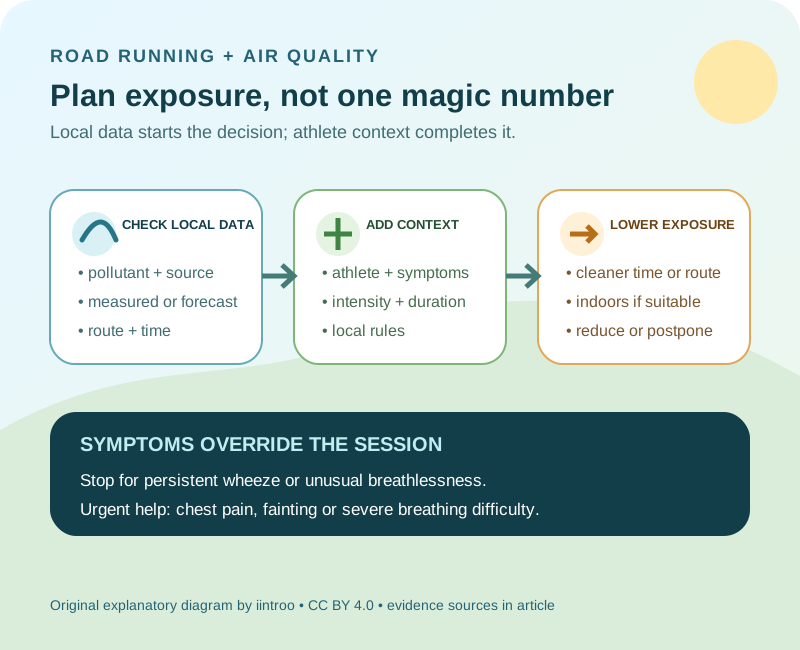
Key points
- Check the local source, pollutant and forecast rather than relying on colour alone.
- Route, timing, duration and intensity can all change inhaled exposure.
- Chest pain, severe breathlessness, fainting or rapidly worsening symptoms need urgent assessment.
Who this guide is for
This guide is for outdoor runners, coaches and event teams deciding whether a session should proceed when air quality is poor. World Athletics now lists a dedicated Air Quality in Athletics document in its Health & Science collection, reflecting that air pollution belongs in ordinary training and event planning rather than being treated only as a rare emergency.
The decision is not identical for every athlete. Asthma or another respiratory or cardiovascular condition, pregnancy, age, disability, medication, recent illness and the planned intensity can all change the discussion. A coach can adapt exposure, but should not diagnose symptoms or change a medical action plan.
An index is a prompt, not a universal prescription
Air-quality indices use local formulas, categories and dominant pollutants, so the same colour or number may not mean exactly the same thing in different countries. Check which source supplies the reading, when it was updated, whether it is measured or forecast, and which pollutant is driving the result. World Athletics guidance should be read alongside local public-health and event rules.
WHO guideline levels cover particulate matter, ozone, nitrogen dioxide, sulfur dioxide and carbon monoxide. They are health-based references for population policy, not personalised go-or-stop thresholds for a runner. A reading below a legal limit does not prove zero risk, and a short spike should not be interpreted as an individual diagnosis.
What the evidence can and cannot tell us
The IOC subgroup review describes plausible respiratory and performance effects and practical mitigation, while emphasising education and monitoring. A 2026 meta-analysis combined 35 controlled trials in healthy participants. Higher-pollution exercise conditions were associated with small average reductions in some lung-function measures and a modest rise in systolic blood pressure; inflammatory and blood-cell results were more uncertain.
Those studies differed in pollutant, concentration, exposure chamber or outdoor setting, exercise task and follow-up. Most examined short-term physiological responses in healthy people. The pooled averages cannot predict what one runner will feel, establish a safe personal cut-off or quantify the long-term effect of one altered session.
Reduce exposure before abandoning activity altogether
Practical options include moving the session to a cleaner time or place, increasing distance from busy traffic, choosing an indoor venue with known ventilation or filtration, and reducing duration or intensity. Compare current and forecast conditions at the actual route rather than a distant city average. Event teams should document who monitors conditions and who can modify or stop the programme.
A face covering may be required for wildfire smoke or public-health reasons, but fit, filtration, heat and breathing comfort matter; it is not a universal solution for hard exercise. Supplements should not be used as a pollution shield. The priority is lowering exposure and following qualified advice for any existing medical plan.
Symptoms outrank the training plan
Stop the session and seek medical advice for persistent cough, wheeze, unusual breathlessness or reduced exercise tolerance, especially when symptoms recur. Chest pain, fainting, severe breathing difficulty, confusion or rapidly worsening symptoms require urgent local medical help. Do not use an air-quality app to explain away a potentially serious problem.
Record the route, time, conditions, symptoms and response so a clinician can assess the pattern. The aim is not to eliminate outdoor running; it is to make exposure visible, use cleaner alternatives when practical and protect the athlete’s long-term ability to train.