
Rowing rib pain: report the first signs before a stress injury progresses
Rib stress injury can begin as local pain rather than a dramatic crack. Early assessment, load review and an individual return plan matter more than a fixed week count.
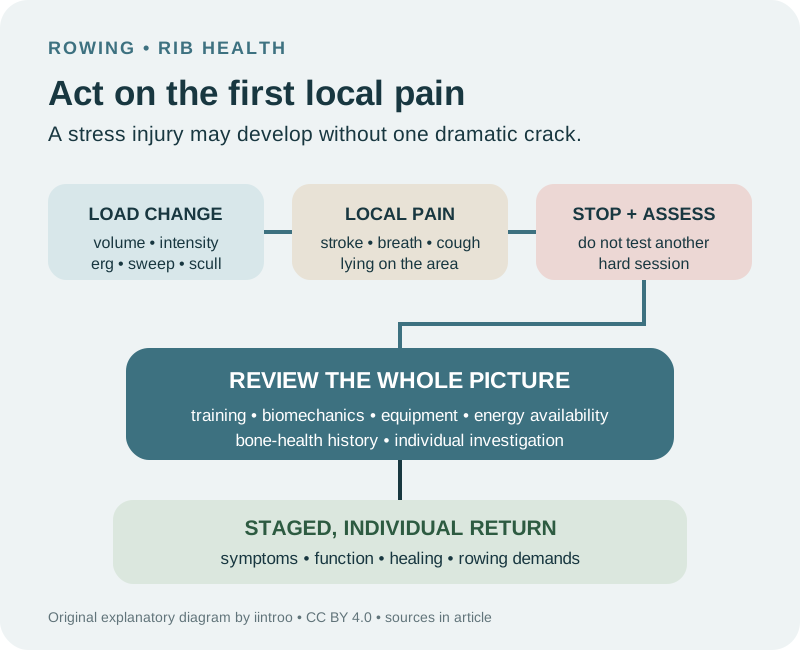
Key points
- Rib stress injury can present as local chest-wall or rib pain without one traumatic event.
- Training changes, biomechanics and bone-health factors should be reviewed together.
- Return to rowing is individual; older reports of typical time loss are not a clearance rule.
Local rib pain deserves an early question
This guide is for rowers, coxes, coaches, parents and medical teams. Rib stress injury develops when repeated loading outpaces the rib's capacity to adapt. It does not always begin with a sudden crack. A rower may first notice focal pain with the stroke, deep breathing, coughing, lying on the area or loading the arm and trunk.
World Rowing recommends responding to early symptoms rather than waiting for a more obvious fracture. Stop the aggravating rowing and strength work and arrange assessment by a sports medicine clinician or physiotherapist familiar with rowing and bone stress. Pain location alone cannot distinguish rib stress injury from muscle, joint, lung or other chest problems.
Review what changed around the rib
Look beyond a single ergometer session. Recent changes can include water-to-erg transitions, switching between sweep and sculling, changing sides, adding volume or intensity, returning after a break, competition camps and extra gym work. Equipment and technique can alter how force travels through the trunk and upper body, but a visible movement pattern does not prove the diagnosis.
Bone-health context also matters. Low energy availability, menstrual or hormonal changes, previous bone stress injury, low bone density, illness and nutrition may contribute. A qualified clinician decides what history, examination, imaging or laboratory investigation is appropriate. Do not start calcium, vitamin D or hormone treatment from an online checklist.
The evidence is smaller than the problem
The 2016 systematic review found only 17 eligible studies and described insufficient or conflicting evidence for many proposed risk factors and prevention strategies. Nine reports mentioned four to six weeks away from training, but observed time loss ranged from one to 16 weeks. Those figures describe past groups; they are not a timetable for an individual rower.
The Great Britain guideline combines literature with expert opinion from an elite medical team. The 2025 publication is a narrative review proposing a rehabilitation protocol, not a controlled trial proving one sequence. Evidence from elite rowing and other repetitive upper-body sports may not transfer directly to juniors, masters or community crews.
Rebuild rowing-specific load in stages
Once the clinician considers progression appropriate, the plan can move from symptom-limited daily activity and non-aggravating conditioning towards rowing-specific work. Track the response during the session and later that day rather than using one pain-free stroke as clearance. Increase one major demand at a time so distance, intensity, stroke rate, boat type and strength work are interpretable.
Return decisions can consider local symptoms, examination, healing where relevant, trunk and shoulder function, bone-health factors, confidence and the demands of the crew. A normal scan, a completed calendar week or an important selection race cannot answer all of those questions alone.
Separate rib stress from urgent chest symptoms
Sudden severe chest pain, difficulty breathing, coughing blood, fainting, blue or grey lips, or pain after major trauma requires urgent medical care through local emergency services. Fever, unexplained breathlessness or feeling acutely unwell also needs prompt assessment. Do not assume that every rower's rib pain is an overuse injury.
For non-emergency focal pain, early reporting still protects training time by allowing the cause and contributing factors to be assessed before repeated loading continues. This article cannot diagnose the pain, select imaging, prescribe supplements or provide a universal return date.