
Rugby mouthguards: protect the mouth without mistaking fit for concussion clearance
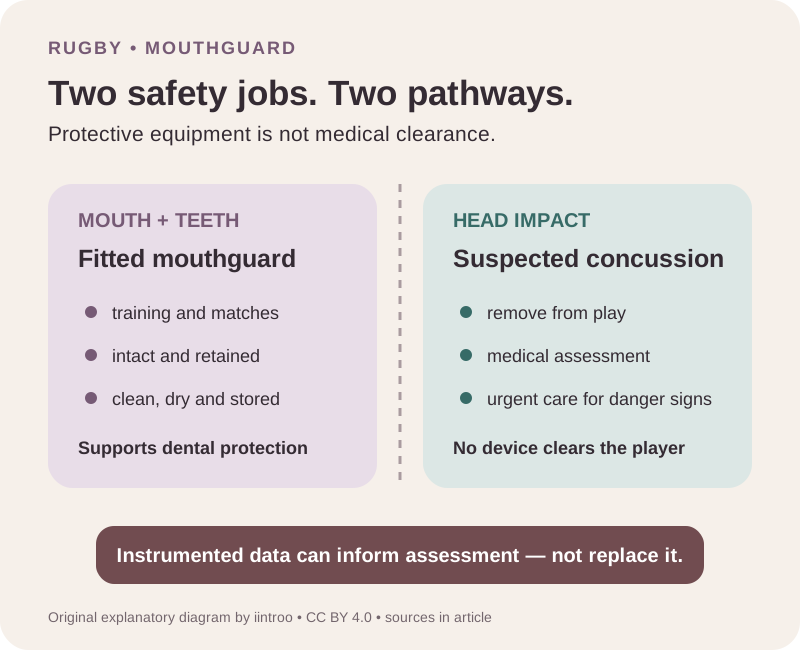
A well-fitted mouthguard supports dental protection, but it cannot clear a player after a head impact. Keep equipment care and concussion recognition as separate safety tasks.
Key points
- World Rugby recommends a properly fitted mouthguard for training and matches.
- A mouthguard is protective equipment, not a concussion test or clearance tool.
- Suspected concussion still requires removal from play and the applicable medical pathway.
Use the mouthguard for the job it can do
This guide is for rugby players, parents, coaches and team staff. World Rugby recommends that players wear a mouthguard or dental protector. Rugby Ready explains that a well-fitted device can help protect teeth and soft tissues by distributing impact force and absorbing energy. It should stay in place comfortably without the player needing to bite constantly to retain it.
A 2026 review pooled 16 studies published through March 2025 and found that orofacial and dental injuries remain important in rugby. The authors rated the cumulative evidence very low because methods, populations and definitions varied. Pooled prevalence is not an individual forecast, and the review cannot identify one product as best for every player.
Fit, condition and use matter every session
Wear the mouthguard in contact training as well as matches. A dentist-made custom device will often provide the most controlled fit, but the correct choice also depends on age, dental development, orthodontic appliances, local rules, access and cost. A player with braces or changing teeth should ask a dental professional about an appropriate design rather than trimming equipment without guidance.
Inspect the mouthguard for splits, thinning, sharp edges, looseness or distortion. Clean it according to the manufacturer's instructions, allow it to dry and store it in a ventilated rigid case. Review fit after dental treatment, growth or a significant impact. Sharing mouthguards or repeatedly chewing them undermines hygiene and fit.
Do not turn equipment into concussion clearance
A mouthguard does not diagnose concussion, and wearing one does not make a head impact safe to ignore. Instrumented mouthguards can measure head acceleration and add objective information for trained staff, but World Rugby describes these data as complementary to medical, officiating and video assessment. An alert is not a diagnosis, while the absence of an alert does not clear a symptomatic player.
After a concerning impact, visible signs, reported symptoms or clinical suspicion should activate the competition's concussion process. In community settings, suspected concussion means remove the player and arrange medical assessment; professional Head Injury Assessment procedures apply only in approved environments. The player's device, score or wish to continue cannot replace that decision.
Prepare for dental and head injuries as separate pathways
A club emergency plan should identify who manages a dental injury, who handles a suspected concussion and how emergency services are reached. A knocked-out or displaced permanent tooth, heavy bleeding, jaw deformity, difficulty breathing or inability to close the mouth requires prompt professional care. Follow the trained responder's instructions and local dental-emergency pathway; this article is not a reimplantation protocol.
At the same time, watch for worsening headache, repeated vomiting, seizure, increasing confusion, weakness, unequal pupils or difficulty waking after a head impact. These danger signs require urgent medical care. Dental pain and a normal-looking mouth do not rule a brain injury in or out.
Make the two checks part of the weekly routine
Before training, confirm that the mouthguard fits, is intact and is actually worn during contact work. Separately, brief players and coaches on how to report head-impact concerns and who can remove a player. For instrumented devices, agree who receives alerts, how data are protected and how the technology connects to the approved medical pathway.
After an injury, return to contact depends on qualified assessment and the applicable rugby rules, not on replacing the mouthguard or obtaining a normal device reading. The same principle applies to a dental injury: pain relief alone does not establish readiness. Equipment care can reduce avoidable risk, but it does not provide a guarantee against dental injury or concussion.