
Rugby scrum neck safety: front-row readiness is a team decision
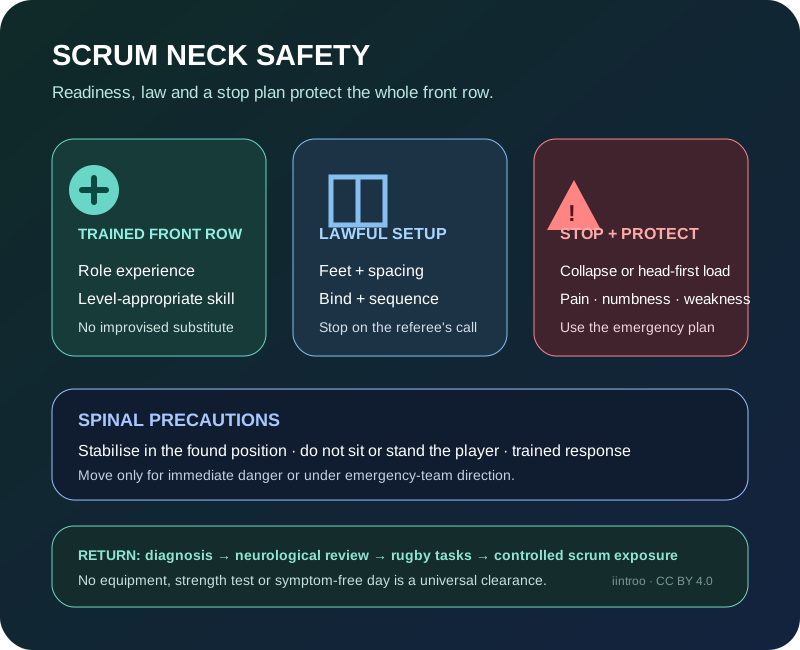
The scrum needs trained front-row players, lawful technique and a stop plan. Neck pain, weakness or neurological symptoms require protection and assessment.
Key points
- World Rugby's Scrum Ready guidance treats front-row training and experience as safety requirements, not optional performance extras.
- A collapsed scrum, head-first impact or axial loading can cause serious cervical injury; do not move a symptomatic player unless immediate danger requires it.
- Neck strengthening may be part of preparation, but evidence does not prove that strength alone prevents every spinal injury or concussion.
The front row is a trained role
This guide is for rugby-union players, coaches, match officials, families and medical teams. Props and hookers must manage body position, binding, force and instability under load. World Rugby's Scrum Ready pathway highlights that lack of front-row experience has been linked with scrum injury and that players should be suitably trained for the level being played.
Selection pressure must not turn an unprepared substitute into a contested front-row player. The referee, coaches and medical staff each have a safety role under the applicable competition rules. Local union rules, age-grade restrictions and current law take priority over a team's desire to keep a full contest.
Lawful setup protects a shared structure
Current Law 19 specifies front-row spacing, foot position, binding and the sequence used to form the scrum. Coaches should teach the current law, stable body position and communication progressively before adding opposition and maximal force. Players must be able to stop when the referee calls and report a binding, footing or symptom problem early.
Equipment and strength do not make illegal technique safe. A mouthguard, scrum cap or heavily developed neck cannot control an opponent's actions or rescue a collapsed formation. Pitch condition, fatigue, mismatched experience and previous symptoms belong in the pre-match readiness discussion.
Treat a collapse or head-first load seriously
World Rugby identifies axial loading—force that straightens and compresses the neck—as a mechanism that can injure the cervical spine, including in a collapsed scrum or head-first fall. Reviews of rugby cervical injury describe scrum, tackle, ruck and maul mechanisms, but older case series and changing laws make exact modern risk estimates uncertain.
After a concerning impact, stop play and use the venue emergency plan. Neck pain, weakness, numbness, altered sensation, loss of movement, breathing difficulty, confusion or reduced consciousness requires immediate medical assessment. Stabilise the head and neck in the found position and do not sit, stand or remove a player simply to clear the field unless trained responders direct it or immediate danger demands movement.
Preparation is broader than neck strength
Progressive neck and shoulder conditioning may be included in rugby preparation alongside whole-body strength, scrum technique and exposure. A recent systematic review reported promising signals for cervical-muscle programmes in rugby, but designs and populations varied and the review did not establish the same effect across sports or women players.
Do not convert a group-level association into a personal protection guarantee. Readiness also requires skill, communication, fatigue management, confidence, lawful opposition and a coach who will stop the drill. Neck training should be supervised and modified for pain, previous injury, neurological symptoms or medical restrictions.
Return only after diagnosis and rugby-specific progression
Any suspected cervical-spine injury needs qualified diagnosis. Return may involve symptom resolution, neurological examination, range, strength, non-contact conditioning, controlled rugby tasks and later scrum exposure, depending on the injury. Normal imaging or a pain-free day does not by itself clear a front-row player.
Persistent pain, recurrent tingling, weakness, balance change or symptoms with contact require reassessment. There is no universal return time and no online neck test can establish safety. Where front-row readiness is uncertain, use the competition's safety process rather than improvising a contested scrum.