
Fluoroquinolone antibiotics and running: tendon pain needs a prompt response
Fluoroquinolone antibiotics can affect tendons during or after treatment. Learn the warning signs, evidence limits and questions to discuss before running.
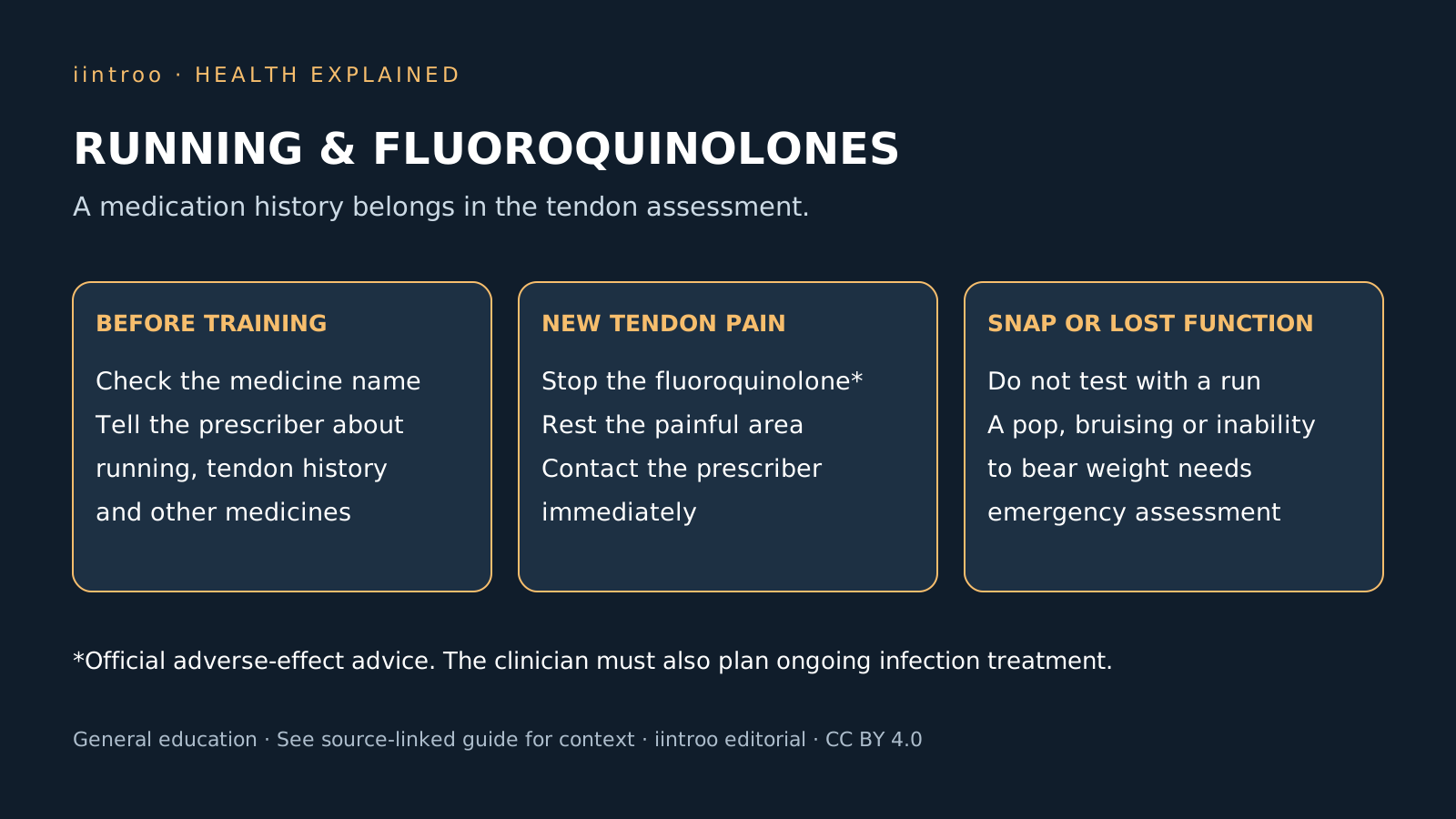
Key points
- Tell the prescriber about running, tendon history, kidney problems and other medicines before treatment.
- Official guidance says to stop a fluoroquinolone and contact the prescriber immediately at the first signs of tendon pain or swelling; rest the painful area.
- Finishing the antibiotic course does not create an automatic all-clear for strenuous running.
Identify the medicine before discussing the mileage
This guide is for road and trail runners prescribed a fluoroquinolone antibiotic, including ciprofloxacin, levofloxacin or moxifloxacin. These medicines can be appropriate for particular bacterial infections, but their benefits must be weighed against recognised adverse effects. Antibiotics are not a way to shorten an ordinary viral cold so that training can continue.
Check the generic name on the prescription and tell the doctor or pharmacist about regular running and any previous tendon problem. Do not borrow antibiotics, choose a replacement yourself or stop an essential treatment solely because of a headline. Ask why this medicine is appropriate and what symptoms require action; the specific adverse-effect instructions below are important exceptions to simply continuing a course.
Regulatory restrictions are not a universal prescribing rule
UK advice issued in January 2024 restricts systemic fluoroquinolones to situations where commonly recommended alternatives are inappropriate. The MHRA's June 2025 public assessment report explains the review behind that action. EMA advice describes approved indications and restrictions in the European Union. These are jurisdiction-specific communications, not a substitute for the applicable product information in Türkiye or elsewhere.
The warnings cover more than the Achilles tendon and more than running. Tendon inflammation or rupture can begin soon after treatment starts or become apparent months after it stops. Older age, impaired kidney function, an organ transplant and concomitant corticosteroids warrant particular caution. Tell the prescriber about all medicines; do not abruptly discontinue a prescribed steroid yourself.
An association is not an individual prediction
A UK nested case-control study drew on a cohort of more than 1.35 million adults prescribed a fluoroquinolone or co-amoxiclav. It identified 4,836 tendon ruptures. Current fluoroquinolone exposure was associated with a higher rate of Achilles rupture, with greater concern when oral corticosteroids were also prescribed. The average absolute excess was small, while subgroup risks differed substantially.
This was medical-record research, not a trial assigning runners to an antibiotic and a hill session. Residual confounding, incomplete recording of trauma and prescription-versus-actual-use uncertainty limit causal interpretation and personal risk estimates. The paper's February 2019 correction concerned retrospective open-access publication, not a reported change to its clinical findings. Relative risk must not be presented as the probability that a particular runner will rupture a tendon.
New tendon symptoms change the immediate plan
EMA and patient medicine information advise stopping the fluoroquinolone and contacting the prescriber immediately if tendon pain or swelling develops. Rest the affected area while arranging care. Do not test it with a hard run, repeated hops or a heavy calf-loading session. The clinician needs to address both the suspected reaction and continuing treatment of the infection.
A snap or pop around a tendon, new bruising, inability to move the area or inability to bear weight requires emergency medical assessment. New burning, numbness, tingling or weakness also warrants prompt attention under the medicine warning. These symptoms are not proof of a drug reaction, but uncertainty is a reason for assessment rather than a reason to push through.
Return is a clinical decision, not a countdown
The athlete-focused 2014 review assembled 175 papers, including many case reports, and searched literature only through 2012. It highlighted that medication-associated tendon problems may need a staged rehabilitation approach rather than an automatic copy of an ordinary tendinopathy programme. This evidence does not define a universally safe mileage, intensity or return date.
Discuss the infection, medication exposure, symptoms and planned running demands with the treating team. Record when treatment began and ended and when symptoms appeared. A symptom-free easy walk cannot establish readiness for repeated hills or racing. Equally, an online warning should not turn into indefinite self-imposed inactivity without assessment. The goal is a reasoned plan that treats the infection and protects function.
Sources: 5