
Sarcoidosis in sport: separate rehabilitation from changing lung or heart disease
Sarcoidosis fatigue is real but not a measure of inflammation alone. Lung status, cardiac warning signs, treatment effects and graded rehabilitation shape return.
Key points
- Sarcoidosis can affect several organs. Fatigue or breathlessness alone cannot show whether lung inflammation, heart involvement, treatment effects or deconditioning is responsible.
- Small studies suggest pulmonary rehabilitation may improve exercise capacity and breathlessness, but effects on fatigue and quality of life are less certain.
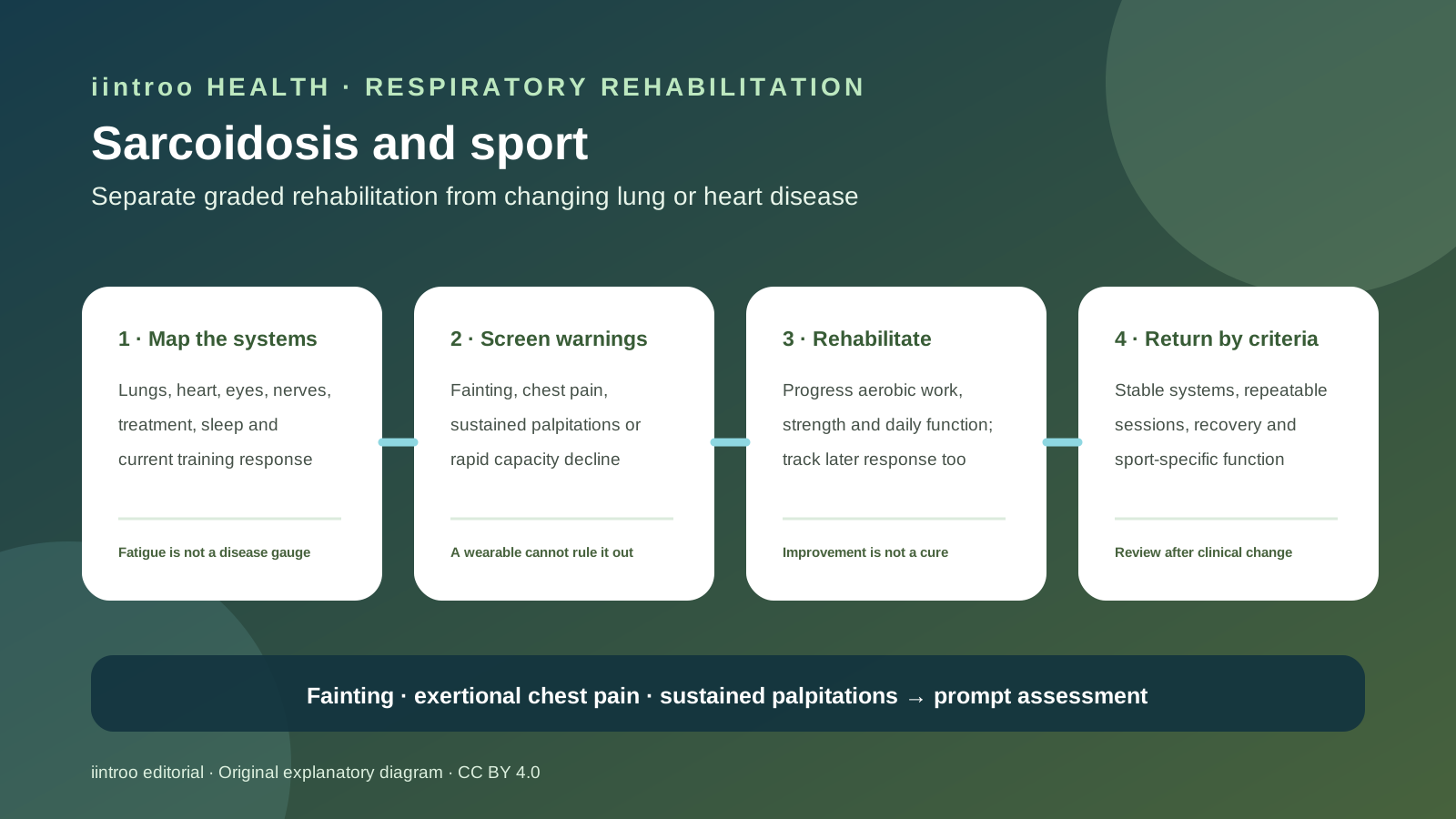
- Fainting, exertional chest pain, sustained palpitations or unexplained rapid decline in capacity requires prompt assessment for cardiac and other serious causes.
Identify the affected systems before labelling the problem deconditioning
This guide is for athletes with sarcoidosis, people returning to activity after treatment and their support teams. Sarcoidosis most often affects the lungs and lymph nodes but can involve the heart, eyes, nervous system, skin and other organs. Breathlessness, cough, fatigue, weakness and a fall in performance are not specific enough to show which system is responsible. The ERS treatment guideline and ATS diagnostic guideline support organ-specific assessment rather than assuming that every symptom reflects active lung inflammation.
Map symptoms, previous organ involvement, lung function, imaging, heart assessment, medicines, sleep, infection, mood and current training. Fainting, exertional chest pain, sustained or new palpitations, a new neurological deficit, severe eye pain or sudden vision change, or marked unexplained breathlessness needs prompt medical review. A smartwatch rhythm alert, oxygen reading or normal easy session cannot rule cardiac sarcoidosis in or out. Coaches should not use a field test to decide that the disease is inactive.
Use rehabilitation to rebuild capacity, not to prove inflammation is gone
Pulmonary rehabilitation can combine individually progressed aerobic work, strength, education and symptom management. A 2023 systematic review found only five studies with 184 participants; exercise capacity and dyspnoea may improve, while fatigue, quality of life and lung-function changes were not consistent. This supports a supervised, measured trial of rehabilitation but not a promise that exercise will cure sarcoidosis or explain every persistent symptom.
Begin from a duration and intensity the athlete can repeat, then progress time, pace, resistance, terrain and environmental stress separately. Walking, cycling, pool work and strength exercise can provide adjustable options. Record symptoms during the session and later that day or the next day. A temporary easier week can be sensible during a flare, infection or medication change, but indefinite rest can also reduce capacity. The clinical team should distinguish a disease change from ordinary training fatigue or deconditioning.
Keep cardiac warning signs and medicine effects in the plan
Cardiac sarcoidosis can present with conduction disease, arrhythmia, heart failure or sudden cardiac arrest. The AHA statement recommends a tiered evaluation driven by symptoms, ECG and imaging rather than one screening result. An athlete with fainting, exertional chest pain, sustained palpitations or an unexplained rapid performance decline should stop and seek assessment. If someone collapses, is unresponsive and is not breathing normally, activate emergency services, begin CPR and use an AED as soon as possible.
Glucocorticoids and other immunosuppressive medicines may affect glucose, blood pressure, muscle, bone, infection risk, skin or mood. Athletes should not reduce a dose to improve performance or stop treatment because training feels better. Build bone-supportive strength and impact only when appropriate, use infection precautions agreed with the care team and review supplement or anti-doping questions before use. Fever, new infection symptoms or a major treatment adverse effect belongs in the medical plan, not a coach-designed recovery protocol.
Return by stable systems and repeatable sport function
Progress from controlled rehabilitation to ordinary training, harder intervals, competition density and remote or high-consequence settings. Useful markers include stable symptoms, repeatable session response, recovery, task-specific strength and adherence to follow-up. Lung tests, cardiac findings and treatment response may still matter even when fitness is improving. Revisit the plan after a flare, new organ involvement, syncope or palpitations, a medicine change, prolonged infection or a clear reduction in capacity.
Sarcoidosis varies widely, and rehabilitation studies are small, heterogeneous and not focused on competitive athletes. Fatigue can persist despite apparently stable inflammatory disease, while serious organ involvement can sometimes be subtle. There is no universal oxygen saturation, lung-function value, fatigue score, steroid dose or symptom-free interval that clears every athlete. This page provides general education, not diagnosis, rhythm interpretation, oxygen prescription, immunosuppressive treatment or personal rehabilitation and return-to-sport clearance.