
Scuba diving and PFO: when screening matters—and what closure cannot promise
Understand the 2025 guidance on PFO screening in scuba divers, the limits of closure evidence and why suspected decompression illness needs urgent care.
Key points
- The 2025 SPUMS/UKDMC statement does not recommend routine shunt screening for every diver.
- Finding a PFO does not by itself prove why a diving illness happened.
- Closure is not a guarantee against decompression illness or automatic clearance to dive.
A heart finding is not a complete diving-risk assessment
A patent foramen ovale, or PFO, is a persistent opening between the heart's upper chambers. In some circumstances it can allow blood, and potentially venous gas bubbles, to pass from the right to the left side. That provides a plausible route for bubbles to reach the arterial circulation after a dive. It does not mean that every person with a PFO will develop decompression illness.
This guide is for recreational scuba divers considering testing or discussing a PFO already found during medical care. A positive test after a diving incident does not prove that the opening caused that incident. Dive exposure, the clinical history and other possible mechanisms still matter. Neither a negative result nor a successful procedure makes all diving risk disappear.
Sources: 2
What changed guidance asks clinicians to consider
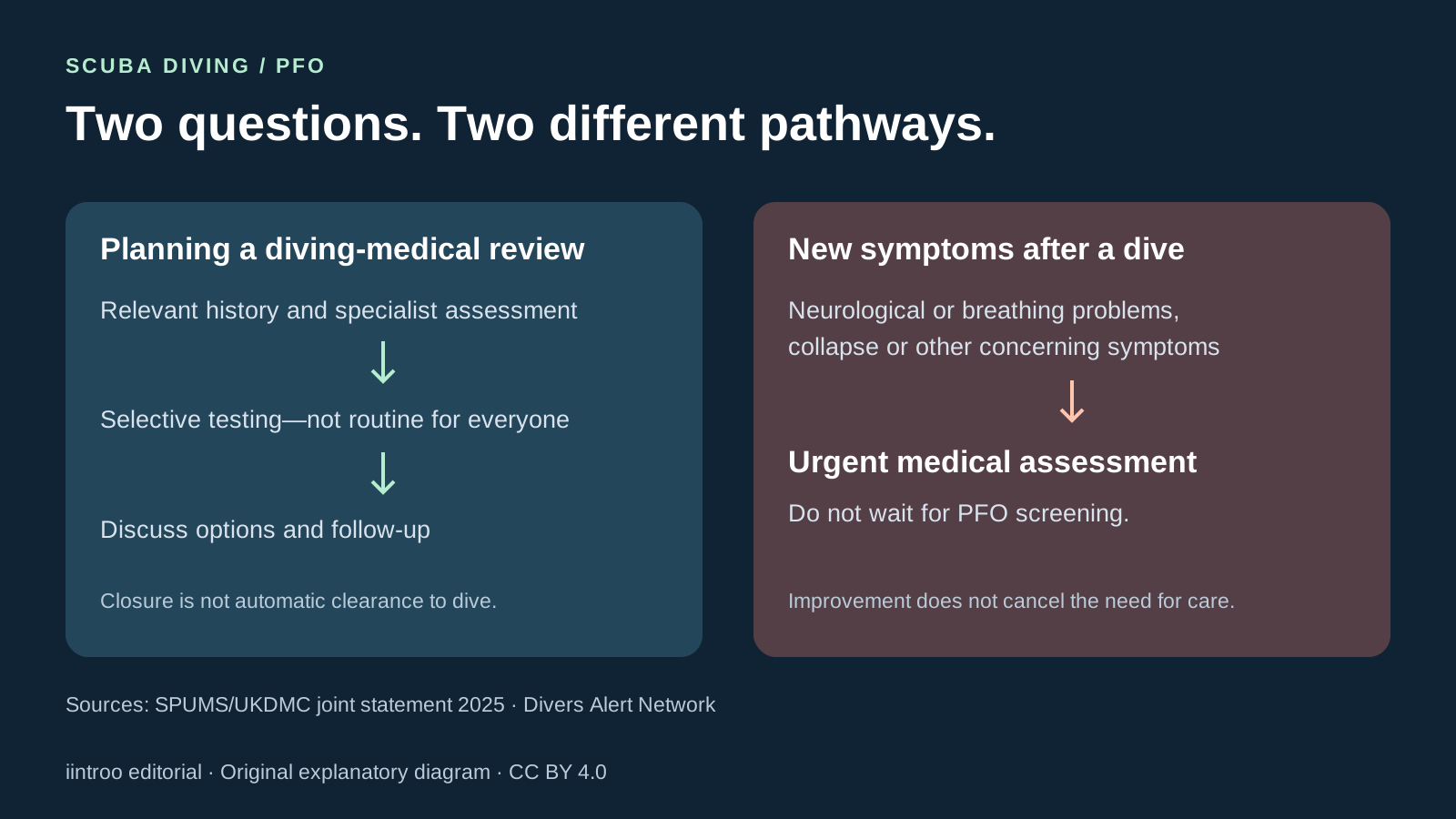
The March 2025 SPUMS/UKDMC statement advises selective—not routine—screening. Relevant histories include particular decompression-sickness presentations, migraine with aura, cryptogenic stroke and some family or congenital heart conditions.
When testing is indicated, skilled bubble-contrast echocardiography and contextual interpretation matter. Specialist discussions can include stopping diving, restrictions or closure; none is an online clearance checklist.
Sources: 1
A prospective study shows association, not a screening mandate
A 2023 prospective cohort followed 100 experienced divers recruited through 13 diving organisations, with a mean follow-up of about 29 months. Participants undertook more than 50 dives per year. High-risk PFO characteristics were associated with more study-defined PFO-related decompression illness, but the estimate was imprecise and the study was too small to settle the risk from low-risk PFO findings.
The investigators used blinded assessment, which strengthens the study, but it remained observational and relied on reported diving events. Its experienced, frequently diving sample cannot establish an identical risk for occasional holiday divers. Nor did it randomly compare screening everyone with selective screening, or closure with no closure. Risk prediction, screening policy and treatment effectiveness are three different questions.
Sources: 3
Closure evidence cannot supply a universal return date
A 2021 Swedish report followed nine divers who had undergone PFO closure. Eight resumed diving and reported 4,708 subsequent dives. One serious recurrence occurred in a diver with a residual shunt after a provocative dive profile. The experience is informative, but nine selected people without an untreated comparison group cannot establish how much closure reduces risk or which diver should choose it.
Counting many uneventful dives is not equivalent to a randomised treatment comparison: diving behaviour may change, and the participants are not interchangeable with everyone considering the procedure. The 2025 statement requires reassessment after closure rather than treating elapsed time as sufficient. Follow-up testing and the specialist's review of treatment, including antiplatelet medication, matter. Do not stop prescribed medication or resume diving on the basis of this article.
Symptoms after diving belong on an urgent pathway
Decompression illness includes both decompression sickness and arterial gas embolism. New weakness, numbness, difficulty walking, severe vertigo, confusion, breathing difficulty or collapse after a dive requires urgent medical help; a concerning rash also warrants prompt diving-medical assessment. Do not wait for a PFO appointment to decide whether these symptoms deserve attention.
Activate local emergency services and arrange expert diving-medical advice. Emergency oxygen should be provided by trained responders when available, while definitive assessment is arranged. Improvement does not remove the need for evaluation. A partner's previous benign symptoms, a computer's apparently acceptable dive profile or a known PFO cannot safely distinguish causes at the waterside. Acute illness assessment comes before any later discussion of screening or return to diving.
Sources: 5