
Tooth pain while diving: pressure can expose a dental problem
Dental pain and barotrauma can disrupt a dive, but prevalence estimates vary widely. Recurrent pressure-linked pain needs dental and dive-medicine review.
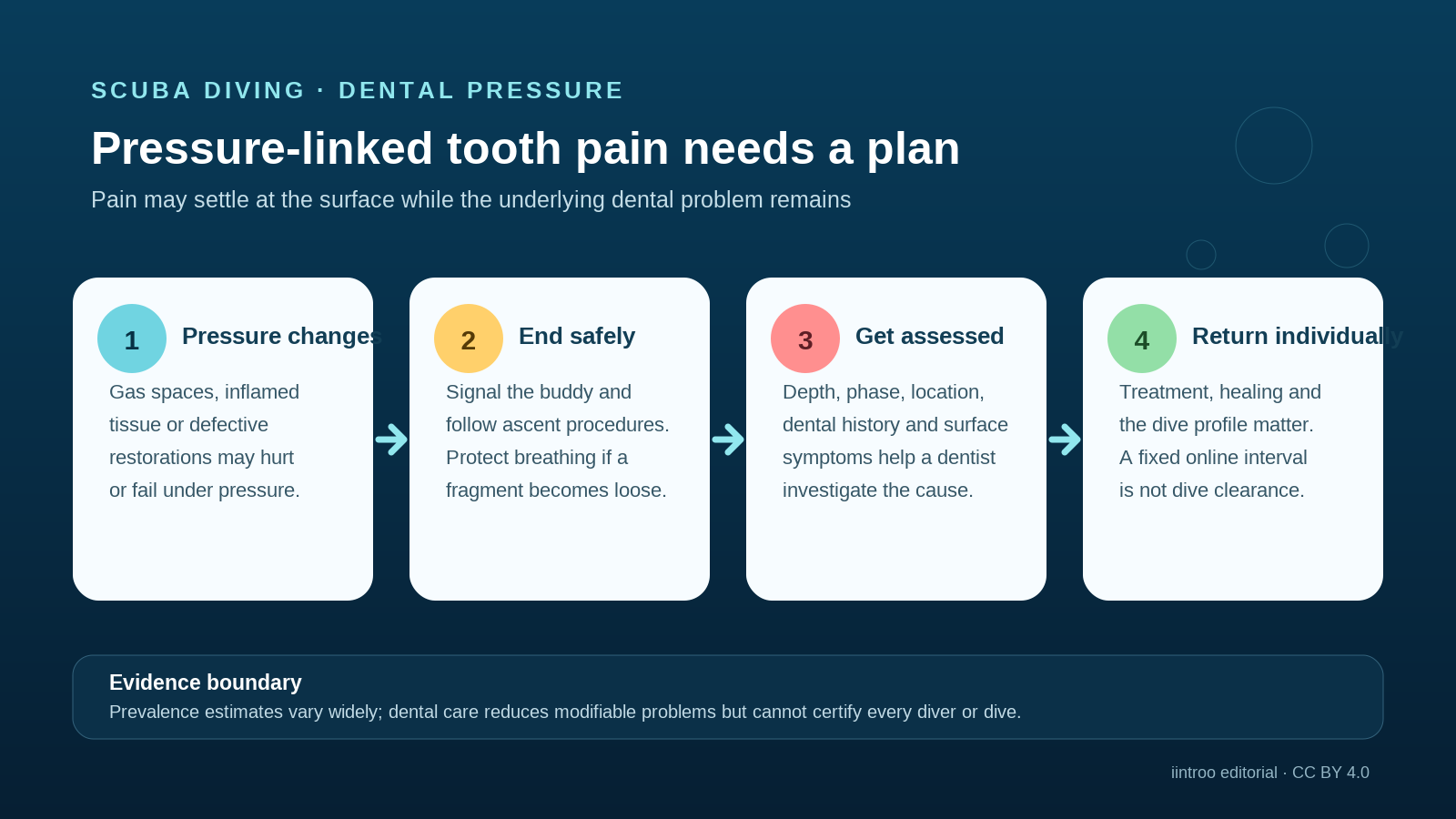
Key points
- Barodontalgia means dental pain associated with ambient-pressure change; dental barotrauma describes structural injury such as a damaged tooth or restoration.
- A 2025 systematic review found very wide prevalence estimates and high study heterogeneity, so no single percentage describes every diver.
- New pressure-linked tooth pain, a loose restoration or facial swelling should end the dive safely and be assessed before another pressure exposure.
Name the symptom without guessing the tooth
This guide is for recreational and occupational divers, instructors and dental professionals. Barodontalgia describes tooth pain triggered or changed by ambient pressure. Dental barotrauma describes physical injury to a tooth, filling, crown or other structure. Pain during descent or ascent can point toward different mechanisms, but timing alone cannot locate decay, pulp disease, an incomplete root treatment, a leaking restoration or a sinus problem that refers pain to the teeth.
Divers Alert Network notes that a pressure difference between the environment and a gas-filled space associated with a cavity can cause dental trauma. Pressure physics makes that mechanism credible, yet most evidence comes from self-reported surveys, military cohorts, case reports and reviews rather than prospective diagnostic studies. A diver should report the exact depth, phase of the dive, tooth area, duration, previous dental work and whether symptoms continued at the surface.
Read prevalence as a range with major uncertainty
The 2025 systematic review included seven studies across military, occupational and recreational divers. Reported barodontalgia prevalence ranged from 10.8% to 56.1%, with extremely high statistical heterogeneity, so the authors did not pool the studies. Different questionnaires, populations, diving exposure and definitions help explain why a single headline percentage would mislead.
A 2026 comprehensive review reported lower ranges in some civilian surveys and higher pain burdens in selected naval groups. It also noted that no major international dental professional body had issued a specific clinical practice guideline for divers at the time of its search. That absence matters: suggested waiting periods after dental procedures and restoration choices should not be converted into universal rules by a dive club or website.
End the dive safely and protect the airway
Sudden dental pain can distract a diver, interfere with the mouthpiece and provoke an unsafe ascent. Signal the buddy, control the dive within training and emergency procedures, and do not exceed ascent limits to escape pain. If a crown, filling or tooth fragment becomes loose, avoid inhaling or swallowing it when possible without compromising breathing. Once safe at the surface, do not re-enter simply because pressure-related pain settled.
Severe facial swelling, spreading infection, fever, difficulty breathing or swallowing, uncontrolled bleeding, major trauma or neurological symptoms needs urgent medical care. Jaw or tooth pain with chest symptoms or collapse should not be assumed to be dental. Decompression illness, ear or sinus barotrauma and other dive emergencies require the appropriate emergency plan and dive-medicine advice; a dentist does not replace that assessment.
Use dental care as preparation, not a clearance stamp
Routine dental care can identify active decay, inflamed pulp, defective restorations and other problems before travel. Tell the dentist that you dive, especially when planning treatment or reporting pressure-linked pain. After a filling, crown, extraction, root-canal procedure or surgery, ask the treating dentist and a dive-medicine professional when pressure exposure is appropriate for the actual procedure, healing and trip profile. A fixed internet waiting period cannot account for complications or provisional work.
A well-fitting regulator mouthpiece and attention to jaw clenching may help some orofacial complaints, but they do not treat diseased teeth. Keep dental records and insurance arrangements accessible on remote trips, and identify referral options before boarding a liveaboard. This guide does not diagnose a tooth, prescribe antibiotics, choose a restoration, certify fitness to dive or replace the diver's training-agency and local medical requirements.