
Shooting ranges and lead exposure: control the dust before it travels home
Lead can be inhaled during firing or swallowed from contaminated hands and surfaces. Ventilation, cleaning and hygiene matter more than waiting for symptoms.
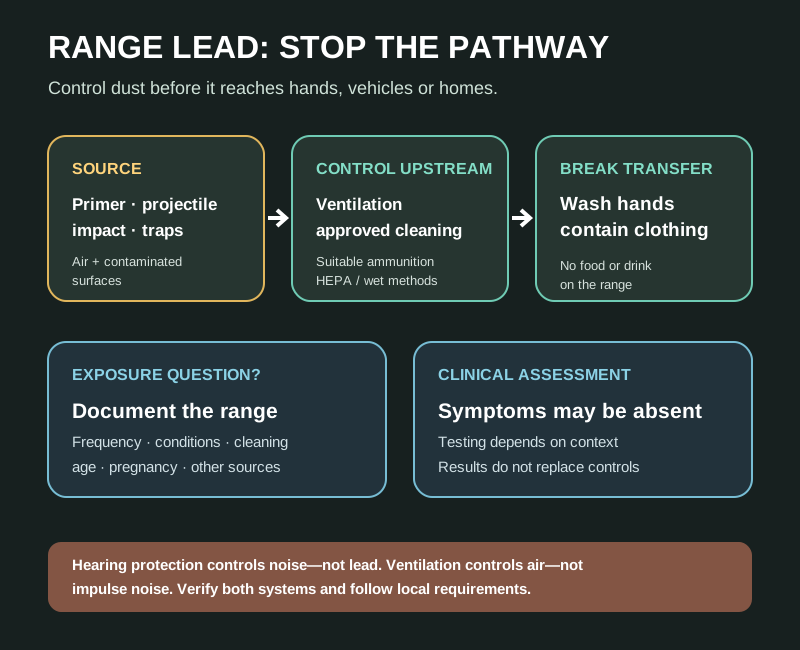
Key points
- Lead exposure at firing ranges can occur through inhaled particles and by swallowing contamination transferred from hands, clothing or surfaces.
- Feeling well does not rule out exposure; blood lead concentration is interpreted with exposure history and clinical context.
- Ventilation, suitable ammunition and safe cleaning practices control exposure upstream, while hygiene helps prevent ingestion and take-home contamination.
Understand how exposure moves from the firing line
This guide is for target shooters, coaches, parents, range staff and medical teams. Lead may be released from primers, ammunition and impact surfaces. Fine particles can be inhaled; deposited dust can move from hands and equipment to food, drink, phones, vehicles and homes. Cleaning traps and floors can create additional exposure if dust is disturbed.
The risk depends on ammunition, ventilation, number of shots, time in the range, maintenance methods and the athlete's other exposures. Air-rifle or lead-pellet environments may have different emission patterns from firearms, but surface contamination still deserves a documented control plan.
Control the source and the room before relying on personal habits
A range operator should verify that the ventilation system moves contaminated air away from shooters and is maintained by competent professionals. NIOSH places elimination, substitution and engineering controls ahead of administrative rules and protective equipment. Ammunition choice, enclosure, extraction and cleaning method should be assessed together.
Dry sweeping and compressed air can redistribute contaminated dust. Use the facility's approved wet-cleaning or HEPA-vacuum procedures, with task-appropriate protective equipment and training. Athletes should not improvise maintenance or handle bullet traps unless the role, controls and competence are clear.
Break the hand-to-mouth and take-home pathways
Keep eating, drinking, smoking, cosmetics and mouth-contact items away from firing and cleaning areas. Wash hands, forearms and face using the range's lead-removal procedure before leaving or touching food. Change contaminated shoes and clothing when the exposure plan requires it, and transport them so that dust is not spread to the car or household laundry.
Children and pregnancy require particular caution because lead can harm the developing nervous system. That does not mean one online article can define a safe personal exposure. Families and youth programmes should ask the facility how it controls air, surfaces, equipment and take-home contamination.
Use testing to answer an exposure question, not to replace controls
Lead effects can occur without a distinctive early symptom pattern. Abdominal symptoms, fatigue, headache or concentration changes have many possible causes. A clinician should decide whether blood lead testing is appropriate based on frequency, range conditions, maintenance work, pregnancy, age and other sources of exposure.
A 2024 UK investigation identified 87 people with possible exposure connected to a civilian indoor range or close contact. An outbreak report shows that serious control failures can affect a group, but it cannot predict one athlete's dose. If several people share concerns, notify the relevant range, public-health or occupational-health authority rather than treating results as isolated personal problems.
Keep hearing and lead controls as separate checks
Hearing protection is essential around firearm impulse noise, but it does not control lead. Likewise, excellent ventilation does not remove the need for effective hearing protection. A range safety review should verify both systems and ensure that eye protection does not break the seal of earmuffs.
Medical testing, range engineering and national exposure rules vary by country. Seek qualified occupational or environmental-health advice when controls are uncertain. This guide does not diagnose lead poisoning, specify a testing interval or replace local regulation.