
Sitting volleyball upper-limb health: count floor movement and ball contacts
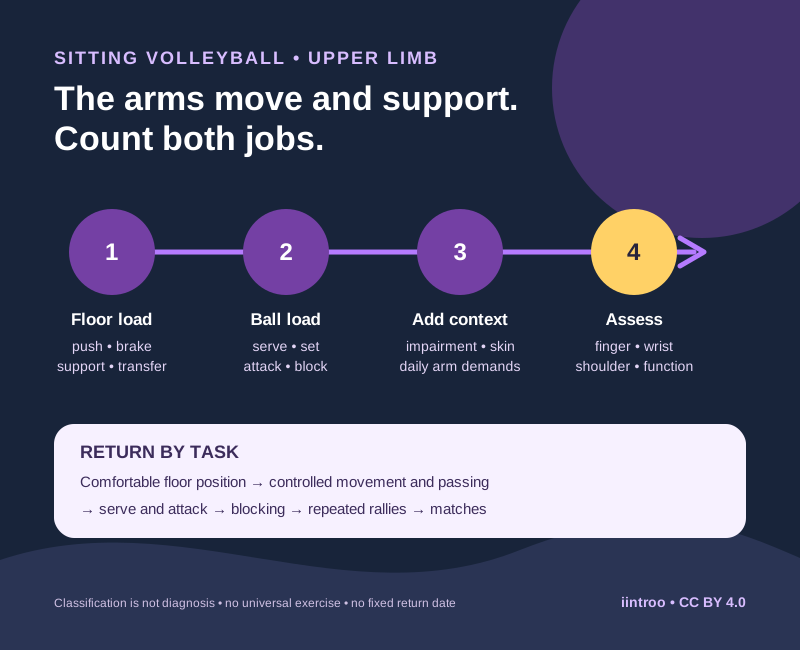
Sitting volleyball combines rapid floor movement, support through the arms and repeated ball contacts. Track finger, wrist and shoulder load while adapting care to the individual athlete.
Key points
- A recent retrospective study from one professional league identified fingers, wrists and shoulders among frequently reported injury areas, but its small sample cannot predict every player.
- Floor movement, supporting body weight through the arms and repeated ball contacts can overlap; count these demands instead of tracking spikes alone.
- Classification describes eligibility for competition, not a medical diagnosis, treatment plan or complete picture of an athlete's capacity.
Start with the sport and the individual athlete
This guide is for sitting-volleyball athletes, coaches, families, classifiers and health teams. Play combines serving, setting, blocking and attacking with rapid movement across the floor. The hands and arms may contact the ball, brake movement and support body weight within the same rally.
World ParaVolley includes athletes with different eligible impairments, and the rules require part of the torso to remain in contact with the floor during play. Classification supports fair competition; it does not explain every health condition, limb difference, pain history, sensation change, prosthetic issue or functional strategy. Medical planning must stay individual.
Treat the current injury evidence as a starting point
A 2025 study interviewed 56 athletes from six teams in the Iranian professional league and recorded 80 injuries reported by 30 players. Fingers, wrists and shoulders were among the most affected areas, and reinjuries were common. The study was retrospective, covered one league and measured exposure in athlete-days, so recall and selection can influence its estimates.
A broader para-athlete meta-analysis found upper-limb and shoulder problems prominent in several non-ambulant sports, but rated prevalence evidence very low quality and incidence evidence low quality. Athletes and teams should report and monitor health problems; they should not assume one league's percentage is their personal risk.
Record movement, support and ball-contact load
Track training minutes, sets, matches and tournament density together with serving, attacking, blocking, defensive floor movement and drills that load the arms for repeated support. Add strength work, wheelchair propulsion or crutch use, transfers and another sport when relevant. Competition exposure is only one part of the upper-limb day.
Note pain, swelling, grip or push-off difficulty, loss of ball control, skin problems and the response later and the next morning. A player may compensate for one painful area by loading another. Coaches can modify drills and repetitions, but persistent or function-limiting symptoms need impairment-informed clinical assessment rather than a generic shoulder programme.
Build prevention around reporting and capacity
World ParaVolley's surveillance programme aims to describe injury and illness patterns and evaluate prevention over time. Teams can support that purpose with consistent definitions, confidential reporting and follow-up, including gradual-onset problems that do not immediately remove an athlete from play.
Preparation may include individual hand, wrist, shoulder and trunk capacity, floor-movement technique, progressive ball-contact volume and suitable skin and equipment checks. The details depend on the athlete. Research does not justify one universal strengthening routine, taping method or workload ratio for sitting volleyball.
Return to the floor by task and response
A staged return can progress from daily tasks and comfortable floor positions to controlled movement, passing and setting, then serving, attacking, blocking, repeated rallies and full matches. The order changes with the injury, dominant arm, impairment, assistive-device needs and court role. Classification status does not provide medical clearance.
A deformity, suspected fracture or dislocation, loss of circulation, new numbness, marked weakness, severe swelling or an infected wound requires prompt assessment; severe or rapidly worsening symptoms need urgent care. This guide cannot diagnose an injury, prescribe taping or medication, or set a return date. The current World ParaVolley rules, event medical plan and individual clinical advice take priority.