
Sjögren disease in sport: protect eyes, mouth and recovery while staying active
Sjögren disease can affect dryness, fatigue, pain and organs. Exercise may support function, but eye, dental, heat and systemic care still need individual plans.
Key points
- Sjögren disease can affect eyes and mouth as well as joints, nerves, lungs, kidneys and other systems; dryness alone does not establish the diagnosis.
- Small randomized-trial syntheses suggest exercise can improve some fitness and quality-of-life outcomes, but findings for fatigue and pain are inconsistent.
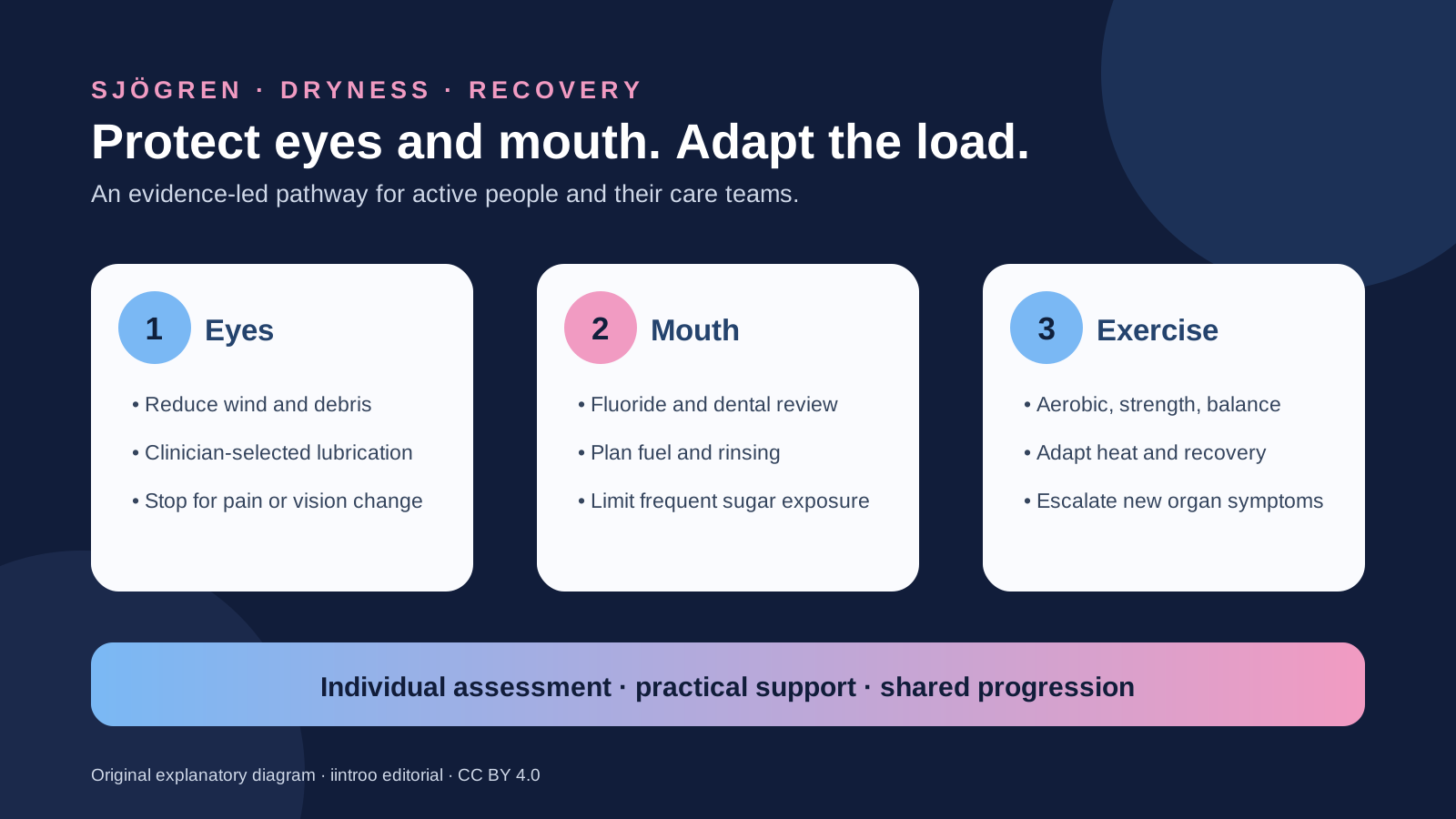
- Sport plans should protect the ocular surface and dental health, adapt to heat and fatigue, and escalate new organ or neurological symptoms for clinical review.
Recognize a systemic disease, not just dry eyes
This guide is for active people with Sjögren disease and the teams supporting them. Sjögren is an autoimmune disease that often reduces tear and saliva production but can also involve fatigue, pain, joints, nerves, lungs, kidneys, blood vessels and other organs. Symptoms vary widely and can overlap with medicines, dehydration, environmental exposure, menopause, infection and other autoimmune disease. Dry mouth after a hot session or irritated eyes in the wind does not diagnose Sjögren, while normal-looking eyes at one visit do not explain every systemic symptom.
Diagnosis uses clinical history, examination and targeted ocular, oral, blood and sometimes gland testing. The EULAR recommendations organize care around the person's dominant symptoms and systemic activity, using topical approaches for dryness and specialist-directed systemic treatment where indicated. New chest pain, fainting, marked breathlessness, weakness, numbness, blood in urine, significant eye pain, light sensitivity or sudden vision change needs prompt assessment. Coaches should document timing and function, preserve privacy and avoid attributing a genuine flare or organ symptom to poor conditioning.
Protect the ocular surface and oral health during sport
Wind, fans, cold air, smoke, dust, chlorine and prolonged visual concentration may aggravate eye discomfort. NIDCR and NIAMS advice supports clinician-selected lubricating drops, protection from drafts and regular eye care. Wraparound sports eyewear may reduce airflow and debris exposure, but ordinary drops or glasses cannot treat corneal injury. Eye pain, marked redness, light sensitivity, discharge or visual change should stop the session and prompt eye assessment. Contact-lens decisions belong with an eye professional because dryness and surface disease can alter tolerance and infection risk.
Reduced saliva increases dental-decay and oral-infection risk. Frequent small sips can help comfort, but repeatedly bathing teeth in sugary sports drink can add harm. NIDCR advises fluoride toothpaste, regular dental review, flossing and limiting sugary food and drink between meals. A dentist and sports dietitian can coordinate fuel form, timing, rinsing and oral care without compromising energy needs. Sugar-free gum or lozenges may stimulate saliva for some people, but they can be unsafe during contact or intense movement and may not suit everyone. Medicines that stimulate saliva require clinical assessment.
Exercise evidence is encouraging but still small
A 2026 meta-analysis included six randomized studies and 277 participants. Physical-activity interventions improved cardiopulmonary function, functional capacity and several health-status domains, but did not significantly improve fatigue, pain or disease activity. A separate 2025 synthesis of five trials and 269 women reported benefits for pain, fatigue, quality of life and aerobic capacity, with resistance work appearing helpful. Different study selection and analyses produced different conclusions, which is a reason for caution rather than for choosing the most optimistic result.
Trial samples are small, mostly female and not designed around competitive athletes, severe organ disease or every treatment. A 2025 cohort of 245 people found higher activity associated with better quality of life, but association cannot prove cause and people who feel better may be more active. Current evidence supports offering aerobic, strength, balance and mobility work at an achievable level; it does not show that exercise suppresses autoimmunity, replaces medicines or guarantees relief from fatigue. The British guideline recommends regular or graded exercise for fatigue while acknowledging the limited evidence base.
Build a flexible plan around heat, fatigue and organ status
The athlete and clinical team should separate stable baseline symptoms from change, then map environmental dryness, heat, hydration access, fatigue, pain, sleep, medicines and any lung, nerve, kidney or vascular involvement. Use perceived effort and next-day response alongside objective load. Adjust session duration, work-to-rest ratio and venue before abandoning activity. Cooling, shaded recovery, indoor alternatives and ready access to water can help in hot or dry environments, but universal fluid targets are inappropriate where kidney, heart or medicine factors matter.
Review the plan when systemic treatment changes, eye or dental disease worsens, fatigue becomes disproportionate, neurological symptoms develop or recovery no longer matches load. This page cannot diagnose Sjögren disease, prescribe eye drops, saliva stimulants, immunosuppression, fluid targets or a personal exercise dose. Evidence does not provide one return date after a flare. Good support combines ocular and dental prevention, flexible training, qualified assessment of organ involvement and the athlete's preferences—without presenting inactivity as the default or exercise as a cure.