
Skateboarding falls: protect the head, wrists and riding space
A helmet, wrist guards and pads cannot remove every injury, but equipment, board checks, suitable terrain and early removal after suspected concussion create layers of protection.
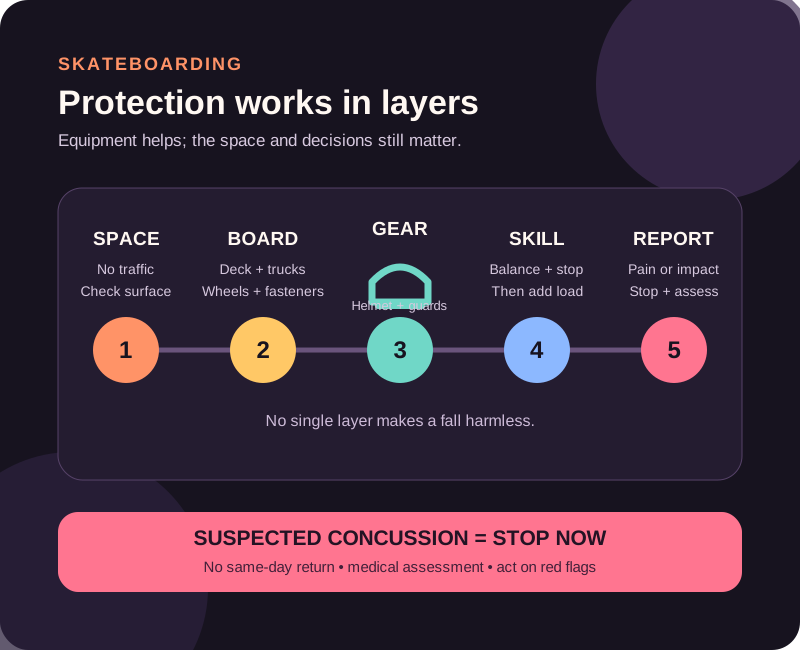
Key points
- Traffic, unsuitable surfaces, excessive speed and board defects are preventable hazards that protective equipment cannot cancel.
- A skateboarding helmet must fit securely and be worn correctly; wrist guards and knee or elbow pads add protection but do not make a trick risk free.
- A rider with suspected concussion should stop immediately, not return the same day and receive appropriate medical assessment.
Control the place before attempting the trick
This guide is for skateboarders, families, coaches, clubs and park operators. Start with the riding environment: keep clear of moving vehicles, inspect the surface for holes, debris and changes in traction, check visibility and avoid a speed or feature that exceeds the rider's control. CPSC guidance highlights traffic collisions, trick riding and excessive speed as important hazards.
Supervision should reflect the rider's age, skill and setting without replacing learning and judgment. Do not hitch to a vehicle or use a public road as an improvised high-speed course. A well-designed park still needs dry, maintained surfaces, clear lines and rules for turn-taking; the label 'skatepark' does not guarantee a safe run.
Sources: 1
Use equipment as one layer, not a permission slip
Wear a helmet designed for skateboarding, level on the head, snug enough to stay in place and secured with the chin strap. Follow the helmet manufacturer's fit, care and replacement instructions and the rules or standards that apply locally. A loose, damaged or incorrectly worn helmet cannot be assumed to provide its intended protection.
CPSC also recommends wrist guards, knee and elbow pads and flat-soled shoes. These items may reduce particular injuries, but they do not prevent every fracture, concussion or serious impact. The 2025 systematic review found helmet use reported inconsistently and often at low levels across 17 studies; it did not establish one equipment package that eliminates risk.
Inspect the board and progress the load
Before riding, check the deck, trucks, wheels, bearings and fasteners for cracks, excessive looseness or other damage. Use a qualified repair service when a defect is beyond routine maintenance. Learn falling, stopping and basic balance skills in a lower-consequence area before adding height, speed or complex rotation.
Treat repeated falls, fatigue and pain as information. End a session when control is deteriorating, and report persistent wrist, hand, ankle or other focal pain rather than masking it to complete a trick. In the Australian hospital review, fractures were the most common injury type and the upper limb was the most frequently affected region, but one hospital cohort cannot predict an individual rider's injury.
Stop after a possible concussion
After a head impact, possible concussion signs include confusion, memory difficulty, balance problems, headache, visual disturbance or unusual behaviour. World Skate competition rules require immediate removal when concussion is suspected and no same-day return. A trained medical assessment is needed even when the athlete wants to continue or the helmet looks undamaged.
Neck pain, double vision, weakness or tingling, a severe or worsening headache, seizure, repeated vomiting, declining consciousness or increasing agitation are red flags requiring urgent medical assessment. Follow local emergency procedures and do not leave the person alone initially. This article is not a first-aid course or medical clearance protocol.
Read the evidence without overpromising
Recent evidence includes hospital cohorts, trauma databases and a systematic review of helmet-use prevalence. These designs describe who reached care and what they were wearing; they are vulnerable to missing exposure data, self-report and selection bias. They cannot prove that every severe injury would have been prevented by a helmet, pad, park or particular coaching method.
The practical approach is layered: separate skating from traffic, inspect the space and board, use correctly fitted protective equipment, build skill progressively and act immediately on suspected concussion or significant pain. Culture matters too: coaches, families and experienced riders can make protective equipment and honest symptom reporting normal rather than a sign of inexperience.