
Wrist pain after a skateboard fall: a normal first X-ray is not always clearance
Thumb-side wrist pain after a skateboard fall needs assessment. Understand missed scaphoid fractures, follow-up imaging and why return is not a fixed deadline.
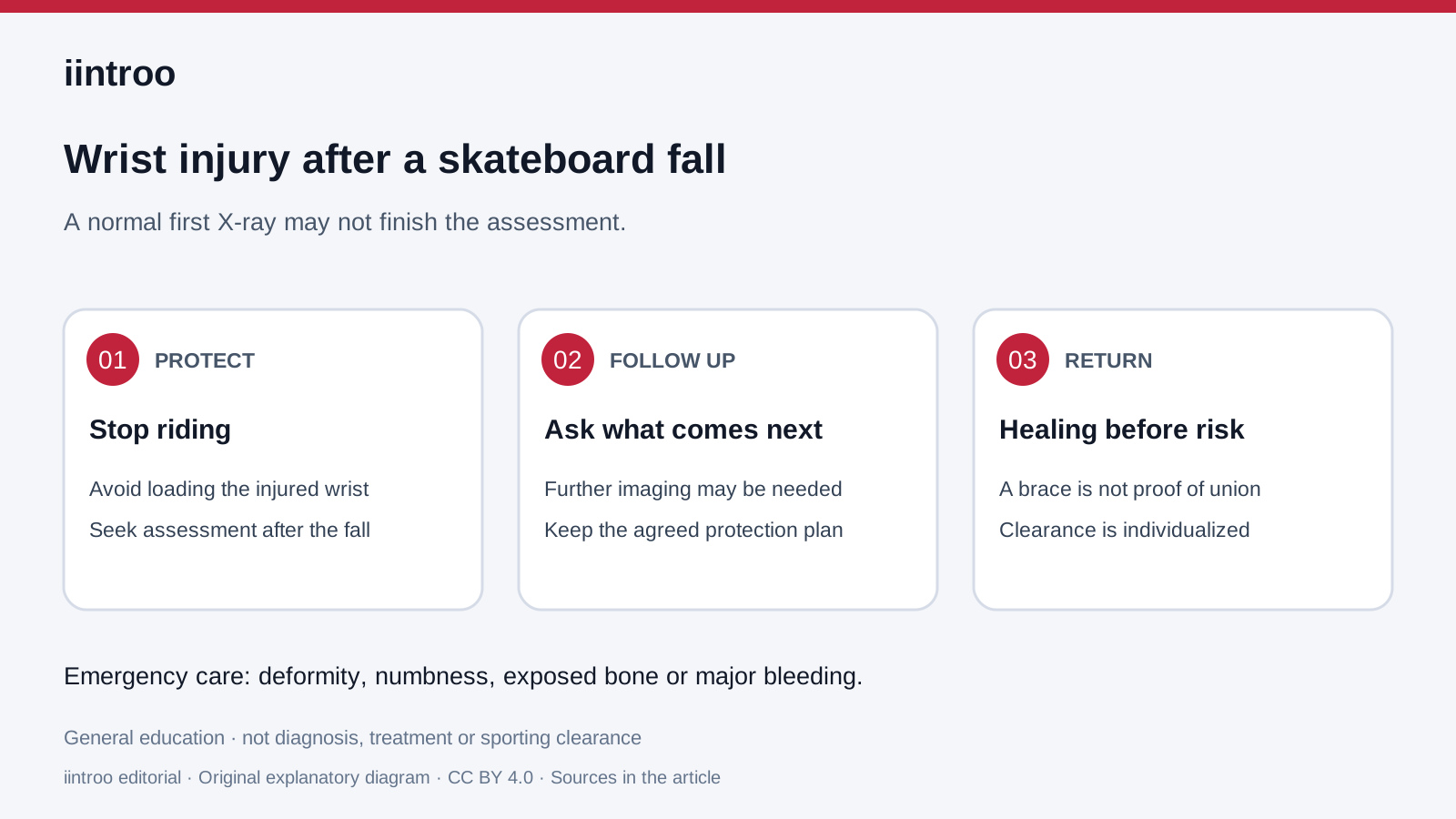
Key points
- Some scaphoid fractures are not visible on the first X-ray.
- A suspected fracture needs a clear follow-up plan, not a self-test.
- Surgery is not automatically superior for every scaphoid-waist fracture.
The small wrist bone that can be easy to miss
Landing on an outstretched hand is a familiar skateboarding accident, but being able to move the wrist does not establish that it is only a sprain. The scaphoid is one of the small bones on the thumb side of the wrist. A fracture may cause pain with gripping or pressure without dramatic swelling. This guide is for riders and families deciding what to do after a fall, not for identifying a fracture at home.
Stop riding and arrange assessment when a wrist injury remains painful or limits use. Repeatedly trying a push-up, gripping the board or attempting another trick is not a safe diagnostic test. Tell the clinician how the fall happened and where the pain is concentrated.
What a normal first X-ray does and does not mean
A scaphoid fracture can be invisible on the first radiographs. If the history and examination remain concerning, the clinician may protect the wrist and arrange further assessment or imaging. MRI can help detect an occult fracture; CT can clarify displacement and, in appropriate circumstances, healing. The choice depends on the clinical question and local services.
The British hand-surgery standards describe a structured pathway for suspected fractures with normal initial radiographs. Ask what diagnosis remains possible, what protection and activity restrictions apply, and how follow-up will happen. These professional standards apply to people over 16; a younger rider needs age-appropriate assessment. Do not interpret a reassuring scan report without the accompanying clinical plan.
Recognize when help is urgent
Severe or worsening pain, substantial swelling or inability to use the hand needs prompt medical attention. Numbness, an obviously deformed wrist, exposed bone, major bleeding or a hand changing colour warrants emergency care. Use the local emergency service rather than waiting for an ordinary sports appointment.
Support the injured arm and avoid loading the wrist while help is arranged. Remove rings or a watch before swelling makes that difficult, if this can be done safely. Do not try to straighten a deformity. These are immediate protective measures, not a substitute for diagnosis or a home treatment plan.
Sources: 3
Surgery is not a universal shortcut
The SWIFFT randomized trial studied 439 skeletally mature people aged at least 16 with selected scaphoid-waist fractures displaced by no more than two millimetres. Early surgery did not produce a clinically important improvement in patient-rated wrist outcomes at one year compared with an initial cast pathway that included prompt surgery for confirmed nonunion. Most participants were men; the trial did not test every fracture pattern.
The January 2026 five-year report found similar patient-rated outcomes between the original groups. Valid scores were available from 344 participants, and imaging from fewer people. This is follow-up of the same cohort, not an independent replication. It supports an informed treatment discussion, not choosing a cast or operation without examining the individual fracture.
Return involves another possible fall
Healing depends on fracture location, displacement, blood supply and the treatment course. Comfortable desk work is not the same demand as unexpectedly landing on the palm. A brace or wrist guard does not prove the bone has united or make an unhealed injury safe.
Ask the treating team how healing and hand function will be assessed before returning to fall-risk activity. Once cleared, agree how to rebuild riding demands rather than immediately resuming difficult tricks. There is no responsible universal number of weeks for every rider. The trial outcomes concern wrist health, not a validated return-to-skateboarding test. This article is educational and cannot provide sporting clearance.