
Ski-jumping landings: knee injury, changing weather and safe return
Ski-jumping injuries cluster around crash landings and the knee. Hill decisions, preparation and criteria-based return should guide safer participation.
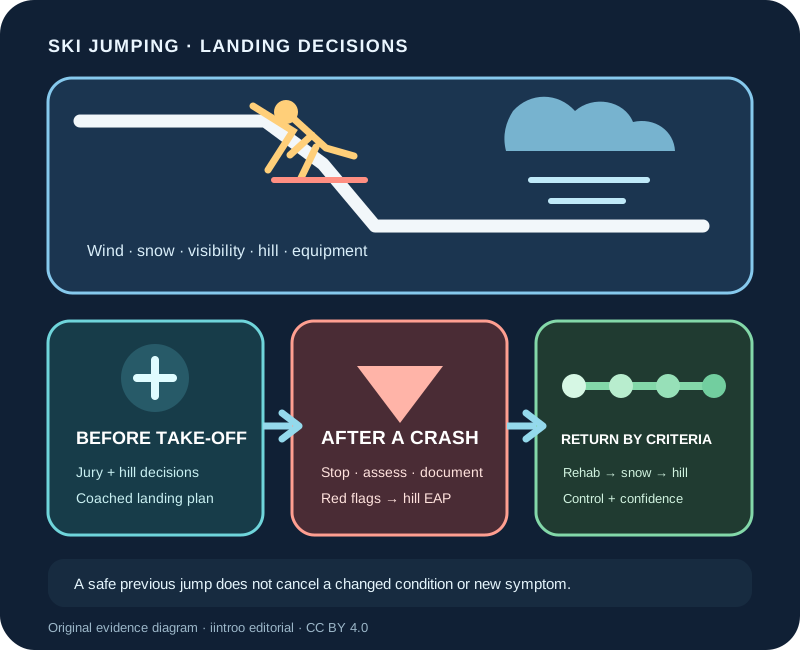
Key points
- FIS surveillance and elite women's cohorts place the knee among the leading ski-jumping injury sites, with crash landings the most common recorded mechanism.
- Wind, snow and visibility can change landing demands, but observational studies cannot prove that one weather condition caused an individual injury.
- A painful or unstable knee after a landing needs qualified assessment; return must restore strength, control, hill-specific skills and confidence rather than follow a fixed date.
The landing is the main injury conversation
This guide is for ski jumpers, coaches, parents, hill teams and clinicians. FIS surveillance from five seasons recorded 89 injuries and identified a lower-limb emphasis, with the knee accounting for 41.6% and the ankle 14.6% of injuries. In a prospective three-season cohort of elite women, 70% of injury events followed a crash landing, the knee was the most common site and one third of injuries were severe.
Those figures describe World Cup and elite environments, not every club or developing jumper. The cohorts were small, exposure definitions differed and surveillance identifies patterns rather than a personal probability. The useful message is operational: landing preparation, hill conditions and an immediate response plan deserve the same attention as take-off and flight performance.
Conditions can change the task between jumps
Snow, wind, visibility, inrun speed, gate choice, hill preparation and equipment compliance interact. In the three-season women's cohort, 44% of acute injury events occurred in snowy, windy or cloudy conditions, while the single-season study also found many moderate or severe injuries in snow or wind. These associations do not establish a causal weather threshold and cannot replace the jury's measurements and decisions.
Athletes should follow the current FIS or national competition rules, hill signals and team communication. A previous safe jump is not permission to ignore a changed wind reading, deteriorating landing surface or equipment concern. Coaches and officials—not an athlete under selection pressure alone—need a clear route for delaying or stopping participation when the planned conditions are no longer present.
Technique is individual and coached, not an online recipe
A ski-jump landing must manage high speed on a sloped surface while the athlete transitions from flight to skiing. Telemark and parallel landings have different competition and biomechanical contexts, and fatigue, jump length, surface and skill change the demand. The landing review concludes that this phase remains under-researched despite its importance.
Dry-land strength, balance and landing drills can build general capacity, but this article cannot prescribe a technique or progression. Hill size, equipment, age, physical development and coaching competence matter. A movement cue that helps one jumper may destabilise another; skill changes belong in supervised practice using the discipline's current rules and the athlete's established technical model.
Treat a crash as an injury event, not a lost score
After a crash, stop the athlete from standing or skiing away if there is severe pain, deformity, inability to bear weight, loss of feeling, neck or back pain, confusion, worsening headache or another emergency concern. Activate the hill medical plan and follow trained responders. A normal-looking suit or binding does not rule out knee, ankle, head or spinal injury.
Swelling, locking, giving way, persistent focal pain or reduced motion needs medical assessment even when the athlete can walk. Video can document the mechanism for clinicians, but it cannot diagnose a ligament, meniscal, bone or cartilage injury. Painkillers, tape or a brace should not be used to manufacture clearance for another jump.
Return from rehabilitation to performance in layers
Return depends on the actual diagnosis and may progress through ordinary movement, rehabilitation, general conditioning, ski-specific dry-land tasks, controlled snow work, smaller or less demanding hills, full training and competition. The medical and coaching team should agree criteria for pain, swelling, strength, range, dynamic control, equipment use, hill tolerance and psychological readiness.
A medically healed structure is not automatically ready for World Cup-level performance, and a confident take-off does not prove landing capacity. A recurrence of swelling, instability, altered technique or fear after a step should prompt reassessment. There is no responsible universal number of days for return, and current federation rules and individual clinical advice take priority.