
Ski mountaineering avalanche safety: gear needs training
A transceiver, probe and shovel support companion rescue but do not prevent burial. Hazard information, practice and turn-back decisions come first.
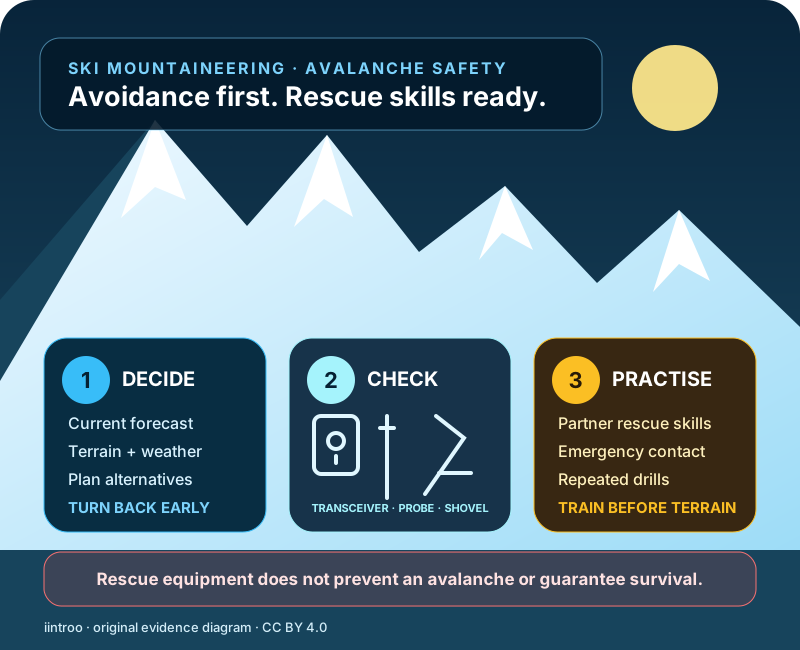
Key points
- The 2025–26 ISMF rules specify avalanche transceiver, shovel and probe requirements for applicable official events, inspections and training.
- Rescue equipment can shorten location and excavation when companions know how to use it, but it does not stop an avalanche or guarantee survival.
- Training routes need their own local hazard assessment, communication and emergency plan; a race equipment list is not permission to enter avalanche terrain.
Separate race control from backcountry judgement
This guide is for ski-mountaineering athletes, coaches, families and training groups. ISMF rules can require an avalanche victim detector, shovel, probe, helmet, clothing and other equipment for official events, course inspection and official training. Event organisers and a technical jury also control the marked course and race conditions.
An independent training day is different. A mandatory race kit does not certify an unmarked route or replace the local avalanche forecast, weather, snowpack information, land access rules and advice from qualified local professionals. ICAR prevention principles emphasise preparation, alternatives, continual reassessment and open group communication.
Equipment is a rescue system, not a force field
A transceiver helps companions locate a buried person; a probe helps pinpoint; a shovel supports excavation. Every member needs compatible, functional equipment carried as specified by its manufacturer and the applicable rules. UIAA standards address mechanical requirements for rescue shovels and probes, but certification cannot supply search skill or decision quality.
A retrospective Austrian study from 1994–2003 associated transceiver use with shorter median burial time, yet mortality among completely buried victims remained high. Rescue technology cannot be presented as a guarantee, and the older regional data may not reflect current equipment, behaviour, terrain or rescue systems elsewhere.
Practise before the emergency
Partners should know how to run a pre-start equipment check and practise locating, probing and digging under qualified instruction. Training should include gloves, cold, time pressure, more than one signal and communication with emergency services. Reading a diagram after an avalanche is not a rescue plan.
Agree leadership, spacing and regroup points; share the route and return time with a reliable contact; confirm local emergency numbers and the limits of phone or satellite coverage. Carrying equipment without practising together can create false confidence. Youth groups require age-appropriate supervision and conservative terrain choices.
Avoidance remains the first intervention
The WMS guideline treats avalanche prevention, rescue and resuscitation as linked but evidence-limited areas. The safest burial is the one avoided. Use current local information, identify terrain exposure and consequences, and be willing to change or abandon the objective when observations or uncertainty exceed the group's plan.
Fatigue, competition goals, social pressure and familiarity can narrow decisions. A planned turnaround point and alternative route make retreat an expected option rather than a failure. Airbags and other devices may add layers in some settings, but no equipment replaces avoidance, partner competence or professional local guidance.
Activate trained rescue and medical care
After an avalanche, protect rescuers from secondary hazards and activate local mountain rescue as soon as possible. Companion actions are time-critical, but they must follow current training and local protocols. Trauma, airway obstruction, asphyxia and hypothermia can coexist; improvised internet instructions are not a substitute for an avalanche-rescue course.
Anyone buried, injured, confused, breathless, very cold or exposed to major trauma needs professional medical assessment. This article does not teach a complete search, excavation or resuscitation protocol. Qualified training, repeated practice and conservative terrain decisions are the practical foundation.