
Softball pitching load: the windmill delivery is not a free pass
Fast-pitch softball evidence does not support treating unlimited underhand pitching as harmless. Track all teams, fatigue and pain, then respond before mechanics and function deteriorate.
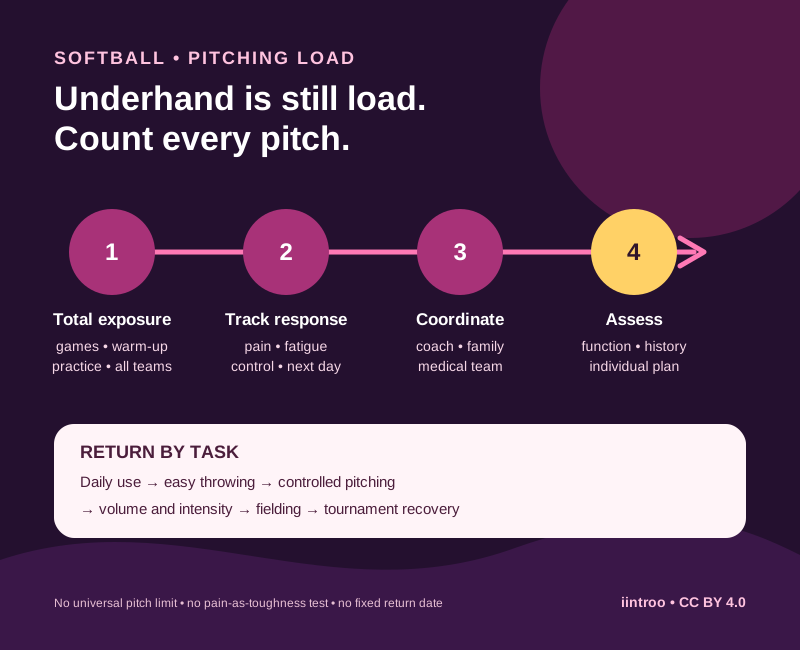
Key points
- The windmill pitch places meaningful demand on the shoulder and elbow; underhand does not mean load-free.
- Published softball studies are too limited to establish one evidence-based pitch count or rest rule for every age and competition.
- A useful record combines pitches, innings, warm-up throws, practice, other positions, multiple teams, pain, fatigue and recovery.
Replace the underhand-safety myth with exposure data
This guide is for fast-pitch softball pitchers, catchers, families, coaches and medical teams. The arm moves through a large range at high speed during the windmill delivery. Calling the motion underhand does not show that the shoulder, elbow and trunk are protected from fatigue, pain or injury.
A 2025 systematic review found higher reported shoulder and elbow injury incidence in collegiate than high-school softball, but rates varied by setting and study. A separate shoulder review found only seven eligible studies and described the evidence as limited. These data support taking arm health seriously; they do not establish that pitching alone caused every reported injury.
Count the work that a single scorebook misses
Record competitive pitches and innings, bullpen and warm-up pitches, pitching practice, high-intensity fielding throws and time at another position. Combine school, club, academy and private sessions. The athlete's total exposure can be much larger than the number visible to any one coach.
Add recent tournaments, consecutive days, travel, sleep, strength training and other sports. Note pain, fatigue, reduced control or velocity and the response later that day and the next morning. A shared log improves coordination, but it is not a diagnostic test or proof that a specific threshold is safe.
Use fatigue and pain as information, not a character test
In a small study of 17 high-school pitchers, shoulder strength declined after games, while pre-game pain and fatigue increased with more games pitched across the season. The sample was small and cannot define a universal stopping rule, but it challenges the idea that a pitcher should work through every change because the delivery looks normal.
Agree before play who can remove or modify a pitcher, how the athlete reports symptoms privately and how different teams exchange workload information. Loss of control, altered mechanics and visible fatigue can prompt a coaching decision; persistent pain, weakness or loss of normal function warrants assessment by a qualified healthcare professional.
Do not import a baseball limit and call it softball evidence
Age-based baseball pitch limits are not automatically validated for softball. The softball prevention review found few position-specific programmes and substantial gaps in evidence. A local league may still set rules for safety and scheduling, but administrators should describe those rules honestly rather than presenting them as a proven injury boundary.
A practical programme can coordinate recovery days, gradual pre-season preparation, whole-body strength, throwing mechanics and symptom reporting. None of those elements guarantees prevention. Young athletes also need enough time for school, sleep, food and life outside sport; switching teams does not reset biological fatigue.
Return through pitching demands, not a calendar shortcut
After injury or a clinically directed pause, progression may rebuild comfortable daily use, general conditioning, easy throwing, pitching intensity, pitch volume, fielding and recovery between appearances. The order and pace depend on diagnosis, age, history and response. One pain-free bullpen or a normal scan does not prove readiness for a tournament schedule.
Sudden severe pain, deformity, major swelling, a suspected dislocation or fracture, numbness, marked weakness or loss of hand circulation needs urgent assessment. Ongoing pain that changes the delivery also deserves review. This article does not prescribe a pitch limit, exercise programme, medication or return date; current competition rules and individual clinical advice take priority.