
Spinal muscular atrophy and adaptive sport: build capacity without ignoring fatigue or breathing
Spinal muscular atrophy affects strength, fatigue and breathing differently. Adaptive training needs current function, respiratory review and measured recovery.
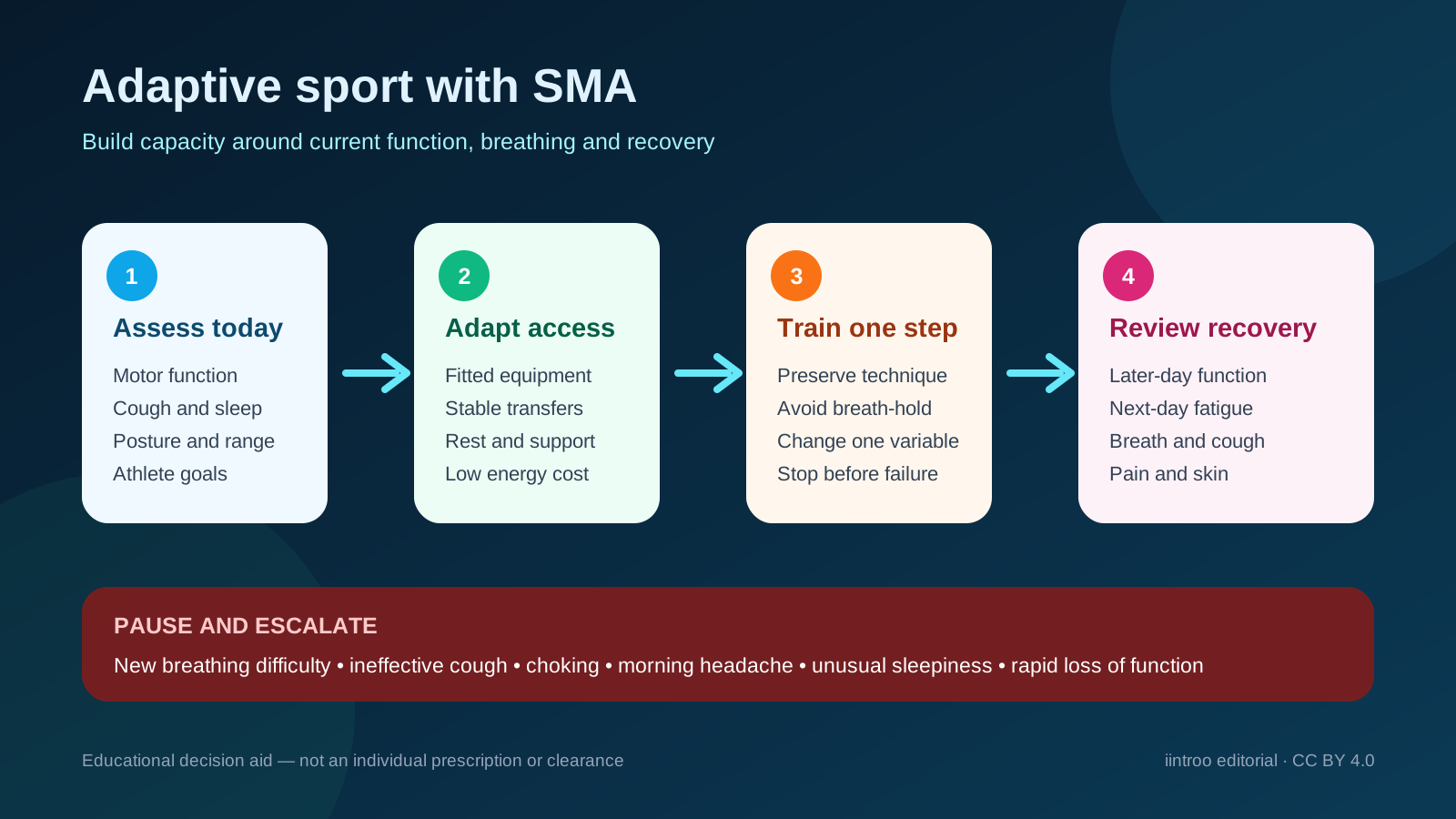
Key points
- SMA varies by age, motor function, respiratory status and treatment response, so one exercise dose cannot be transferred between athletes.
- Small trials support selected aerobic, trunk and respiratory training, but they do not prove that harder work changes the disease course.
- New breathing difficulty, weak cough, swallowing change, morning headache, unusual sleepiness or loss of function needs clinical review.
Start with today's motor and respiratory function
This guide is for people with 5q spinal muscular atrophy, families, coaches and rehabilitation teams. SMA causes motor-neuron loss and muscle weakness, but function differs widely between people who do not sit independently, sit, walk or use powered mobility. Age, contractures, scoliosis, fatigue, swallowing, cough effectiveness, sleep-related breathing, treatment and access equipment can all change what a safe session looks like. A diagnostic type or treatment name is not an exercise prescription.
Current standards of care place rehabilitation, respiratory review, nutrition and orthopaedic management alongside disease-modifying treatment. The movement assessment may include transfers, range, posture, wheelchair position, upper-limb use and functional goals. Respiratory assessment can include symptoms, cough, lung function and sleep evaluation when clinically indicated. A coach can record performance and recovery, but should not interpret spirometry, change assisted-cough routines or infer that improved strength makes respiratory monitoring unnecessary.
Use encouraging trials without turning them into a universal dose
Exercise evidence is growing but remains small and heterogeneous. A 2025 study in people with type III SMA reported gains after supervised aerobic training, while a randomized trial of 38 children found improvements within respiratory-training groups and additional trunk-control signals. A 2026 feasibility study of assisted interval cycling in wheelchair users reported high attendance and no systematic fatigue increase. Different ages, abilities, outcomes and short follow-up mean these results cannot define one frequency, intensity or progression for every athlete.
Fatigue also needs precise language. A person can feel persistent fatigue, develop task-specific fatigability during repeated movement, or experience a temporary decline after an unusually demanding day. These are related but not identical. A 2025 review proposed separating fatigue from performance fatigability because measurement and management differ. Plan work around the person's reliable baseline, useful movement and next-day response. The aim is participation and function, not proving effort through exhaustion or soreness.
Adapt equipment, temperature and recovery
Choose stable, fitted equipment and reduce unnecessary energy cost. Options may include assisted cycling, supported standing, aquatic access, seated resistance, propulsion practice or task-specific mobility, but each needs a therapist-led fit when weakness, contracture or pressure risk is relevant. Avoid breath-holding and poorly controlled maximal efforts. Build duration, resistance or skill one variable at a time, with enough rest to preserve technique. Heat, infection, travel and inaccessible transfers can add load that a training log does not capture.
Track what matters to the individual: ease of transfers, repeated movement quality, perceived effort, breathlessness, cough, pain, sleep and function later that day and the next. A single slower session is not proof of progression, and a wearable cannot rule out respiratory weakness. Skin redness that persists, new pressure injury, repeated falls, painful loss of range or equipment-related numbness needs review. Nutrition, hydration and swallowing plans belong to the clinical team; do not use supplements or forced weight change as a shortcut to performance.
Pause for change and return by function
Stop and seek assessment for new or rapidly worsening breathlessness, weak or ineffective cough, choking, recurrent chest infection, morning headache, unusual daytime sleepiness, blue or grey colour, fainting, chest pain or sudden loss of function. Severe breathing difficulty, inability to clear the airway, unresponsiveness or collapse is an emergency. During respiratory illness, follow the person's written clinical plan; a coach should not improvise airway-clearance devices, ventilation settings or medicine changes.
After illness, injury or treatment change, return through comfortable daily activity, accessible conditioning and then sport-specific demands, with the clinical team when function or breathing has changed. There is no universal number of symptom-free days, strength threshold or heart-rate zone. This article cannot diagnose SMA, prescribe exercise, respiratory care, nutrition or equipment, alter treatment or clear participation. It supports shared decisions that protect the athlete's goals while acknowledging the small and evolving exercise evidence.