
Sport after bariatric surgery: coordinate fuelling, hydration and training
Training after bariatric surgery requires coordinated food, fluid, micronutrient and symptom planning. General sport advice cannot replace the bariatric care team.
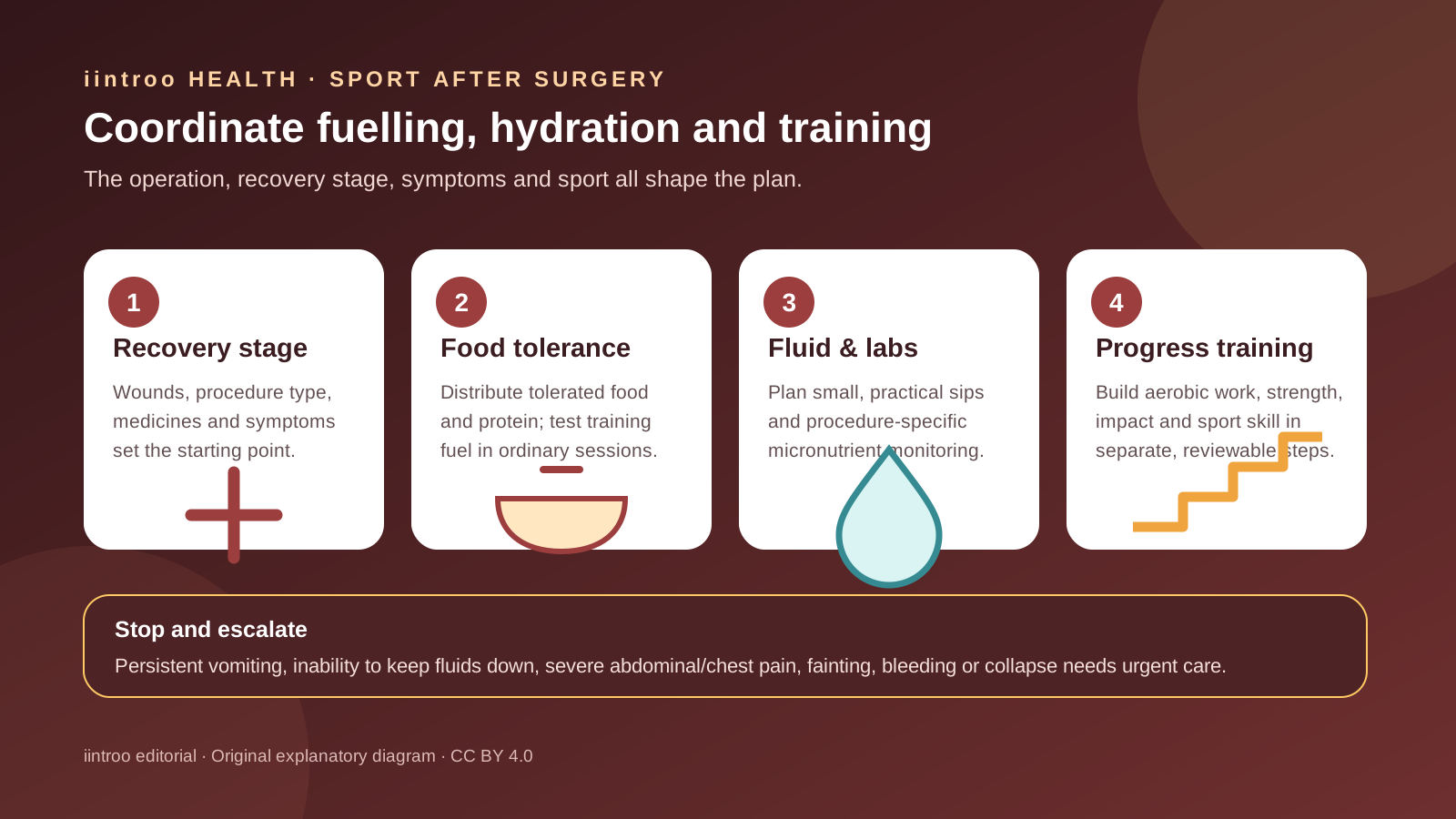
Key points
- Surgery type, recovery stage, tolerance and laboratory monitoring shape nutrition and exercise decisions; one online protein or fluid target is not universal.
- Small meals, altered absorption and difficulty drinking around food can complicate fuelling and hydration during long or intense sessions.
- Exercise can improve fitness and strength after surgery, but evidence does not justify rushing impact, heavy lifting or competition before recovery and clinical review.
Build the sport plan around the operation and the person
This guide is for adults returning to or starting sport after metabolic or bariatric surgery, plus coaches and clinical teams. Sleeve gastrectomy, gastric bypass, adjustable banding and more malabsorptive procedures do not create the same anatomy, absorption or symptom pattern. Timing since surgery, wound healing, medicines, diabetes treatment, gallbladder or gastrointestinal symptoms, baseline fitness, pregnancy plans and the athlete's sport all change the plan. Body size or weight loss does not describe readiness or worth.
The bariatric surgeon and multidisciplinary team direct the early diet stages, supplements, laboratory surveillance and restrictions. Light movement commonly begins early to reduce inactivity, but swimming waits until wounds are healed and higher-impact or heavy resistance work needs progression. Severe or increasing abdominal or chest pain, persistent vomiting, inability to keep fluids down, fainting, fever, black or bloody stool, rapidly worsening weakness or shortness of breath needs prompt clinical assessment rather than a modified workout.
Fuel performance without overriding tolerance or deficiency monitoring
After surgery, a smaller eating capacity and altered digestion can make it difficult to combine everyday nutritional adequacy with higher training demands. Protein supports recovery and preservation of lean tissue, but the amount and form must fit surgical guidance, kidney health, total energy intake and tolerance. A 2022 systematic review found only eight studies of physically active post-bariatric patients and concluded that sport-specific energy, carbohydrate, fat and micronutrient requirements could not be defined from available evidence.
Use the bariatric dietitian's plan to distribute tolerated foods and fluids across the day, then test training nutrition gradually. Long sessions may expose gaps that are not obvious during ordinary activity. Iron, vitamin B12, folate, thiamine, vitamin D, calcium and other nutrients can require procedure-specific monitoring and supplementation. Fatigue, breathlessness, palpitations, numbness, weakness, bone pain or repeated injury should prompt assessment; they are not proof of one deficiency and should not trigger unsupervised high-dose supplements.
Treat hydration and gastrointestinal symptoms as performance information
Frequent small sips may be easier than large volumes, and many post-operative plans separate drinking from meals. Heat, altitude, long events, protective clothing and gastrointestinal losses can raise fluid needs while capacity remains limited. Plan access and practise the schedule in ordinary training before an event. Urine colour, thirst and body-mass change provide context but are imperfect; a fixed amount copied from another athlete can be too little or too much.
Rapid intake, high-sugar foods or individual trigger foods can provoke pain, nausea, diarrhoea, dizziness, palpitations or dumping symptoms in some people. Late post-meal hypoglycaemia is another clinical possibility after certain procedures. Stop exercise and follow the care plan for concerning symptoms; confusion, collapse, seizure or inability to swallow safely is an emergency. Do not deliberately provoke symptoms to identify a race-fuelling limit, and do not change glucose-lowering medicine without the prescribing clinician.
Progress strength and endurance while tracking function, not only weight
Systematic reviews generally find that structured exercise after bariatric surgery can improve cardiorespiratory fitness, strength and physical function, with mixed results for weight and lean mass. A 2025 meta-analysis reported better exercise capacity and maintenance of lean mass, while earlier reviews found heterogeneous programmes and limited long-term data. These averages do not prescribe one start date, weekly volume or intensity for a particular athlete, and the study populations were not designed to represent every competitive sport.
Progress walking or other aerobic work, resistance training, impact and sport skill in stages agreed with the clinical team. Track energy, recovery, strength, symptoms, menstrual or hormonal health where relevant and the ability to complete normal food and fluid intake—not just scale change. Repeated injury, declining function, persistent fatigue or fear around eating deserves multidisciplinary review. This page is general education, not a diet, fluid target, supplement protocol, medicine adjustment, exercise prescription or personal competition clearance.