
A tooth knocked out in sport: protect the root and get urgent dental care
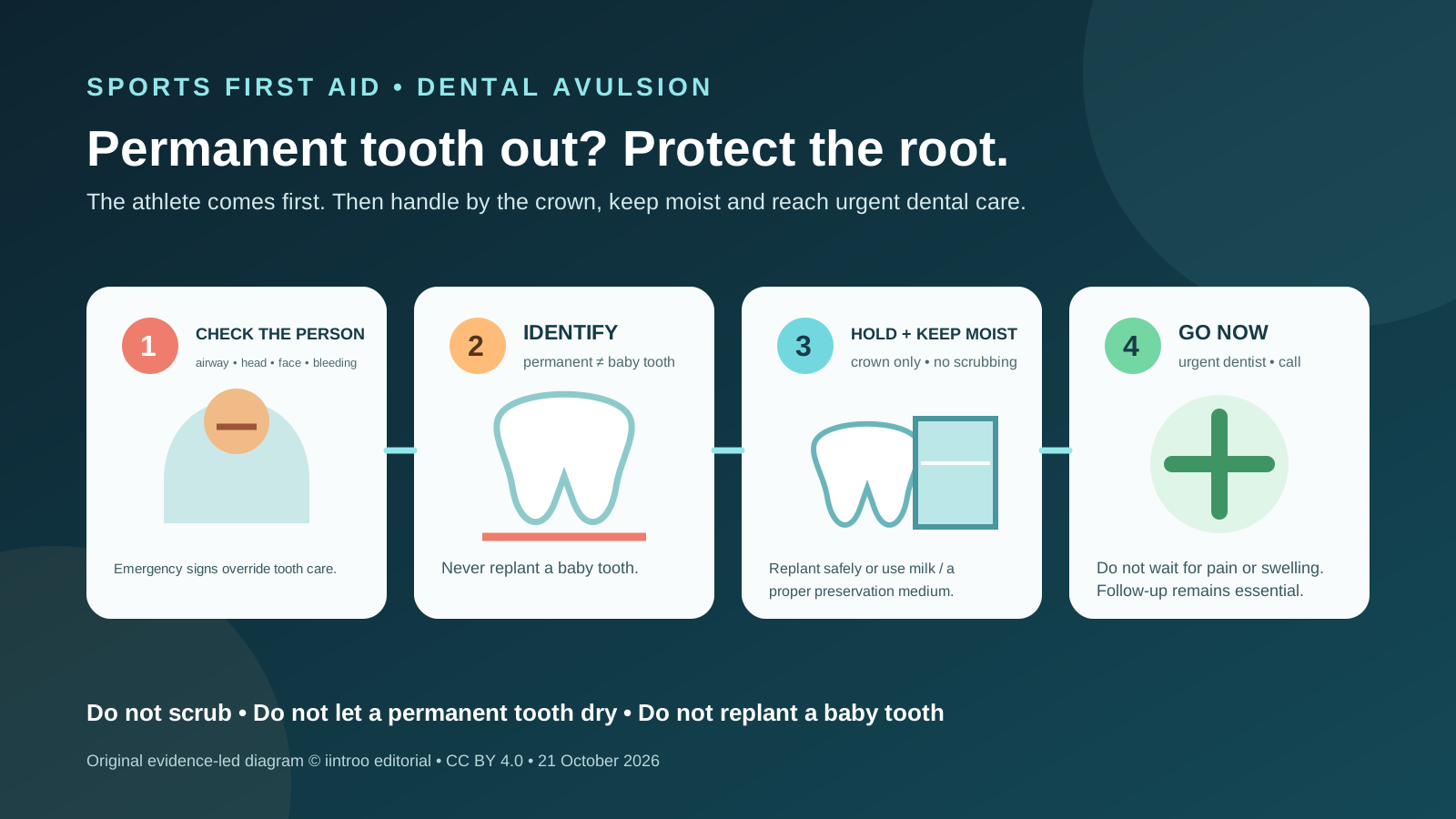
A knocked-out permanent tooth is time-critical. Hold it by the crown, keep it moist and reach urgent dental care; never replant a baby tooth.
Key points
- A completely knocked-out permanent tooth is a time-critical dental injury.
- Handle the tooth by its crown, not the root, and do not scrub or let it dry.
- Never put a knocked-out primary or baby tooth back into the socket.
Check the athlete before focusing on the tooth
This guide is for athletes, parents, coaches, officials and first-aiders in basketball, hockey, rugby, martial arts and other activities where a tooth can be struck. Dental avulsion means the whole tooth has left its socket. Stop play and first assess the person: loss of consciousness, possible concussion, neck pain, severe facial injury, uncontrolled bleeding, breathing difficulty or a missing tooth that may have been inhaled requires emergency medical care.
If the athlete is stable, identify whether the tooth is permanent or primary. A knocked-out permanent tooth may be replanted and is time-critical. A baby tooth must not be put back because replantation can harm the developing permanent tooth. When uncertain, contact an emergency dentist immediately and keep the recovered tooth moist while following professional instructions rather than guessing from the athlete's age.
Protect the living cells on the root
Pick up a permanent tooth by the white crown, never the root. If it is visibly dirty, rinse it gently and briefly with milk, saline or clean running water. Do not scrub, scrape, disinfect, dry or wrap the tooth in tissue. Root-surface cells matter to healing, and drying time affects prognosis. Collect fragments separately because a broken tooth follows a different pathway from a complete avulsion.
The International Association of Dental Traumatology guideline supports immediate replantation of a permanent tooth at the scene when this can be done safely. Do not force it, and do not attempt replantation if the athlete is drowsy, uncooperative, at risk of swallowing the tooth or has serious associated injuries. A first-aid plan must preserve airway and overall safety, not turn replantation into a sideline contest.
Keep the tooth moist when replantation is not appropriate
If a permanent tooth cannot be replanted, place it promptly in a suitable storage medium such as cold milk or a commercially available dental-preservation solution if one is on hand. Saline may be used. Do not store it in plain water for a prolonged period, and never allow it to dry. Holding a tooth inside the mouth creates a swallowing or aspiration risk and is not suitable for a young, distressed or injured athlete.
Go to an emergency dentist without delay and call ahead so the service understands that a permanent tooth is out. NHS England's urgent-care guidance describes reimplantation within 60 minutes as strongly advised, but that is not a guarantee or a reason to abandon a tooth after an hour. Extra-oral dry time, storage, root development, contamination and later care all influence outcome; only the dental team can assess prognosis.
The dental visit is the beginning, not the finish
The dentist will assess the socket, neighbouring teeth, soft tissues, bite and possible jaw injury. Replanted teeth usually require splinting and follow-up; root-canal decisions, antibiotics and tetanus review depend on age, root development, contamination, injury pattern and local guidance. Coaches should not prescribe medicines or promise that a tooth that looks stable has healed.
Complications can develop after an initially successful replantation, including infection, root resorption, ankylosis or tooth loss. Keep every follow-up visit and report increasing pain, swelling, fever, bad taste, colour change or new looseness. Return to training and contact sport should follow the treating dental and medical plan, including protection of the injured area; there is no universal same-day clearance.
Make dental trauma part of the venue emergency plan
A club kit can include gloves, gauze, a labelled rigid container, saline and an in-date dental-preservation product where locally available. Post the emergency dental route beside the wider medical plan, train staff to distinguish crown from root and rehearse how a responsible adult accompanies a young athlete. Record the injury time, whether the tooth was dry, the storage medium and any replantation attempt for the dental team.
A properly fitted mouthguard reduces orofacial injury risk in exposed sports but does not prevent every avulsion and does not protect against concussion. Growing athletes need fit reviewed as the mouth changes, and damaged guards should be replaced according to dental and manufacturer advice. This article is general first-aid education; it does not replace local emergency protocols, professional dental treatment or individual return-to-sport clearance.