
Sport with a stoma: swimming, pouch confidence and hydration
Returning to swimming and exercise with a stoma means planning pouch fit, hydration and recovery—not following a universal return date or generic drinking plan.
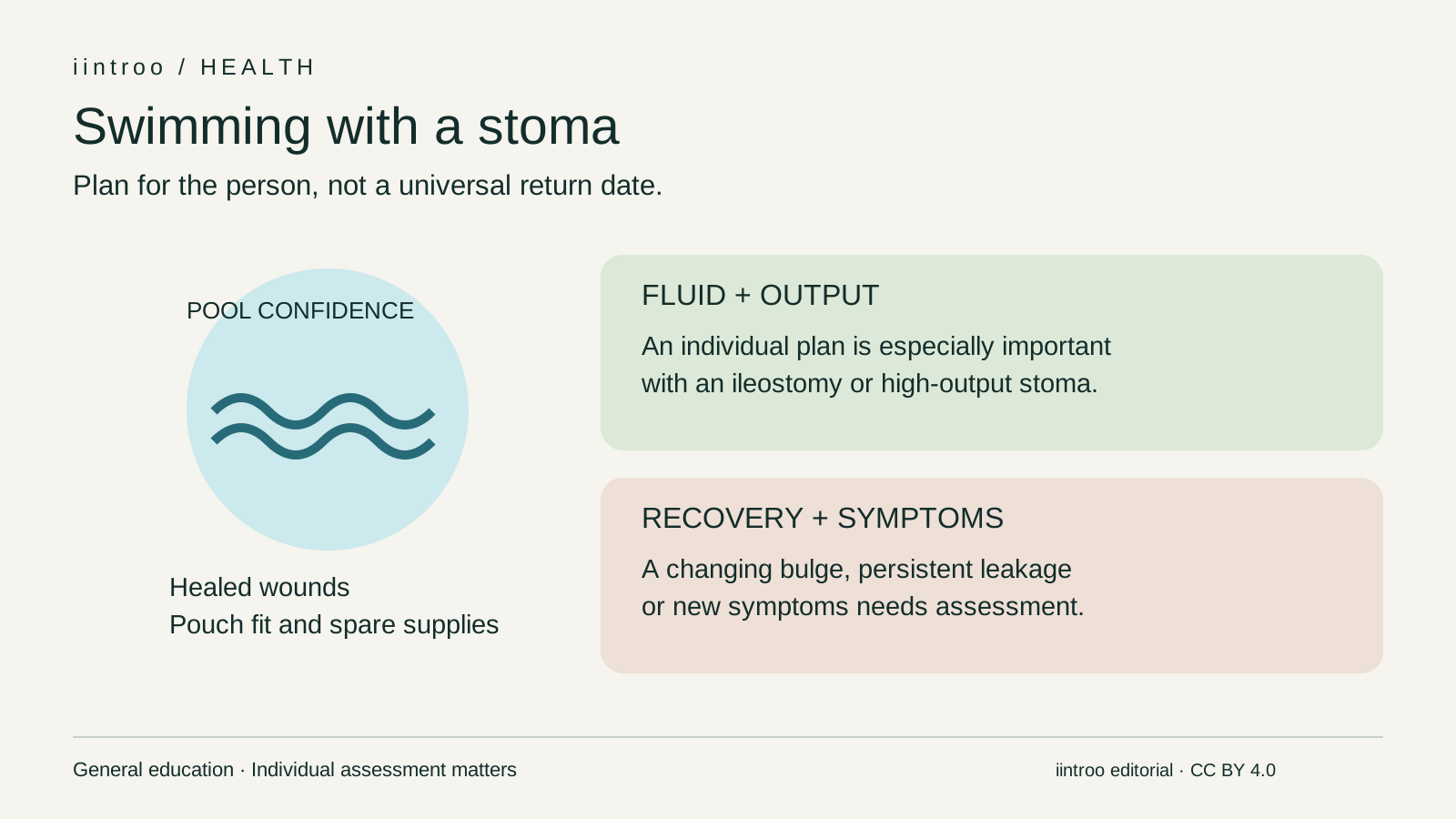
Key points
- Swimming should wait until surgical wounds are fully healed.
- High-output stoma hydration needs specialist advice, not generic fluid targets.
- Exercise and support garments are not proven ways to repair a parastomal hernia.
Build a return around your operation and sport
A stoma does not automatically end swimming or exercise participation. But having a stoma is not enough information to determine appropriate training. The operation, underlying illness, wound healing, ongoing treatment, previous fitness and current symptoms all matter. This guide focuses on adults with a bowel stoma, such as an ileostomy or colostomy.
Discuss the actual demands of your sport with your surgical team, stoma nurse and, when appropriate, a physiotherapist. Pool lengths, heavy lifting and contact play present different challenges. The October 2025 EXPASS recommendations favour an individual recovery pathway. They are evidence-informed professional recommendations, not a validated timetable guaranteeing safe return for everyone.
Sources: 1
Prepare the pouch before the pool
Swimming requires fully healed wounds because of infection risk. Once your team considers swimming appropriate, a stoma itself need not exclude you from the pool. Royal Free guidance explains that the pouch’s main component is waterproof, although its outer covering can become damp. Discuss your particular appliance, skin condition and seal with your stoma nurse; products and accessories differ.
Emptying the pouch before activity can improve comfort. Bring replacement supplies and plan somewhere suitable to change if needed. Specialist swimwear is an option for confidence, not an obligation. Contact sports need a separate discussion about direct impact and whether a stoma shield is appropriate. A pool session and a collision sport are not interchangeable.
An ileostomy changes the hydration conversation
Generic advice to drink more water can be misleading for someone with a high-output stoma. Ileostomy output, heat, illness and exercise-related sweating can complicate fluid and salt replacement. Agree a plan with your clinical team rather than copying another athlete’s drinking routine.
For high-output stomas, Royal Free guidance warns that excessive ordinary drinks can increase output and worsen dehydration; a prescribed oral-rehydration strategy may be needed. This is specialist advice for a particular problem, not a reason for everyone with a stoma to restrict drinks. Reduced or dark urine, dry mouth, unusual fatigue, cramps or light-headedness—especially with changed output—warrant contact with your stoma or colorectal team.
Sources: 3
A hernia or bulge calls for assessment
A new or changing bulge around the stoma deserves assessment. Exercise should not be advertised as a proven way to repair a parastomal hernia. An individually fitted support garment may help comfort in some circumstances, but does not establish that a particular exercise is safe for everyone.
The 2023 HALT feasibility study tested supported physical activity in people with a bowel stoma and a hernia or bulge. It included 17 participants in an initial study and 19 in a feasibility trial. No serious adverse events were reported, but follow-up retention was only 44%, and some pain or discomfort occurred. This supports further investigation, not certainty about prevention, treatment or unrestricted sport.
Make the session manageable and know when to stop
Toilets, spare equipment, changing facilities and freedom to pause can make participation more manageable. Discuss access needs without sharing more medical information than you want. Persistent leakage, soreness or worries about the pouch deserve help from a stoma nurse rather than simply abandoning activity.
Seek urgent medical assessment for severe abdominal cramps with nausea or vomiting, markedly reduced or stopped stoma output, substantial bleeding, or fever and shivering. These are not symptoms to train through. This guide provides general education, not individual medical clearance or a treatment plan. Your existing clinical instructions take priority over a generic sports checklist.