
Swimming with eczema: a skin-care plan without a blanket pool ban
How swimmers with atopic eczema can manage pool irritation, protect their skin barrier and recognise when a flare or infection needs a break and medical advice.
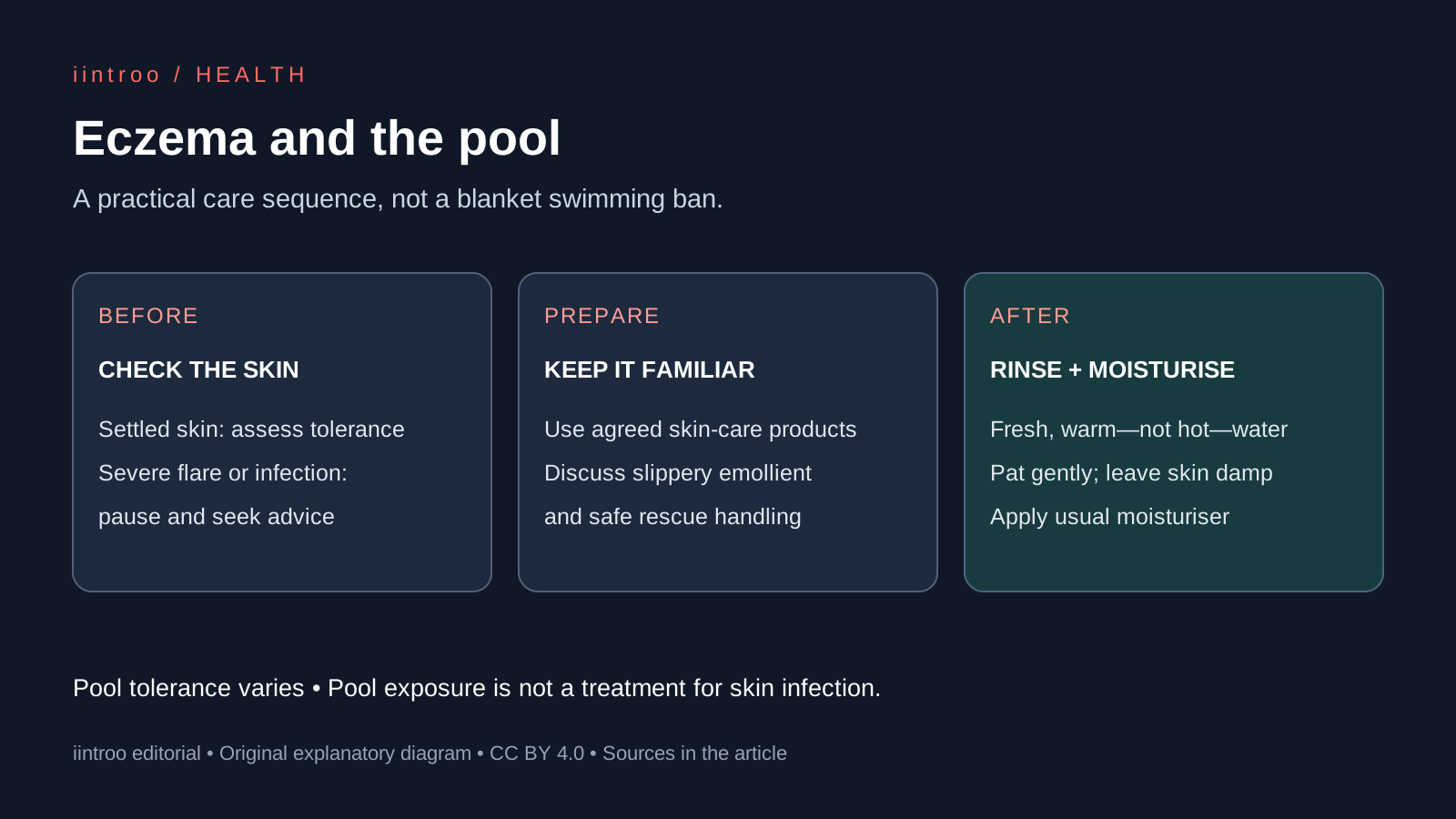
Key points
- Eczema does not automatically prevent swimming; individual tolerance and current skin condition matter.
- A skin-barrier marker is not proof of future eczema or a guaranteed flare.
- Severe flares, open skin and suspected infection need a pause and appropriate medical advice.
Eczema does not automatically rule out swimming
Pool sessions can remain part of life for many people with atopic eczema. This guide is for swimmers, parents and instructors balancing participation with sensitive skin. Pool disinfectants can cause dryness or irritation, but reactions differ: one person may tolerate a pool that another finds uncomfortable. The American Academy of Dermatology says most children with eczema can enjoy swimming with suitable precautions.
When skin is settled, a short initial session at an unfamiliar pool can help establish tolerance. Note how the skin feels afterwards rather than assuming every pool will have the same effect. Persistent irritation is a reason to review the venue and skin-care routine with a clinician, not simply push through.
The evidence supports caution, not sweeping claims
A 2023 narrative review found important gaps in research on swimming during eczema flares and on the best moisturising strategies around swimming. It was not a trial establishing that pools either treat or worsen eczema for everyone. Its practical recommendations combine research with expert opinion.
A separate 2021 study compared 33 competitive swimmers with 25 football players aged 12–21. Skin water loss increased after two-hour swimming sessions, a sign of altered barrier function. But this small, non-randomised study measured a skin-barrier marker, not future eczema diagnoses or flare severity. It cannot establish the effects of a short recreational swim or prove that chlorine alone caused the changes.
Prepare with familiar products and water safety in mind
Use the skin-care products already agreed in your eczema plan. AAD favours fragrance-free creams or ointments; “unscented” does not necessarily mean fragrance-free. Packing a familiar moisturiser and a soft towel makes after-swim care easier than relying on unfamiliar changing-room products.
AAD advises moisturising before swimming, but there is an important safety qualification. Eczema UK warns that freshly applied emollient can make limbs slippery and complicate rescue, particularly for beginners. Discuss this with the instructor; prioritise safe handling and post-swim care when necessary. For outdoor sessions, moisturiser is not sun protection: use suitable clothing and an eczema-compatible sunscreen as part of your usual sun-safety routine.
Rinse, moisturise and notice equipment irritation
After leaving the water, remove wet swimwear and rinse promptly in fresh, comfortably warm—not hot—water. Gently pat the skin rather than rubbing it, then apply the usual moisturiser while the skin remains slightly damp. AAD recommends doing this within three minutes of rinsing. Feeling comfortable in the pool does not remove the need for aftercare.
If a rash repeatedly follows the outline of goggles, a cap or other equipment, tell a dermatologist. Friction, irritation or allergy to an equipment component may need assessment. Switching to seawater is not a guaranteed solution: the review found limited good-quality evidence for saltwater benefits, and some people experience irritation.
Know when to pause and seek help
Skip swimming during a severe flare, with raw or open skin, or when infection is suspected. Weeping or yellow-golden crusting warrants medical advice. Rapidly worsening painful eczema with clusters of blisters or shallow sores, especially with fever or feeling unwell, needs immediate assessment because eczema herpeticum can become serious.
Do not use pool exposure as treatment for infection or replace prescribed care with a swimming routine. Ask the treating clinician about returning after a significant flare or infection; there is no universal number of days. This is general education, not a diagnosis or an individual treatment plan.