
Sports massage after training: less soreness does not necessarily mean better performance
Manual sports massage may ease soreness, but comfort is not proof of restored performance. Explore the evidence, its correction and practical safety limits.
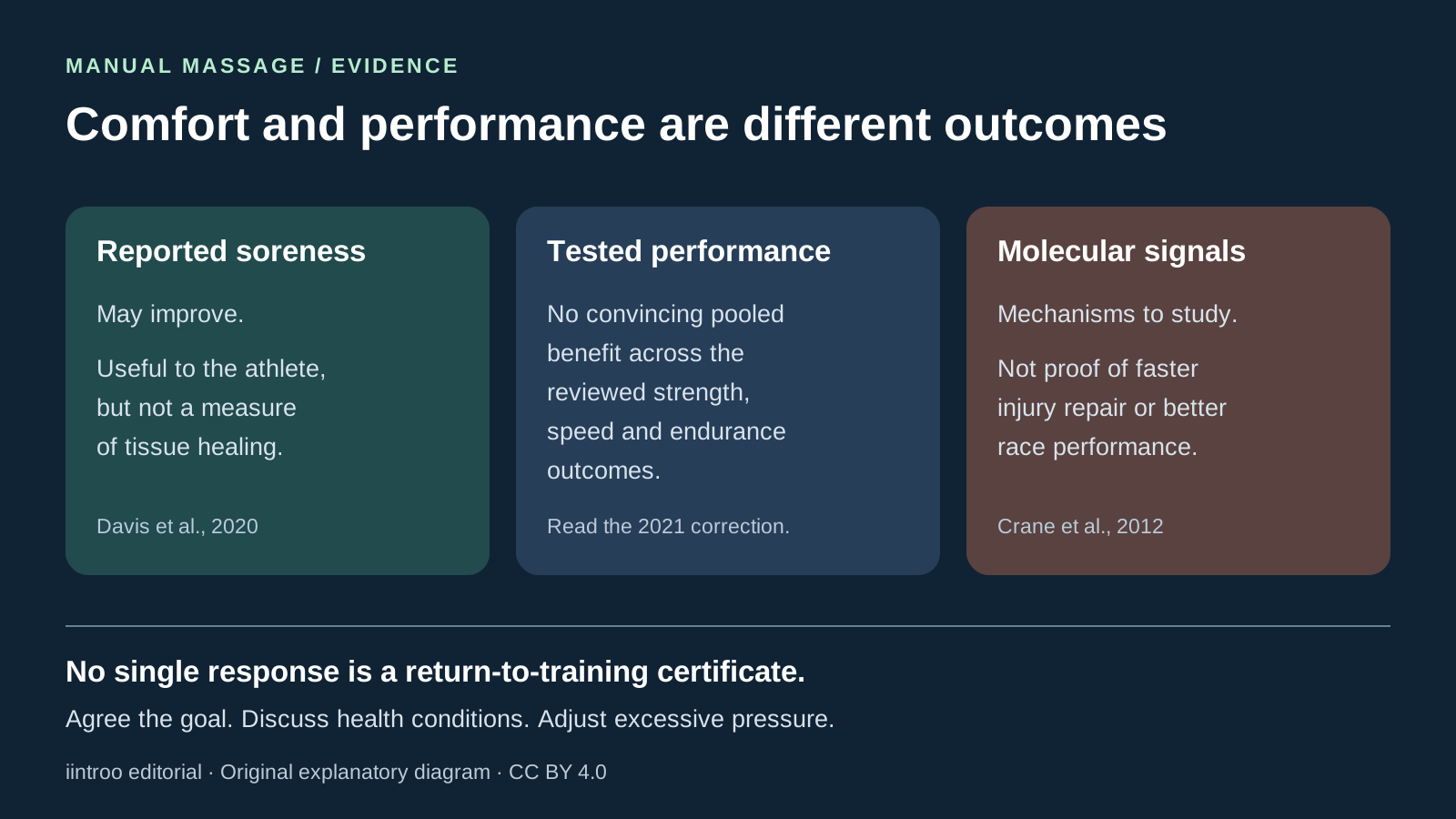
Key points
- Feeling less sore and recovering strength are different outcomes.
- The major manual-massage review has a published figure correction, included below.
- Painful pressure is not a requirement for a useful massage.
Choose the outcome before judging the treatment
This guide concerns hands-on massage delivered by a therapist after sport, not massage guns, foam rollers or compression boots. An athlete might reasonably value feeling more comfortable, but that goal is different from restoring sprint speed, repairing an injury or becoming ready for another hard session. Those outcomes need separate measurements rather than one broad claim of improved recovery.
A 2020 review of 29 randomised studies involving 1,012 participants found modest benefits for soreness and flexibility, but no convincing pooled improvement in strength, jumping, sprinting, endurance or fatigue. The review excluded automated massage devices and foam rolling, so its findings should not be used as direct evidence for every product marketed under the recovery label.
Sources: 1
Read the correction as well as the headline
The review has a 2021 correction replacing an incorrect version of Figure 3. The corrected sprint, endurance and fatigue analyses remain statistically non-significant. The correction is linked here because the published record includes both documents; presenting the original figure without acknowledging that change would leave readers with an incomplete account.
Trials varied in massage technique, timing, participant characteristics and outcome tests, and many were small. The review also selected the earliest post-massage assessment when studies reported several time points. These features limit conclusions about sustained recovery or a particular treatment schedule. The sensible interpretation is that comfort may improve without a demonstrated performance benefit, not that every individual experiences exactly the same response.
A newer trail-running experiment illustrates the distinction
In a 2025 laboratory study, 13 male trail runners completed uphill and downhill treadmill running in a cold environment. One randomly selected thigh received massage while the other rested. Immediately afterward, pain ratings and single-leg balance improved in the massaged limb, but isometric strength and jump performance did not clearly improve.
This was a small, male-only, single-session experiment, not a race trial or a study of injured athletes. Comparing two legs within one person cannot fully remove possible effects shared across the body, and later recovery was not measured. The result helps distinguish a short-term sensation or balance response from restoration of every aspect of function; it does not supply a universal post-run protocol.
Sources: 3
Biological signals are not a clearance certificate
A frequently cited 2012 experiment studied 11 young men after exercise-induced muscle damage. Researchers compared a massaged quadriceps with the untreated leg and examined muscle biopsies. They found changes in inflammatory and mitochondrial-biogenesis signalling, while muscle glycogen and lactate were not changed. This was a mechanistic investigation with a short observation window.
Such signals can help researchers explore how massage affects tissue, but they do not demonstrate faster healing of an actual sports injury, fewer future injuries or better competition results. Nor do they prove the popular idea that massage clears accumulated lactate to solve next-day soreness. Moving from a molecular measurement to a training decision requires evidence the experiment did not provide.
Sources: 4
Make the appointment useful and safe
Discuss your goal, relevant health conditions and the therapist's training before treatment. NCCIH describes the overall risk as generally low but notes rare serious harms, including fractures, nerve injuries and blood clots, particularly in some reports involving vigorous techniques or vulnerable people. Massage should not delay assessment of an unexplained problem or replace necessary medical care.
Mayo Clinic advises checking suitability with conditions such as bleeding disorders, anticoagulant use, recent leg clots, fractures or severe osteoporosis. Tell the therapist about healing wounds and sensitivity to products. Excessive pain is not a target: ask for pressure to change or stop. A pleasant response can be worthwhile without being treated as permission to ignore an injury or override a rehabilitation plan.