
Sport officials under pressure: make abuse a system issue
Referees, judges and umpires face stress and abuse that individual resilience cannot solve alone. Prevention, reporting, peer support and clinical access matter.
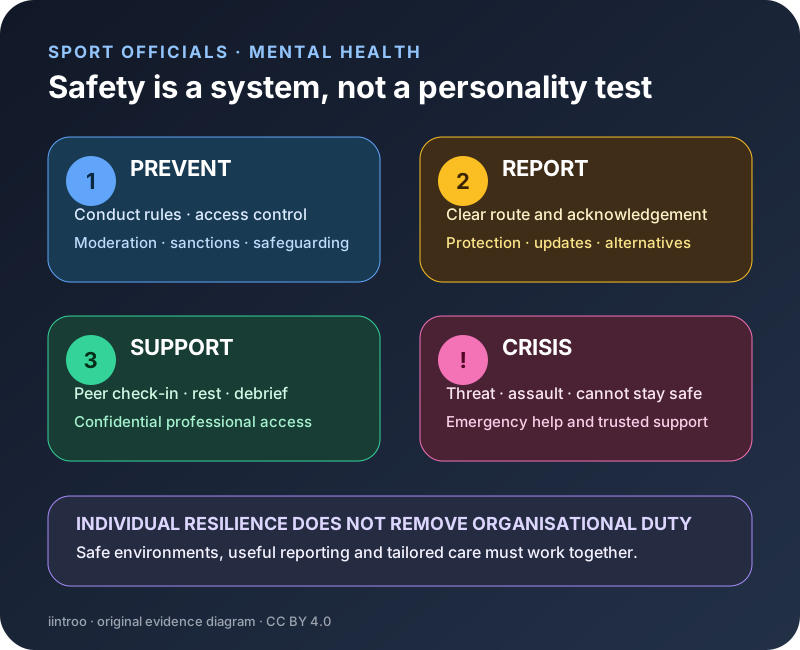
Key points
- Sport officials' mental health is under-researched, but recent reviews repeatedly identify the match environment and experiences of abuse as relevant risk factors.
- Reporting routes, behavioural standards, sanctions, safe venue design, debriefing and confidential support are organisational duties, not signs that an official lacks resilience.
- Persistent anxiety, low mood, sleep disruption, substance reliance or thoughts of self-harm require confidential professional support; immediate danger needs emergency help.
Include officials in the sport mental-health conversation
This guide is for referees, umpires, judges, technical officials, assigners, clubs, leagues and event organisers. Officials make repeated decisions under observation, manage conflict and may combine travel and irregular appointments with other work. Youth and volunteer officials can face the same public pressure without professional resources.
A 2025 systematic review found the field much less developed than athlete mental-health research. Its pooled estimates of elevated anxiety and depressive symptoms had very high heterogeneity, so they should not be treated as a diagnosis rate for a league or country. The stronger conclusion is that officials belong in prevention, monitoring and support systems rather than being assumed to cope alone.
Name abuse as an environmental hazard
Verbal abuse, threats, discrimination, stalking, physical intimidation and online harassment are not ordinary performance feedback. Recent reviews repeatedly identify abuse and the environment around matches as possible risk factors, while FIFA's safeguarding framework defines prevention and response systems as part of protecting people from harm.
Most studies are observational, use different definitions and cannot prove that one incident causes a specific disorder. That uncertainty is not a reason to tolerate abuse. Organisations can set conduct rules, control access to officials' areas, moderate digital channels, document incidents, apply sanctions and coordinate safeguarding or law-enforcement referrals when thresholds are met.
Make reporting safe and useful
Publish more than an email address: state who receives reports, what evidence is helpful, how confidentiality is handled, when the subject is informed and how immediate safety is protected. Provide an alternative route when the alleged behaviour involves an assigner, assessor or senior official. Youth officials need age-appropriate procedures and responsible-adult support.
A report should lead to acknowledgement, risk triage, practical protection and a realistic update. Removing one official from appointments without addressing the perpetrator can feel like punishment and shift the hazard to someone else. Preserve choice where possible, while following mandatory safeguarding and legal duties.
Support recovery without medicalising every hard match
Peer check-ins, trained assessors, predictable appointments, rest after intense travel, constructive review and access to confidential mental-health care can reduce isolation. Mental-health awareness programmes may improve knowledge and help-seeking, but the intervention review found limited officials-specific evidence. A workshop is not proof that a safe system exists.
After a difficult event, ask about safety, sleep, concentration, mood and willingness for the next assignment rather than demanding immediate analysis of every decision. Some stress is expected and not a disorder. Persistent or escalating symptoms, withdrawal, panic, impaired functioning or reliance on alcohol, sedatives or stimulants deserves professional assessment.
Plan the urgent pathway before a crisis
Every league should know how to respond to a credible threat, physical assault, acute panic, severe confusion or disclosure of self-harm. Immediate danger, inability to stay safe or intent to harm self or others requires local emergency or crisis services and a trusted person who can remain present. Do not leave crisis management to a group chat or performance assessor.
Return to officiating after illness, violence or crisis is individual. A clinician can address health needs while the organisation adjusts venue, travel, workload, contact exposure and reporting protections. This article does not diagnose an official, prescribe therapy or promise that resilience training will neutralise an unsafe sporting environment.