
Squash eye protection: choose certified eyewear, not ordinary glasses
The squash ball and racquet can reach the eye at close range. Use sport-certified, lensed protection that fits correctly—and know when an impact needs urgent assessment.
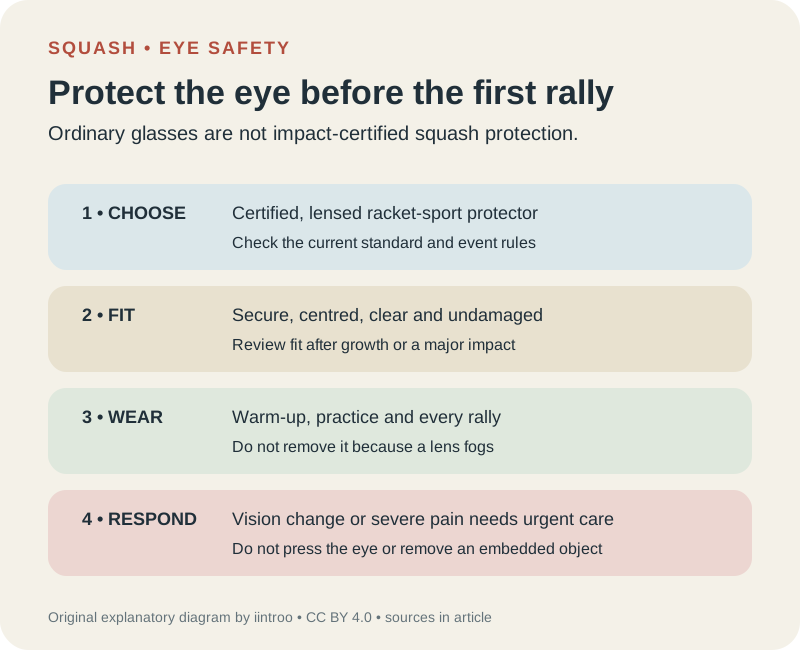
Key points
- World Squash recommends suitable protective eyewear for every player and requires it at WSF junior and doubles events.
- Ordinary spectacles, contact lenses and lensless guards are not substitutes for certified squash eye protection.
- Vision loss, severe pain, a distorted pupil or an object penetrating the eye requires urgent medical care.
Protect the eye from the sport's real hazards
This guide is for squash and squash 57 players, parents, coaches and venue operators. A ball can deform and enter the eye socket, while a racquet can reach a nearby opponent during a compact swing. World Squash recommends appropriate protective eyewear over the eyes throughout play, including the warm-up. It is mandatory at WSF-sanctioned junior and doubles events.
Rules set a minimum for particular competitions; they are not a complete personal risk assessment. Adults playing singles can still sustain serious injury. A 2023 systematic review found that most reported hospital-treated racket-sport eye injuries occurred without eyewear, but the included studies were heterogeneous and mainly described injuries rather than measuring one prospective prevention programme.
Use a lensed protector certified for racket-sport impact
Choose a model identified by the manufacturer or governing body as meeting an appropriate squash or racket-sport eye-protection standard. ISO 18527-2 specifies performance, marking and information requirements for squash protectors. Other recognised national standards may apply in a competition; check the current event rules and certified-product list rather than relying on a seller's use of the word sports.
Ordinary prescription spectacles and contact lenses do not provide the same impact protection. Industrial safety glasses are designed for different hazards, and lensless guards can allow a squash ball to deform through the opening. Players who need vision correction should ask an optometrist or ophthalmologist about a compatible certified option instead of altering the frame or lens themselves.
Fit and condition decide whether protection stays useful
The frame should remain centred and secure through lunges, turns and sweating without creating a blind spot. Adjust the strap and temples according to the product instructions and check that the lenses are correctly seated. Junior players need regular fit reviews as they grow. A helmet, visor or protector intended for another sport should not be assumed to meet the squash impact standard.
Inspect the frame, lenses, strap and fasteners before play. Replace equipment that is cracked, deeply scratched, distorted, loose or involved in a major impact according to the manufacturer's guidance. Clean it without damaging the lens coating and store it in a protective case. A fogged or badly scratched lens can tempt a player to remove protection during a rally; solve the fit or product problem before returning to court.
An injury still needs the right medical pathway
Stop play after a significant eye impact. Sudden loss or reduction of vision, double vision, severe pain, a misshapen pupil, blood inside the eye, flashes or a curtain-like shadow, persistent vomiting after head impact, or an object penetrating the eye requires urgent assessment through local emergency services or an emergency eye-care pathway. Do not press, rub or attempt to remove an embedded object.
Even when the eye looks normal, ongoing pain, light sensitivity, new floaters or blurred vision needs prompt professional assessment. A cold pack placed around—not on—the eye may be included in trained first-aid advice for a minor surrounding injury, but it cannot diagnose internal damage. Certified eyewear reduces risk; it cannot guarantee that an injury will not occur.
Sources: 3
Make eyewear part of the court routine
Clubs can state the required standard in booking information, keep the rule consistent during warm-up and match play, and train staff to stop a session when a protector is removed or damaged. Loan equipment needs documented cleaning, inspection and sizing. Coaches should model the behaviour rather than presenting eyewear as a restriction only for children.
Record eye incidents and review whether the protector was worn, fitted and certified, while protecting the player's privacy. Injury surveillance can improve venue practice, but a single incident cannot prove that a product failed. Product complaints, medical assessment and competition reporting should follow their separate official routes.