
Surfer's ear: protect hearing before cold-water exposure adds up
External ear-canal exostoses can trap water, wax and infection. Cold-water athletes need usable ear protection, symptom review and hearing-aware coaching.
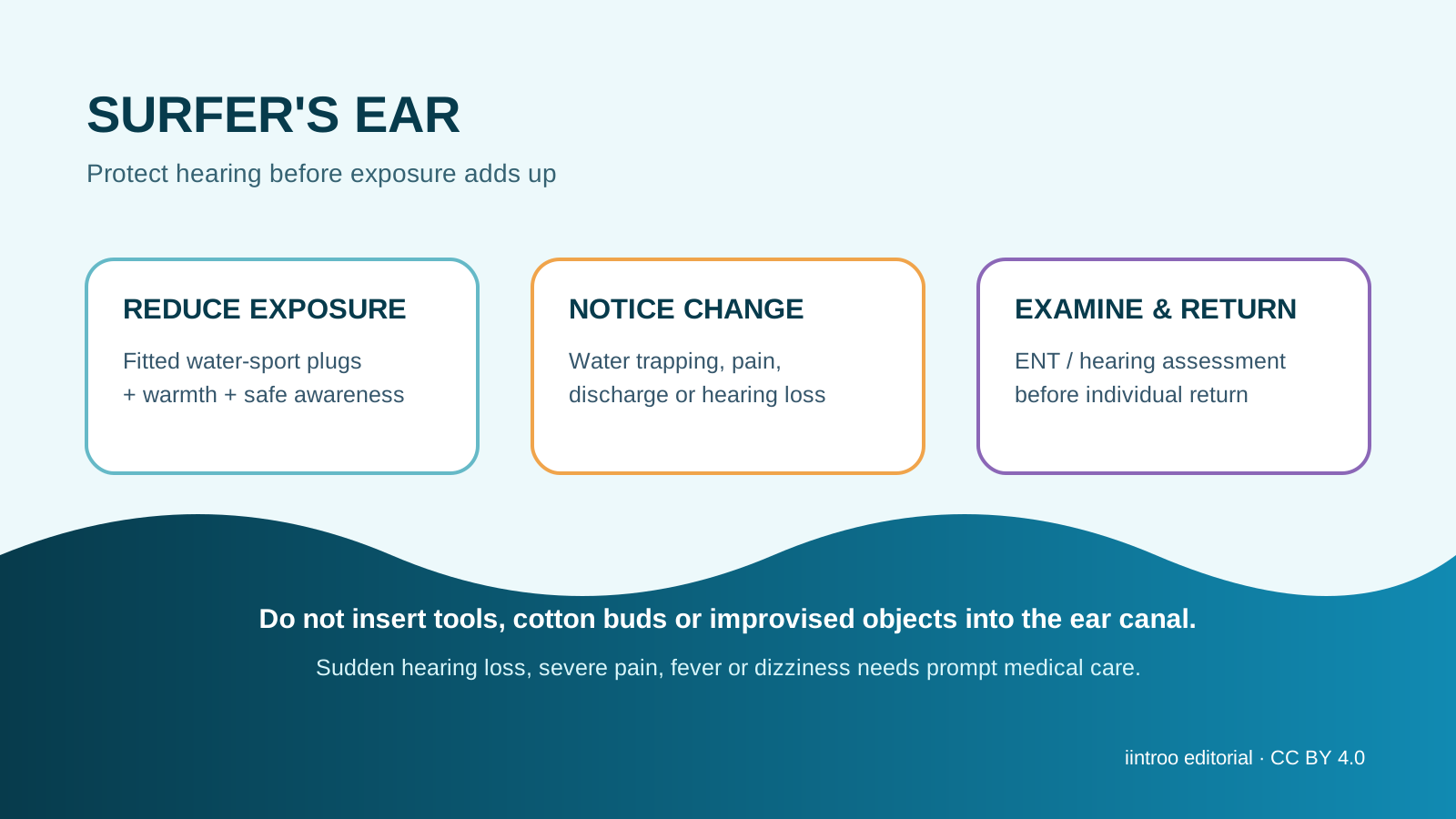
Key points
- Surfer's ear is bony narrowing of the external ear canal associated with repeated water and wind exposure; it is not the same as an acute outer-ear infection.
- Prevalence studies vary widely, while prospective evidence suggests consistent earplug use can reduce progression risk.
- Sudden hearing loss, severe pain, discharge, fever, dizziness or neurological symptoms needs medical assessment rather than self-cleaning the canal.
Distinguish bony narrowing from swimmer's ear
This guide is for surfers, bodyboarders, windsurfers, kayakers, open-water swimmers and other athletes repeatedly exposed to water and wind. External auditory canal exostoses are broad bony growths in the ear canal, often called surfer's ear. They develop over time and may cause no symptoms at first. As the canal narrows, water, wax and debris can become trapped, contributing to blocked hearing, pain or recurrent outer-ear infection. An acute infection and bony narrowing can coexist, but they are not interchangeable diagnoses.
A systematic review of 19 studies and 2,997 surfers reported exostoses in roughly two-thirds of examined participants, with wide differences between studies. Samples were mostly cross-sectional, recruited in selected regions and used varying exposure and grading methods. The figure is not an individual's probability and does not prove one cold session caused disease. A clinician examines the canal and hearing; imaging is generally reserved for selected questions or surgical planning rather than routine self-screening.
Make prevention compatible with awareness and rescue
The practical goal is to reduce repeated cold water and wind reaching the canal. A prospective observational study of 242 ears found earplug use associated with less progression, while a surf hood alone did not show the same effect. This is useful but not a randomised long-term trial. Earplug fit, consistent use, exposure and behaviour can confound the result, so protection reduces risk rather than guaranteeing prevention.
Choose water-sport ear protection that fits securely and still permits the environmental awareness needed for waves, other riders, boats, whistles and rescue instructions. Test it during controlled practice, not for the first time in heavy surf or a race. A hood can add warmth and complement plugs. Stop using a product that causes pain, repeatedly falls out, blocks necessary communication or irritates the canal, and seek fitting advice rather than pushing material deeper.
Do not turn canal care into an injury
After water exposure, dry the outer ear gently. Do not insert cotton buds, tools or improvised objects into the canal; they can push wax inward, scratch skin and worsen infection risk. Ear drops are not suitable for everyone, particularly when a perforated eardrum, ear surgery, tubes or an uncertain diagnosis is possible. Recurrent blockage, discharge, pain, itching or reduced hearing needs professional examination rather than repeated over-the-counter treatment.
Sudden hearing loss is an urgent medical problem. Severe pain, spreading redness or swelling, fever, dizziness, facial weakness, significant trauma, bleeding or worsening symptoms also deserves prompt assessment. Diabetes, immune suppression and previous ear surgery can change risk and treatment. A coach should remove the athlete when hearing or balance is impaired and activate the venue plan; they should not irrigate an ear or diagnose exostosis at the water's edge.
Return after symptoms or surgery is individual
Most asymptomatic exostoses are managed with exposure reduction and monitoring. Recurrent infection, water trapping or conductive hearing loss may lead to specialist discussion, and severe persistent disease can require canal surgery. Surgery carries healing time and potential complications; the operation does not create immediate immunity from recurrence. Return to water depends on examination, healing, infection control, hearing, balance and the treating specialist's instructions—not a date copied from another surfer.
Keep a simple record of water temperature, session duration, protection used, blockage, pain, discharge and hearing change. That history helps an ENT clinician or audiologist connect symptoms with exposure. This page cannot inspect an ear, prescribe drops, select plugs, diagnose hearing loss or clear return after surgery. It supports early prevention and professional review so that a gradual condition is not discovered only when communication, balance or safety has already been affected.