
Shorebreak and neck injury: a safer plan for surfers and wave riders
Shorebreak can drive a surfer or bodyboarder head-first into shallow water. Check conditions, avoid head-first entry and know the spinal-injury response.
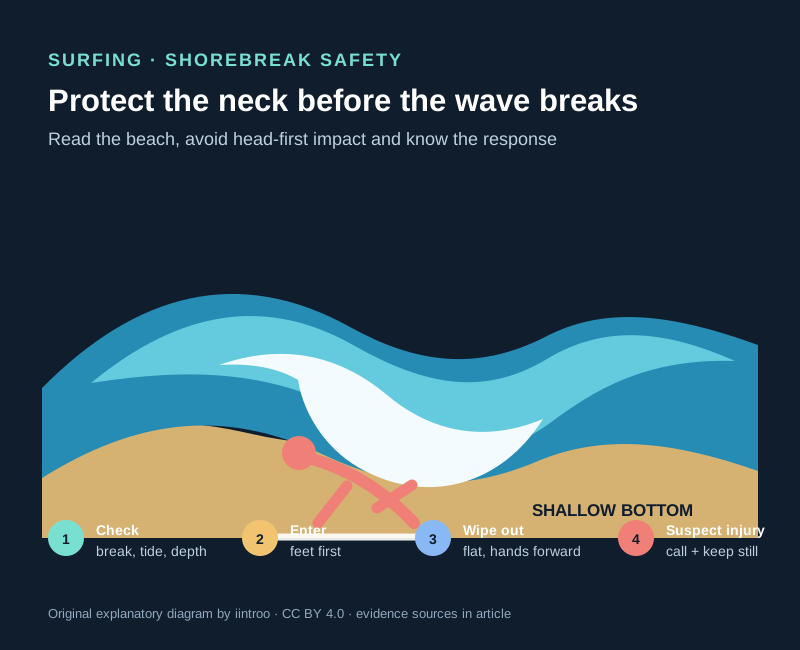
Key points
- Even modest-looking waves can cause a cervical spine injury when shorebreak drives the head into the seabed; water depth, tide, bottom profile and the athlete's position all matter.
- Ask a lifeguard about current conditions, enter unknown water feet first, avoid diving into oncoming waves and choose a break and activity that match the athlete's skill.
- After a suspected neck or spinal injury, summon trained rescue, keep the person still and protect the airway without unnecessary movement; weakness, numbness or breathing difficulty is an emergency.
Understand why shorebreak can injure the neck
This guide is for surfers, bodyboarders, bodysurfers, coaches, families and beach safety teams. A breaking wave can accelerate or tumble a person head-first into the seabed. The neck may be forced into flexion, extension or compression, producing fracture, dislocation or spinal cord injury. The activity does not need to look extreme for the result to be serious.
A Queensland linked-data study found 79 diagnosed cervical spine injuries at beaches over roughly six years; 40% occurred with below-average local wave height. A Hawai'i registry study found wave-related incidents were the state's second most frequent cause among 1,170 spinal cord injuries and disproportionately affected visitors. These regional, retrospective findings cannot predict risk at another beach, but they challenge the assumption that only large surf is dangerous.
Read the break before entering
Use a lifeguarded area where possible and ask about shorebreak, submerged hazards, depth changes, tide and currents. Watch several wave sets from shore and reassess if the tide or swell changes. Walk into unfamiliar water rather than diving. Do not dive toward the bottom under an oncoming wave, and do not turn your back on breaking water in the impact zone.
Match the location, wave size and equipment to the person's swimming ability and wave-riding experience. The French Surfing Federation advises identifying shorebreak and other local hazards, avoiding head-first entry and protecting the head and face during a fall. These are practical controls, not a promise that one technique can make a dynamic ocean environment safe.
Use a wipeout plan without treating it as armour
The US Lifesaving Association recommends avoiding a straight trip over the falls, landing as flat as possible with the hands forward and keeping an arm ahead of the head while bodysurfing. The French federation also advises protecting the head and face and not jumping from the board with the legs locked. Instruction should happen in conditions where the learner can practise calmly.
No fall position prevents every injury, and a systematic review of breaking-wave cervical injuries found varied mechanisms among highly selected hospital cases. Do not turn one cue into a guarantee or tell an athlete to continue in unsuitable shorebreak because they know how to fall. Moving to another break, changing activity or leaving the water can be the safer decision.
Respond as a spinal emergency
After a forceful head-first impact, call the lifeguard and local emergency service. Tell the injured person to remain still. Neck or back pain, tenderness, weakness, numbness, tingling, paralysis, breathing difficulty or altered awareness requires urgent professional assessment. Absence of immediate paralysis does not rule out a serious injury.
In the water, airway and breathing take priority, but an untrained bystander can worsen danger by attempting a complex extraction. Follow lifeguard or emergency-dispatch instructions, support the person only as needed to keep the airway clear and avoid unnecessary twisting. Do not ask the athlete to stand, walk or test the neck, and do not remove safety equipment unless trained care requires it.
Return only after diagnosis and graded exposure
A neck or neurological symptom after impact needs medical evaluation before return. The plan depends on the diagnosis, neurological recovery, strength and movement, any imaging and the clinician's judgement. Later stages should rebuild paddling, prone-to-stand movement, controlled falls and wave selection in a supervised setting before unrestricted surf exposure.
The available evidence is dominated by retrospective regional series and selected hospital cases. It does not establish a universally safe wave height, water depth, technique or waiting period. This article supports hazard recognition and emergency response; it does not diagnose a spinal injury or clear an athlete to return to the water.