
Taekwondo foot and ankle injuries: protection is only one part of the plan
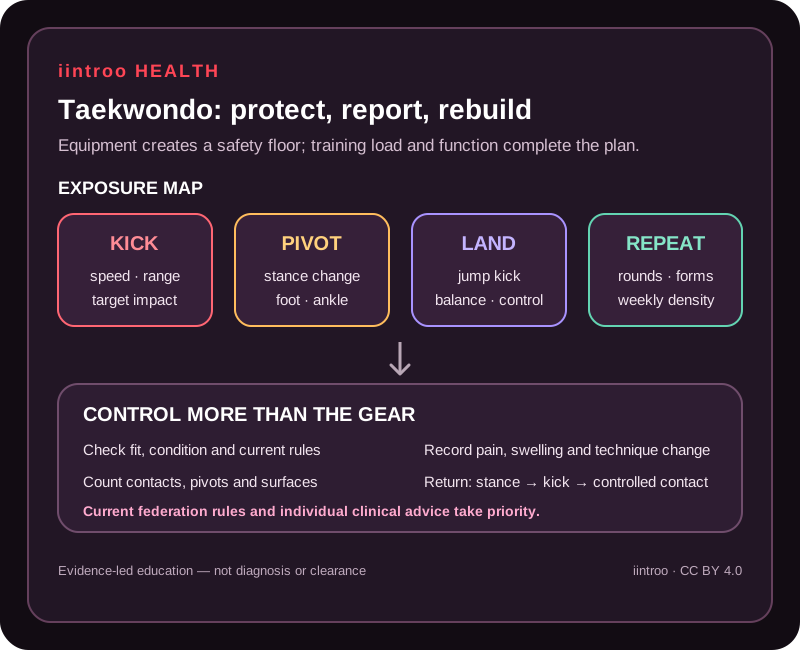
Kicks, pivots, checking and repeated impact load the foot and ankle. Use compliant protection, track training exposure and assess function before return.
Key points
- Recent elite surveillance reviews most consistently identify the lower limb, especially the foot, ankle and knee, as common injury locations.
- World Taekwondo protection rules and medical inspection create a safety floor, but compliant equipment cannot prevent every contusion, sprain or overuse problem.
- Return should restore stance, pivot, landing, kicking and controlled contact—not stop at walking without pain.
Separate sparring impact from training-load pain
This guide is for taekwondo athletes, families, coaches, officials and health teams across kyorugi, poomsae and Para formats. Sparring adds direct impact and rapid reactions; forms and repeated technical training can accumulate pivots, stance work, jumps and kicks without an opponent. The mechanism matters because a contusion after contact, an ankle sprain and gradually increasing foot pain need different assessment.
A 2025 systematic review included eight observational studies of high-performance athletes. Lower-limb injuries were most common, with the foot and knee repeatedly represented; contusions, sprains and ligament injuries featured prominently. Incidence estimates could not be pooled because injury definitions and exposure denominators differed. The review describes patterns, not a universal rate for community, youth or Para athletes.
Treat equipment inspection as a minimum standard
World Taekwondo rules require appropriate protective equipment and allow medical or officiating staff to stop participation when equipment is defective, incorrectly sized or provides inadequate coverage. Athletes and teams must use the current rules for their discipline, age group and event because equipment and taping requirements can change.
Foot and shin protection should fit the athlete, remain intact and allow safe movement. Bracing, padding and taping must comply with competition rules and should not hide a problem that needs assessment. Electronic scoring equipment records valid impacts; it does not certify that a painful foot or ankle is uninjured.
Count kicks, contacts, pivots and surfaces
Track technical sessions, sparring rounds, high-force kicks, jump-kick and pivot volume, strength work, competitions and rapid changes in flooring or footwear. Add recent growth, prior injury, travel, weight-management demands, sleep and other training. A weekly hour total can miss a sudden jump in contact intensity or repeated work on one side.
The older risk-factor review found only a small number of prospectively studied factors, and the newer review remains observational. That means a coach should not convert association into a guaranteed prevention checklist. Use surveillance to find the team's own patterns and revise preparation, session design and recovery while stronger intervention research develops.
Assess the problem before adding more protection
Pain that changes stance, push-off, pivoting, landing or kicking deserves attention. Swelling, focal bone tenderness, inability to bear weight, marked instability, deformity, numbness, weakness or loss of circulation requires prompt assessment; severe symptoms or obvious fracture or dislocation need urgent care. Do not repeatedly kick a pad to prove the foot is safe.
World Taekwondo's Medical Code permits commissioned medical staff to stop an athlete with suspected serious ligament, muscle or tendon rupture, fracture, neurologic deficit or other unsafe findings. Event decisions and individual diagnosis are different: medical follow-up can still be necessary after the bout ends.
Return from stance to controlled contact
A staged return may move through comfortable daily activity, single-leg control, stance changes, pivots, submaximal kicks, pad work, reactive movement, planned sparring and normal competition density. The sequence depends on diagnosis, tissue involved, age, discipline and response. Poomsae, kyorugi and Para taekwondo do not create identical readiness tests.
Stop and seek review if pain, swelling, instability, altered technique or neurological symptoms return. Follow any mandatory medical suspension and national-federation requirements as well as clinical advice. This guide does not prescribe a brace, rehabilitation programme or return date.