
Thalassaemia in sport: coordinate anaemia, iron load, heart and bone health
Physical activity can support people with thalassaemia, but subtype, transfusion timing, iron load, heart function and bone health require coordinated care.
Key points
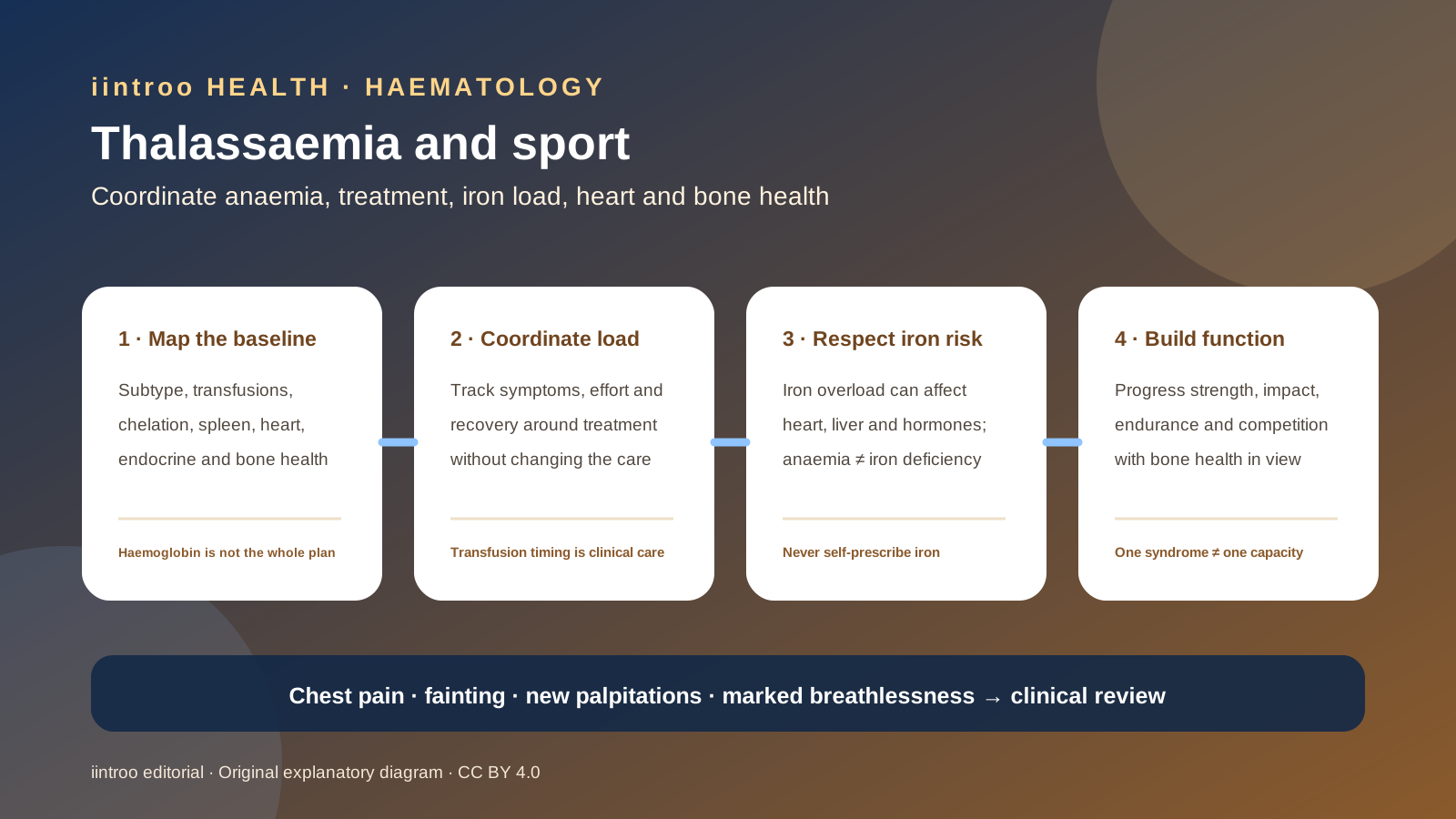
- Transfusion-dependent and non-transfusion-dependent thalassaemia have different treatment patterns and complications; haemoglobin level alone does not describe sport readiness.
- Iron overload is not iron deficiency. Athletes should not start iron supplements or change chelation or transfusion timing without the treating team.
- Chest pain, fainting, new palpitations, marked breathlessness, fever after splenectomy or a suspected fracture needs prompt clinical assessment.
Begin with subtype, treatment pattern and current organ health
This guide is for athletes with transfusion-dependent or non-transfusion-dependent thalassaemia and the people supporting them. Thalassaemia syndromes differ in anaemia, transfusion needs, iron loading and complications. Current haemoglobin, transfusion schedule, chelation, spleen status, heart and liver findings, endocrine and bone health, symptoms and training history all shape the plan. A carrier label, single blood count or comparison with another patient cannot define capacity or sport eligibility.
The 2025 Thalassaemia International Federation guideline encourages physical activity while recognising individual comorbidities and cardiovascular assessment. Establish the athlete's ordinary function and specialist follow-up before adding load. Chest pain, fainting, new palpitations, severe or unusual breathlessness, rapidly declining capacity or neurological symptoms requires assessment. Fever after splenectomy or a significant infection concern should follow the person's urgent-care plan rather than being treated as missed training.
Coordinate sessions with anaemia and transfusion care
Chronically lower haemoglobin and organ or muscle effects can reduce exercise capacity, but response varies. Record symptoms, perceived effort, pace or power, recovery and the relationship to transfusion timing without assuming one best training day for everyone. A recent review describes multifactorial limitations and possible benefits from regular activity, but the intervention evidence is small and not designed to produce a universal competitive programme.
The athlete and treating team should decide how training fits around transfusion, venous access, fatigue and adverse reactions. Coaches must not request a higher transfusion target, delay a transfusion for competition or use altitude exposure to manipulate haemoglobin. After transfusion, follow clinical advice for any reaction or access-site issue. Progress duration and intensity separately and allow a lower-consequence option when symptoms or treatment logistics change.
Do not confuse iron overload with iron deficiency
Repeated transfusion and increased absorption can create iron overload that affects the heart, liver and endocrine organs. This is not corrected by sports nutrition iron. Do not start iron supplements because an athlete is anaemic or tired; iron status and the cause of symptoms need appropriate testing. Chelation is disease treatment, not a recovery tool, and should not be skipped, doubled or retimed by a coach or athlete to accommodate travel or competition.
TIF guidance uses specialist monitoring, including organ assessment, to guide care. Cardiac iron and dysfunction can be clinically important even when an athlete appears fit. New palpitations, fainting, chest pain, unusual breathlessness or reduced exercise tolerance should not be normalised as anaemia. Nutrition should meet general energy and nutrient needs, but calcium, vitamin D, folate, zinc and other supplements require the treating team's assessment rather than a standard thalassaemia stack.
Build bone, strength and participation with evidence limits in view
Low bone density and fracture risk can be influenced by marrow expansion, endocrine problems, iron overload, nutrition and physical inactivity. Weight-bearing and resistance activity may support bone and function, but fracture history, pain, puberty, current bone assessment and the sport's collision or fall exposure matter. Introduce impact, lifting and contact gradually, with technique and recovery reviewed. Swimming and cycling build fitness but do not provide the same skeletal loading as jumping or resistance work.
Return after illness, fracture, cardiac change or treatment interruption should restore stable clinical status, everyday function and low-consequence exercise before remote venues, maximal effort or competition pressure. Heat, altitude and travel logistics can change symptoms and access to specialist care. There is no universal haemoglobin, ferritin, cardiac-MRI value, bone-density score or number of days after transfusion that clears every athlete. This page provides general education, not transfusion, chelation, supplement, cardiac-testing, fracture-treatment or personal sport-clearance advice.