
Animal bites on a running or cycling trip: stop for rabies assessment
Animal contact can interrupt a running or cycling trip. Know the wound-washing step, urgent assessment pathway and why previous vaccination is not clearance.
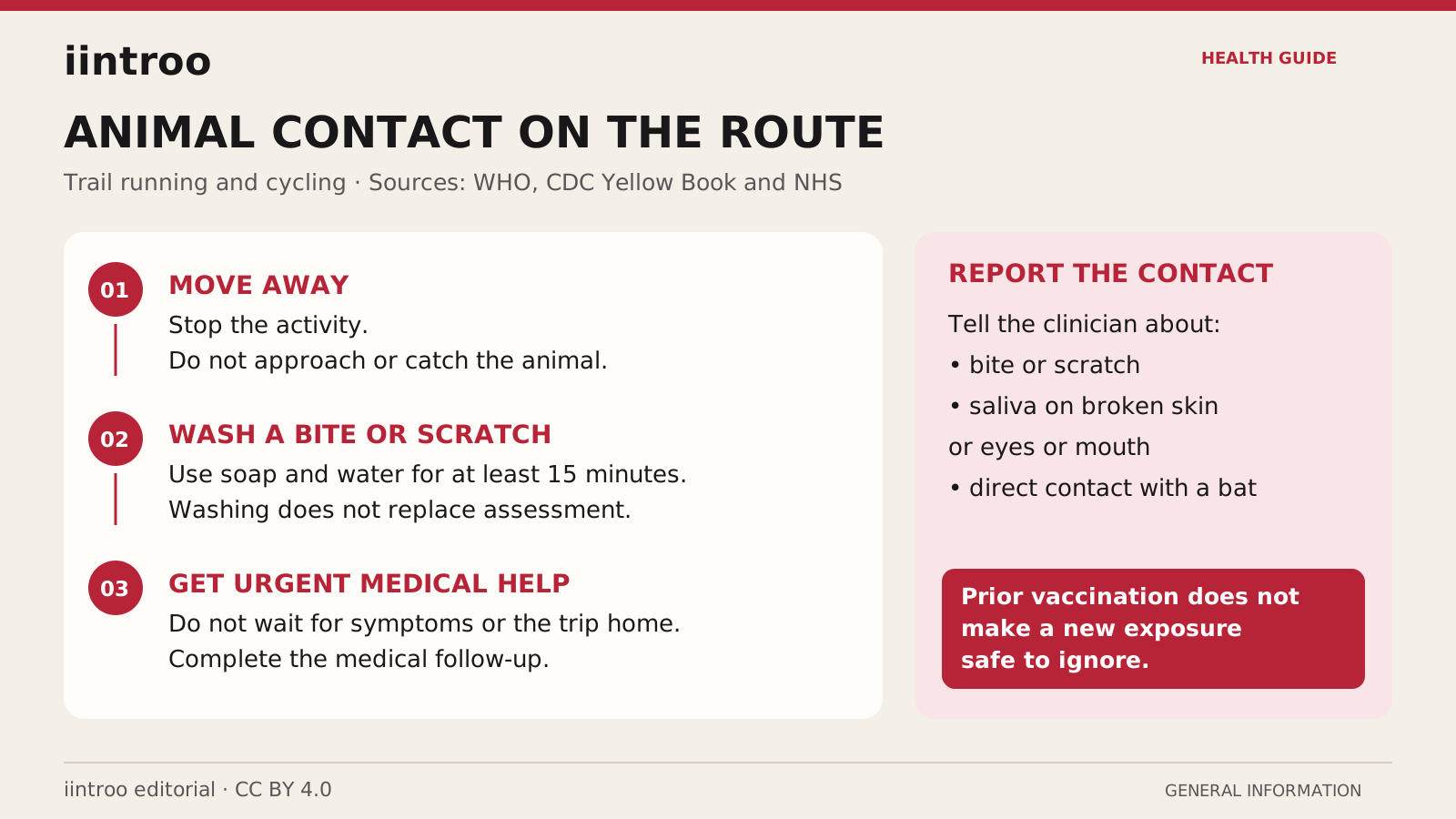
Key points
- After a potentially infectious bite or scratch, wash the wound with soap and water for at least 15 minutes and arrange urgent medical assessment.
- Saliva on broken skin or the eyes or mouth can matter; direct bat contact also needs assessment even if a bite is not obvious.
- Previous rabies vaccination changes medical care but does not make a new exposure safe to ignore.
Plan for animal contact before leaving the start
This guide is for runners, cyclists, hikers and the people supporting outdoor trips. A route through unfamiliar towns, trails or campsites can include contact with dogs or wildlife. An apparently minor encounter should not become something an athlete hides to keep a place in the group.
Ask a travel-health clinician about destination risk, animal contact and access to care before departure. The NHS specifically identifies outdoor activities such as running and cycling, and difficulty reaching medical help, as reasons to discuss vaccination. Know where urgent care is available before beginning a remote route. Avoid touching or feeding unfamiliar animals, including animals that appear healthy.
Sources: 3
Separate intact skin from a possible exposure
Rabies is transmitted through infected mammal saliva, usually through bites or scratches. Saliva reaching broken skin or a mucous membrane, such as the eye or mouth, can also be an exposure. WHO distinguishes a lick on intact skin from contact involving damaged skin; that distinction needs a reliable history, not a quick self-clearance decision beside the trail.
Bat teeth can leave very small marks. CDC travel guidance says bare-skin or hair contact with a bat warrants concern even when a wound is difficult to see. Tell a clinician about the actual contact rather than dismissing it because there is no obvious bleeding.
Respond now, rather than waiting for symptoms
Move away from the animal. For a bite or scratch, wash the wound promptly with soap and water for at least 15 minutes, following WHO guidance, then obtain urgent medical care. Washing is the first action, not a replacement for assessment. Rabies prevention is time-sensitive and must happen before illness develops.
Do not wait until the race ends or until the journey home. The NHS advises immediate help after a suspected exposure abroad, including after prior vaccination. Clinicians assess the wound and exposure, determine preventive treatment and check other injury concerns. Do not attempt to catch an animal or make an athlete approach it for a photograph.
Give the medical team an accurate account
Record the place, time, animal type and whether contact involved a bite, scratch, saliva or a bat. Bring existing vaccination records and any care documentation. Previous vaccination can simplify subsequent care, but CDC guidance is clear that medical attention is still needed.
Coaches can organise transport, contact the trip medical lead and preserve this information. They cannot exclude rabies from the animal's appearance, the wound's size or a claim that the animal was vaccinated. Observation and testing decisions belong to appropriate medical, veterinary and public-health authorities.
Understand what this evidence can and cannot tell a team
These recommendations come from WHO public-health guidance, CDC's 2026 travel-health edition and NHS patient guidance. They are not a trial estimating bites or rabies per race, and they do not show that a particular sport or country is uniformly safe or unsafe. The CDC chapter is dated April 2025 despite its 2026 edition label.
Whether a camp is in Türkiye or another destination, build a route-specific access and communication plan. After an incident, resuming the session is secondary to completing urgent assessment and the prescribed follow-up. This guide gives no vaccine schedule, antibiotic choice or individual return-to-sport clearance.