
Turner syndrome in sport: let heart and aortic assessment guide intensity
Turner syndrome does not create one exercise limit. Aortic dimensions, valve anatomy, blood pressure, treatment and sport consequences shape an individual plan.
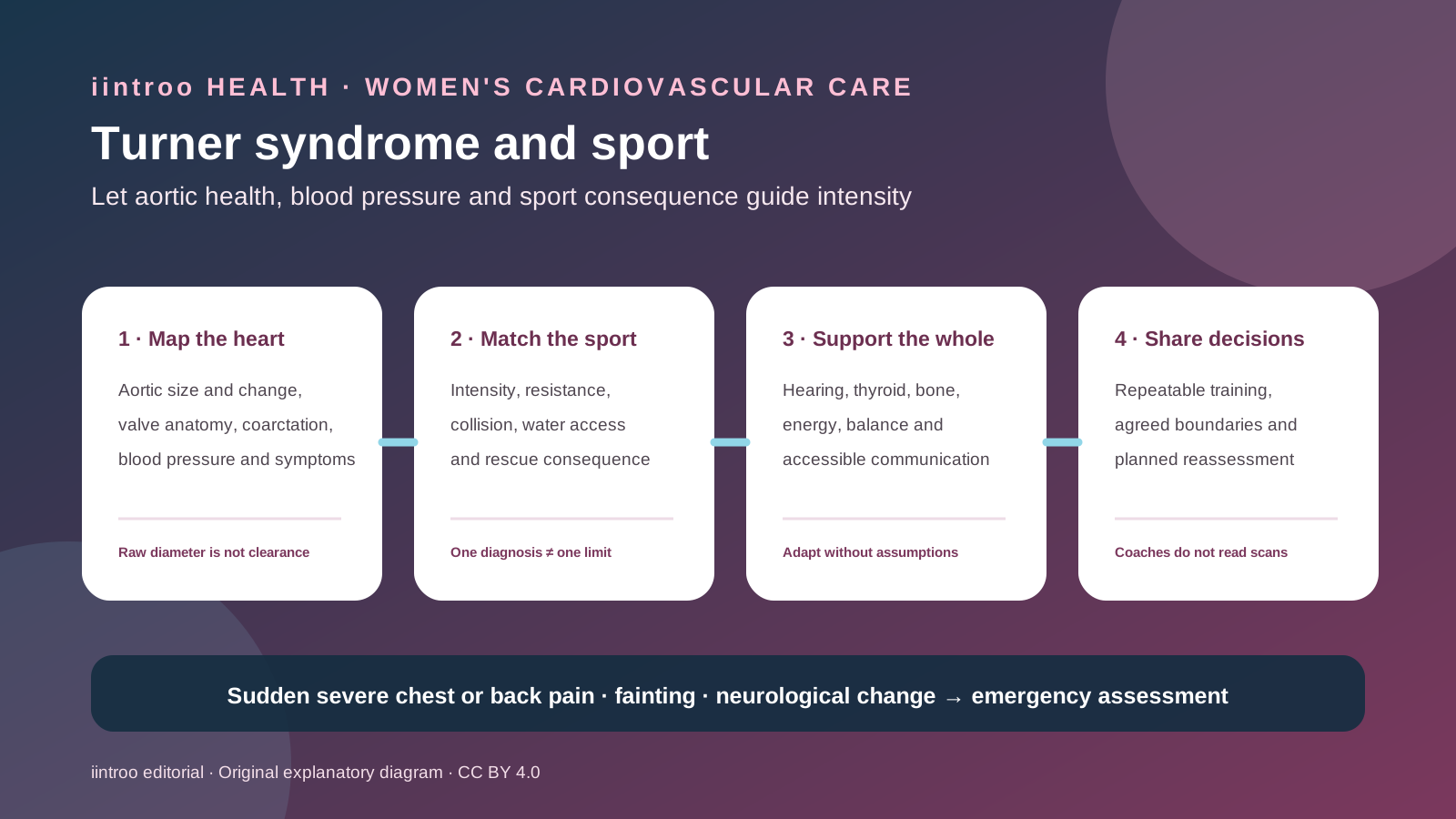
Key points
- Regular physical activity is encouraged in Turner syndrome, but the type and intensity should reflect individual cardiovascular assessment rather than diagnosis alone.
- Aortic size must be interpreted for body size and alongside valve anatomy, coarctation, blood pressure and previous change; a single raw diameter is not a do-it-yourself clearance test.
- Sudden severe chest or back pain, fainting, a new neurological deficit or marked breathlessness requires urgent medical assessment.
Begin with the athlete's cardiovascular map, not the chromosome label
This guide is for girls and women with Turner syndrome, families, coaches and health teams. Turner syndrome can involve a bicuspid aortic valve, aortic coarctation, hypertension and aortic enlargement, but anatomy and risk are not the same for every person. The 2024 international guideline recommends lifelong cardiovascular surveillance and encourages physical activity. It does not turn the diagnosis itself into a universal ban. A cardiology assessment should identify valve and aortic anatomy, blood pressure, previous imaging, symptoms, treatment and any repaired congenital condition before higher-intensity or high-consequence sport is planned.
The sport matters as much as the label. Heavy static effort, repeated maximal lifting, collision, remote water, rapid changes of pressure and long rescue times create different consequences from supervised moderate exercise. Height and body size also matter when clinicians interpret aortic measurements. Athletes and coaches should not compare a raw aortic diameter with an internet threshold or another person's result. Sudden severe chest or back pain, fainting, a new one-sided weakness or speech problem, or marked unexplained breathlessness needs emergency assessment rather than a training modification.
Build everyday activity while blood pressure and treatment stay visible
Current guidance supports regular aerobic and strength activity for general cardiovascular, metabolic and bone health. Start from the athlete's established capacity and progress duration, intensity, resistance and technical complexity separately. Walking, cycling, swimming, dance and appropriately loaded strength work can all be useful when they fit the clinical plan. The goal is not to keep every session easy forever; it is to avoid letting an unassessed cardiovascular issue, uncontrolled blood pressure or abrupt load jump determine the risk.
Blood pressure deserves reliable measurement in ordinary care and around treatment changes. A wearable estimate, one post-session reading or a coach's interpretation cannot diagnose or control hypertension. Prescribed medicines should not be stopped or time-shifted for performance. If treatment causes dizziness, unusual fatigue or exercise intolerance, record the setting and discuss it with the treating team. Hydration, heat planning and recovery support ordinary training, but they do not treat an enlarged aorta, valve disease or hypertension.
Include hearing, thyroid, bone and energy needs without losing the whole athlete
Turner syndrome care extends beyond the heart. Hearing differences can affect whistle, alarm and water-safety communication; visual or balance issues can change technique; thyroid disease, glucose regulation and iron or energy problems can alter fatigue; and reduced bone density or musculoskeletal alignment can affect impact progression. These possibilities are reasons for accessible screening and practical adjustments, not assumptions that every athlete is fragile. The athlete should help decide how information is shared with coaches and teammates.
Make communication concrete: visual starting signals when needed, a buddy and rescue plan for open water, well-fitted hearing devices or protective equipment, and gradual impact exposure when bone health is a concern. Persistent focal bone pain, an acute injury with loss of function, repeated faintness or a clear fall in capacity needs clinical review. Do not prescribe supplements, growth hormone changes, thyroid treatment or menstrual management through a sport programme. Those decisions depend on diagnosis, current tests, age and the person's specialist care.
Progress through shared decisions and repeatable function
A participation plan should state the acceptable training range, any resistance or competition limits, the symptoms that stop a session and the follow-up schedule. Rebuild from repeatable ordinary training toward harder intervals, heavier resistance, travel or competition consequence. Review the plan after new symptoms, a blood-pressure change, new imaging, surgery, pregnancy planning, a treatment change or a move to a sport with greater collision, pressure or rescue demands. Coaches implement the agreed boundaries; they do not interpret scans or set aortic limits.
Evidence for exercise capacity in Turner syndrome is improving but remains smaller than the evidence for cardiovascular surveillance, and many sport recommendations are based on expert consensus and risk extrapolation. No single aortic size index, blood-pressure value, symptom-free interval or fitness test clears every athlete. This page provides general education, not genetic counselling, scan interpretation, medicine advice, pregnancy advice or personal eligibility and return-to-sport clearance.