
Type 2 diabetes in masters sport: coordinate glucose, medication and competition load
Exercise benefits type 2 diabetes, but insulin, secretagogues, SGLT2 medicines, complications and race conditions change the safety plan for each athlete.
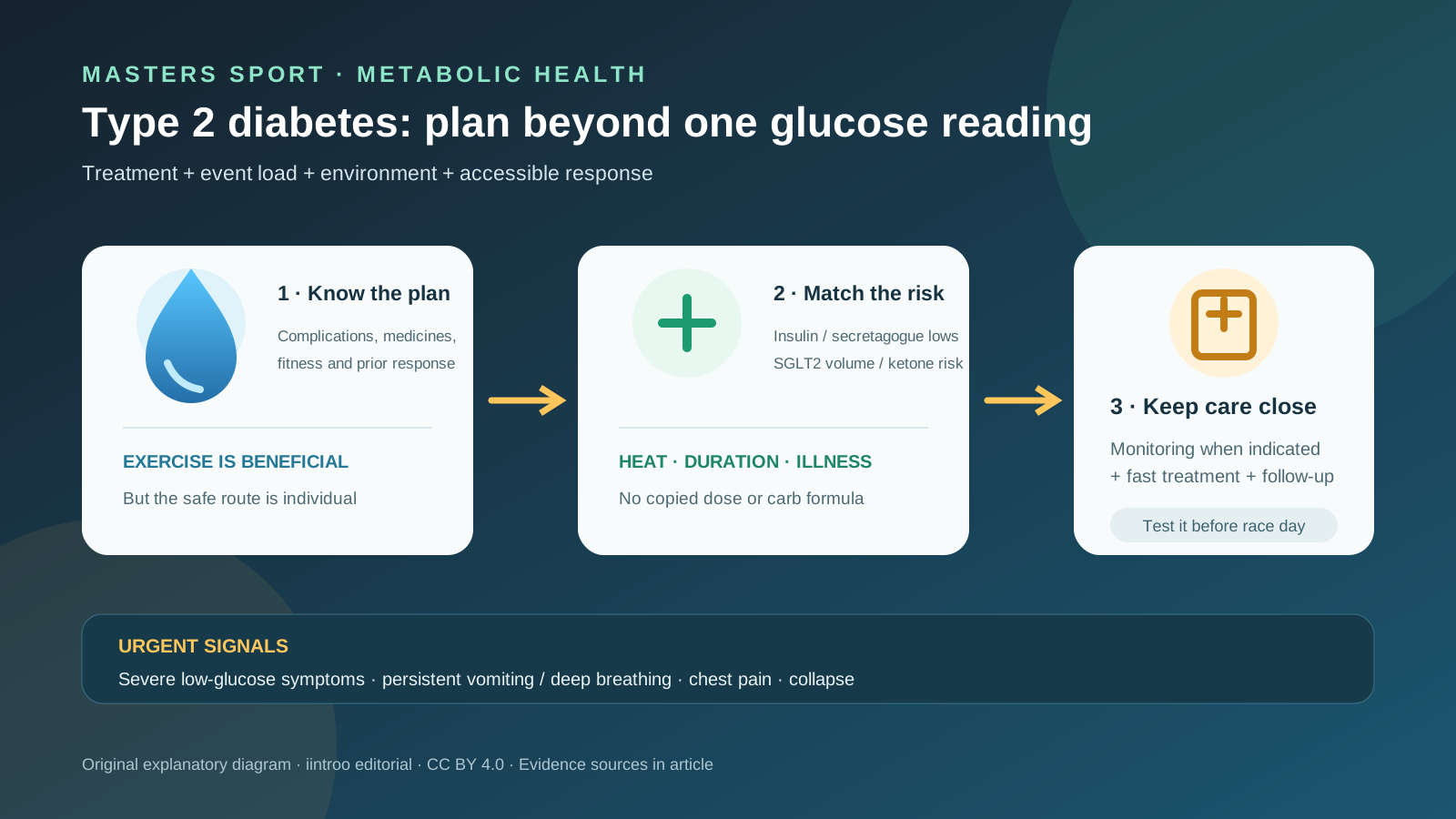
Key points
- Aerobic, resistance and reduced sedentary time benefit most people with type 2 diabetes, but training and competition plans must reflect complications, fitness and treatment.
- Exercise-related hypoglycaemia risk is highest with insulin and insulin secretagogues; exact carbohydrate and dose changes require an individual clinician-developed plan.
- SGLT2 medicines rarely cause hypoglycaemia alone but can add volume-depletion and ketoacidosis concerns during illness, fasting, dehydration or unusually prolonged effort.
Start from the benefits without assuming every session is the same
This guide is for adults with type 2 diabetes who train beyond general activity targets or plan races, tournaments and demanding strength events. The 2026 American Diabetes Association standards recommend regular aerobic and resistance activity for most adults with type 2 diabetes, with balance work for older adults and breaks from prolonged sitting. Exercise can improve glucose control, cardiovascular risk factors, physical function and wellbeing. Those benefits support participation, not a one-size-fits-all intensity or glucose target.
The response to a short strength session can differ from a long ride, hot road race or repeated tournament day. Fitness, carbohydrate intake, sleep, stress, illness, ambient conditions and medication all matter. Masters athletes may also have coronary, kidney, eye, nerve or foot complications that change symptoms or consequences. A preparticipation review should be proportionate: asymptomatic people do not all need maximal testing, while chest discomfort, unexplained breathlessness, exercise fainting, concerning palpitations or known complications require clinical assessment before escalation.
Match glucose planning to the exact treatment
Insulin and medicines that stimulate insulin release, such as sulfonylureas, can increase immediate or delayed hypoglycaemia risk around exercise. A clinician-developed plan may use glucose monitoring, food access and treatment adjustment, but the exact action depends on the medicine, dose, timing, session and previous response. Do not copy an insulin reduction or carbohydrate number from another athlete. Carry rapid-acting carbohydrate when the personal plan requires it, and make sure prescribed glucagon is accessible and that designated people know how to use it.
Many other type 2 diabetes medicines have a low hypoglycaemia risk when used alone, but that does not make them irrelevant to sport. GLP-1-based therapy can cause nausea, vomiting or reduced intake in some people. SGLT2 inhibitors increase urinary glucose loss and can contribute to volume depletion; ketoacidosis may occur with only modest glucose elevation, particularly with acute illness, fasting, dehydration, very low carbohydrate intake or inappropriate insulin reduction. Athletes should follow their prescriber's sick-day and competition instructions rather than stopping or changing medicine independently.
Turn the event plan into accessible actions
Test the plan in training before travel or competition. Record session type, duration, conditions, food and fluid access, glucose response when monitoring is indicated, and symptoms during the following hours. A sensor can provide useful trends for some insulin-treated athletes, but lag, compression and device failure mean symptoms and confirmatory testing still matter. Officials and teammates need only the emergency information the athlete has agreed to share; devices, medicine and fast carbohydrate must remain reachable rather than locked in a bag beyond the course.
Plan for heat, long gaps between rounds, travel and post-event recovery. Check feet and footwear when neuropathy, previous ulceration or altered sensation is present; an unnoticed blister should not become a mileage challenge. Eye, kidney and cardiovascular findings may alter safe pressure, impact, hydration or intensity choices, as described by the treating team. Nutrition should support the actual training load without using extreme fasting or carbohydrate restriction as a shortcut around medicine management.
Know when sport stops and medical care starts
Confusion, seizure, inability to swallow or loss of consciousness can indicate severe hypoglycaemia and requires the agreed emergency response; do not give food or drink by mouth to an unconscious person. Persistent vomiting, abdominal pain, deep or rapid breathing, marked weakness or unusual drowsiness—especially during illness or SGLT2 use—needs urgent assessment for ketoacidosis even when a glucose reading is not very high. Chest pain, collapse, severe breathlessness or new neurological symptoms also requires emergency care.
Review the plan after recurrent low or high glucose, a medication change, illness, altered kidney function, a new complication or a substantial change in event distance, heat or altitude. This page cannot set a glucose threshold, change treatment, prescribe carbohydrate, interpret a sensor or clear competition. It supports regular exercise while making medication-specific risk, accessible treatment, complication screening and post-exercise follow-up part of the performance plan.