
Ultimate injury prevention: non-contact does not mean no collision risk
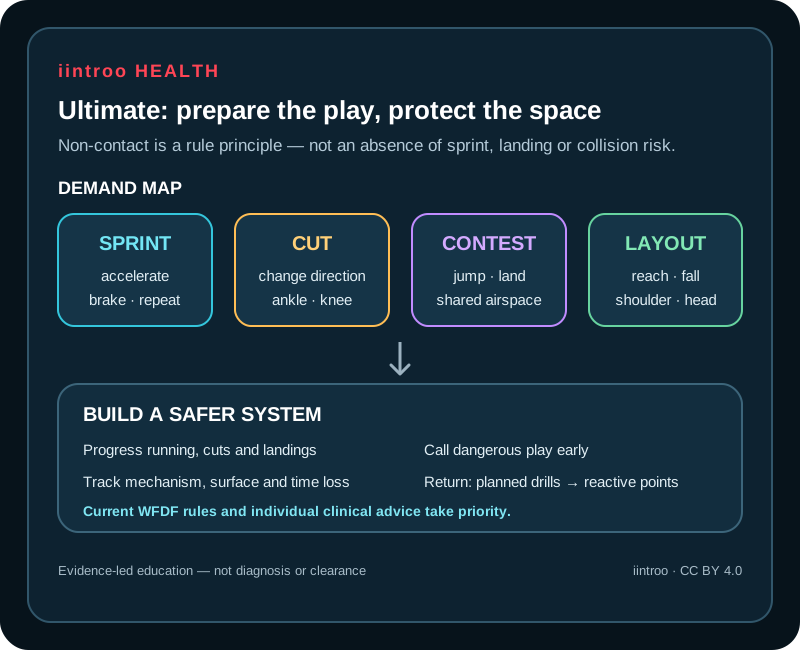
Ultimate combines sprinting, cutting, jumping and layouts. Prepare for lower-limb load, call dangerous play early and rebuild every return by task.
Key points
- Ultimate's non-contact rule does not remove collision, landing, sprinting or layout injuries.
- Reviews consistently identify lower-limb problems, but published injury rates vary too widely to predict one player's risk.
- Direct trials of Ultimate-specific prevention programmes remain scarce, so borrowed warm-ups should be monitored rather than advertised as a guarantee.
Start with what Ultimate actually asks the body to do
This guide is for Ultimate players, coaches, captains, tournament staff and health teams. A point can include repeated accelerations, hard decelerations, changes of direction, one- and two-foot landings, aerial contests, throws under pressure and layouts close to other players. Describing the sport as non-contact is a rule principle, not a statement that contact and injury never happen.
The 2020 systematic review found very wide variation in reported incidence because studies used different definitions, competitions and exposure measures. A 2026 review again identified lower-limb trauma—especially ankle sprain, knee ligament injury and hamstring strain—as prominent, while concussion and upper-body injury can occur around aerial contests and layouts. Those patterns guide surveillance; they do not forecast an individual player.
Make player safety part of Spirit of the Game
Current WFDF rules allow dangerous play to be called before or without contact when conduct shows reckless disregard or could cause serious injury. Examples include diving through a player, jumping into a group or running without looking into occupied space. Winning a disc is not permission to ignore the space another player needs to land safely.
Teams can rehearse clear communication for blind-side cuts, crowded end-zone plays, aerial contests and layouts. Captains and coaches should support an early safety call rather than praising players for continuing through a situation they judge dangerous. Rules knowledge is an injury control only when people feel able to use it.
Sources: 1
Prepare for running, landing and repeat efforts
A practical warm-up can progress from temperature-raising movement to strength, balance, controlled landing, deceleration, cutting, short sprints and disc-specific reactions. Expose athletes progressively to the surfaces, footwear, tournament density and layout techniques they will use. Previous injury, sudden training changes, travel and limited recovery belong in the same plan.
Plyometric-containing programmes reduce ACL injuries across several sports in meta-analysis, but that evidence is not an Ultimate-specific trial. The 2026 Ultimate review explicitly notes that direct intervention evidence remains scarce. Teams should record attendance, technique quality, injuries and exposure instead of claiming that one borrowed routine prevents every sprain or tear.
Use consistent reporting instead of tournament folklore
Record the body area, diagnosis when known, whether the problem was sudden or gradual, the play situation, surface, footwear, contact, time loss and exposure. Count training and matches rather than reporting only a raw injury total. The IOC consensus provides shared concepts for surveillance, while local privacy and safeguarding rules still apply.
Pain, swelling, instability, loss of function or concussion symptoms should be reported early. A suspected fracture or dislocation, neurovascular change, severe bleeding, neck symptoms, or signs of concussion need prompt assessment; severe or rapidly worsening symptoms require urgent care. An injury call is not a diagnosis or a complete emergency plan.
Return through the actions that failed
Return can rebuild comfortable daily activity, running, braking, planned cuts, jumping and landing, throwing under movement, reactive marking, layouts and full-intensity points. The order and dose depend on the diagnosis, player history and response. A straight-line jog or one pain-free drill does not demonstrate readiness for a tournament weekend.
After suspected concussion, do not use a completed catch, a normal-looking walk or a fixed rest period as clearance. Remove the player from risk and follow qualified medical guidance and the applicable competition policy. This article does not diagnose injury, prescribe rehabilitation or provide clearance.