
Vitiligo in outdoor sport: protect depigmented skin without limiting participation
Vitiligo is not contagious and does not require a sport ban. Sunburn, friction, treatment timing and unwanted attention need an athlete-led plan.
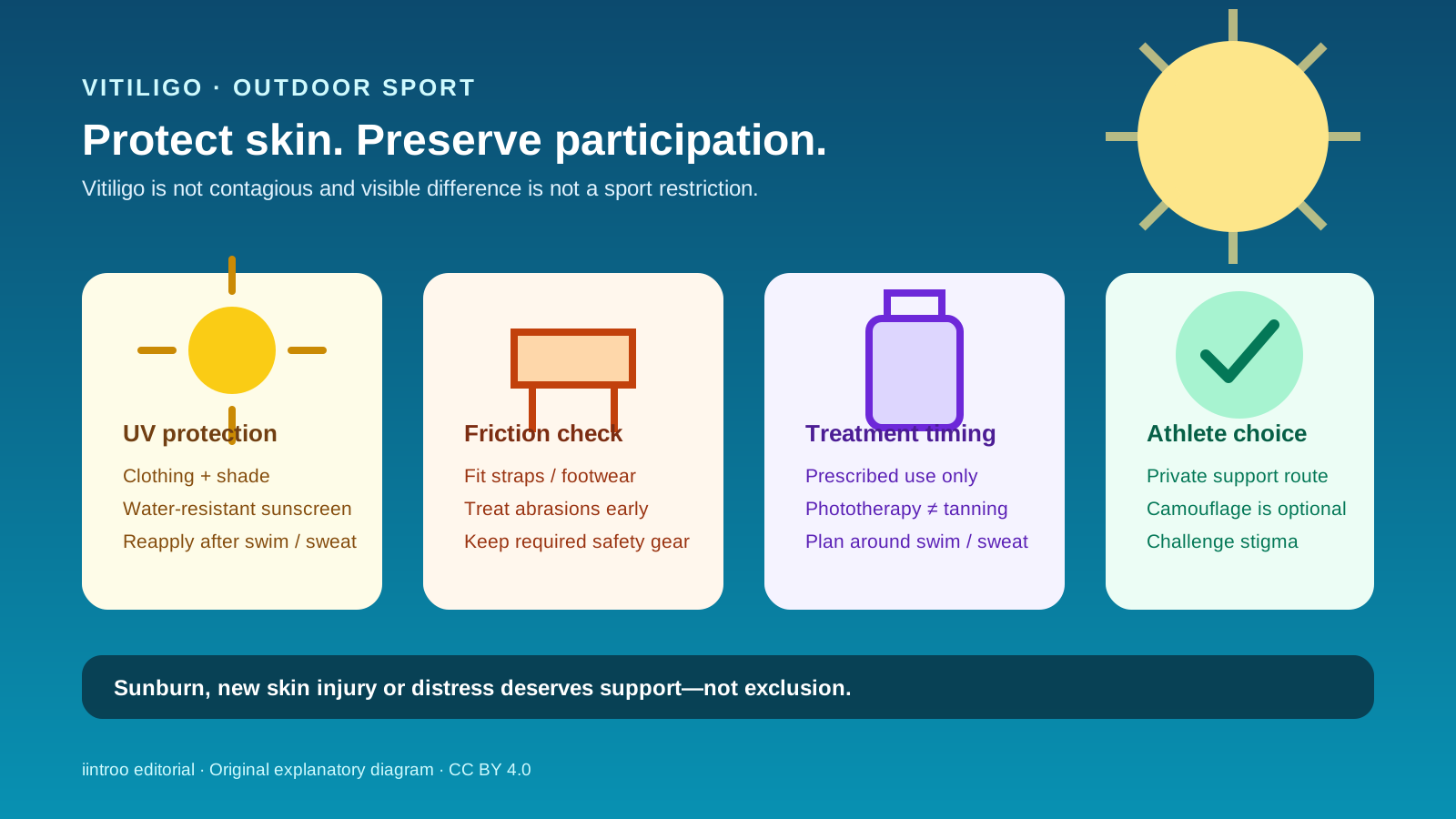
Key points
- Depigmented skin can burn more easily, so clothing, shade, water-resistant broad-spectrum sunscreen and reapplication after sweat, swimming or towelling matter.
- Repeated rubbing or skin injury can be associated with new patches in some people; equipment fit and early care of friction points are practical, not curative, measures.
- Vitiligo is not contagious. Camouflage, disclosure and treatment are personal choices, and teammates should not turn visible difference into a medical restriction.
Keep participation normal and protect exposed skin
This guide is for athletes with vitiligo in outdoor, aquatic and equipment-heavy sports. Vitiligo is an autoimmune condition in which pigment-producing melanocytes are lost from areas of skin. It is not an infection, cannot be passed to teammates and does not make a person unfit for shared changing rooms, contact or water. The skin usually feels normal, although the visible difference and the absence of protective pigment in patches can change sunburn risk, confidence and the way an athlete is treated by others. Sport participation should begin from inclusion, not suspicion.
Depigmented areas can burn easily. Current dermatology guidance supports layered protection: plan shade or timing where practical, use protective clothing, hats and eyewear appropriate to the sport, and apply a broad-spectrum, water-resistant sunscreen to exposed skin. The British Association of Dermatologists recommends high UVA protection and SPF 50 for vitiligo; other jurisdictions may label products differently. Reapply according to the product and after swimming, heavy sweating or towelling. Sunscreen supplements clothing and shade rather than creating permission for unlimited ultraviolet exposure.
Reduce avoidable friction without promising prevention
New vitiligo patches can appear at sites of injury or repeated friction in some people, a response known as the Koebner phenomenon. Evidence includes observational studies, clinical signs and a small experimental friction study; it does not show that every strap mark will become vitiligo or that avoiding sport prevents progression. Check the fit and edges of footwear, prosthetic interfaces, grips, swim equipment, pads, tape and pack straps. Address blisters, abrasions and chafing early, and change a rubbing setup instead of repeatedly covering the same injury and continuing.
Do not use this information to ban contact sport, remove protective equipment or blame an athlete for new patches. Protective equipment may be required to prevent much more serious injury. A dermatologist can help distinguish active vitiligo from another rash, infection, pressure injury or treatment reaction. Rapid spread, itch, inflammation or diagnostic uncertainty deserves review, but vitiligo itself is usually not painful. Team hygiene rules remain the same as for other athletes; white patches are not a reason for isolation, special cleaning or exclusion from a pool.
Coordinate treatment with training and competition
Vitiligo treatment is optional and guided by disease activity, location, age, goals and shared decision-making. Options can include topical medicines, narrow-band ultraviolet B phototherapy, targeted light or systemic treatment in selected cases. Treatment UV is a controlled medical dose, not equivalent to sunbathing or a tanning bed. An athlete receiving phototherapy should ask the dermatology team about timing, redness, additional sun exposure and any photosensitising medicine. They should not add tanning sessions or borrow a topical medicine to make patches change faster before an event.
Topical treatments may be unsuitable for particular body sites, ages or durations and can interact with sweat, occlusion or anti-doping documentation depending on the product. Apply only as prescribed and discuss whether the schedule should avoid immediate washing, swimming or tight equipment. Cosmetic camouflage and self-tanner can be reasonable if the athlete wants them; waterproof claims still need a training test to check transfer, irritation and grip. Concealment is never an obligation, and treatment response is variable rather than a deadline the athlete has failed to meet.
Give the athlete control over visibility and support
Vitiligo can affect mood, body image and social participation even when physical function is unchanged. A systematic review of 168 studies found substantial but highly heterogeneous psychosocial burden, with visible sites and younger age among reported risk factors. Those data describe groups and cannot predict how one athlete feels. Ask privately rather than assuming distress. Offer a route to report staring, comments, bullying or image-use concerns, and let the athlete decide what teammates, spectators and media are told.
Coaches can normalize sun breaks, suitable clothing and equipment adjustments without singling anyone out. Clinicians should ask about sport-specific friction, outdoor hours, treatment logistics and emotional impact, not only patch area. This page cannot confirm vitiligo, prescribe sunscreen or treatment, assess a changing lesion, or provide personal vitamin D advice. New or uncertain skin changes, severe sunburn, treatment reactions or significant distress deserve professional care. The evidence supports practical skin protection and person-centred support; no evidence supports excluding an otherwise well athlete simply because depigmentation is visible.