
Volleyball finger injuries: a 'jammed' finger still needs a diagnosis
Ball contact can cause a sprain, fracture, dislocation or tendon injury that looks deceptively similar at first. Check alignment, movement, sensation and function before deciding that tape is enough.
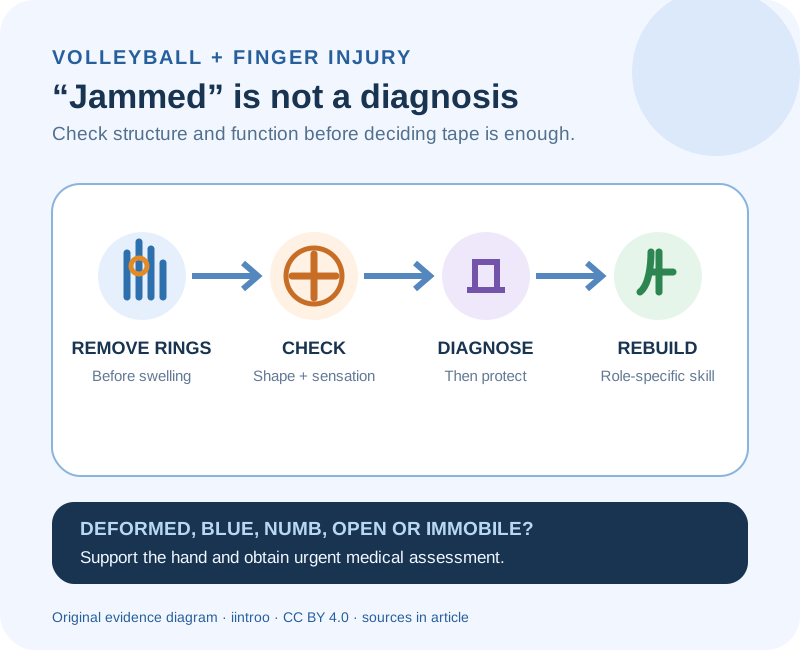
Key points
- Finger injuries are common in volleyball, but the same swelling can hide a sprain, fracture, dislocation or tendon injury.
- A finger that is deformed, blue, numb, cut deeply or impossible to move needs urgent medical assessment rather than sideline straightening.
- Buddy taping or splinting can be useful for selected diagnosed injuries; it is not a universal test of readiness or a substitute for assessment.
Treat the mechanism as a clue, not the diagnosis
This guide is for indoor, beach and sitting-volleyball athletes, coaches and medical teams. A ball striking an extended finger, a block collision or a fall can injure bone, joint, ligament or tendon. In a 2024 US emergency-department study of youth volleyball, fingers were the most commonly injured upper-extremity site, but those data describe presentations rather than every injury in every country.
The label 'jammed finger' does not tell you which structure is injured. Pain, swelling and bruising overlap across sprains, avulsion fractures, dislocations and tendon injuries. Record the mechanism and which movement fails, then use a clinical assessment—and imaging when indicated—to identify the problem before choosing protection or rehabilitation.
Check circulation, sensation and alignment first
Remove rings early before swelling traps them. Compare the injured finger with the other hand and check colour, warmth and sensation without repeatedly forcing movement. A finger pointing at an unusual angle, looking blue, feeling numb, showing an open wound or exposed bone, or losing active movement needs urgent medical care.
Do not ask an untrained teammate to pull a deformed finger straight. Some dislocations occur with a fracture, tendon injury or unstable joint. Cover an open wound, support the hand, and use the local emergency route. Even when the finger looks straight, inability to fully bend or straighten it deserves assessment rather than a test serve.
Early protection should not become automatic immobilisation
Selected stable injuries may be protected with a splint or buddy tape after diagnosis. The material, position, duration and exercise plan depend on the structure and stability. Tape that is too tight can affect circulation or skin, while prolonged unnecessary immobilisation can add stiffness. Follow the treating clinician's instructions rather than copying another player's setup.
Pain control, elevation and wrapped cold packs may help early symptoms, but they do not establish severity. Recheck colour, sensation, swelling and skin. An athlete whose pain, deformity, numbness or motion is worsening should be reassessed promptly, even if they completed the previous set.
Rebuild volleyball function, not only range of motion
Progression should restore comfortable motion, grip, finger control and tolerance of the athlete's actual role. A setter, blocker, libero and sitting-volleyball player expose the hand differently. Controlled handling can precede full-speed serve receive, blocking contacts, diving and unpredictable match play when the diagnosis allows.
The 2026 volleyball evidence map found far more research describing injury patterns and risk factors than testing effective prevention programmes. That gap means coaches should not promise that one taping style or drill prevents all finger injuries. Technical practice, suitable balls for the group, safe spacing and reporting early symptoms are reasonable controls, not guarantees.
Return depends on stability and task demands
There is no universal number of days for return. The decision should account for healing, joint stability, active motion, strength, pain, protective equipment rules and the risk of reinjury to the athlete or a teammate. Some injuries need specialist hand therapy or surgery; playing through them can trade a short absence for persistent deformity or stiffness.
Seek review when swelling and function do not improve as expected or when the fingertip droops, the joint repeatedly gives way, or full motion does not return. Clearance for training does not automatically mean unrestricted competition: exposure can be graded and the response reviewed after the session.